

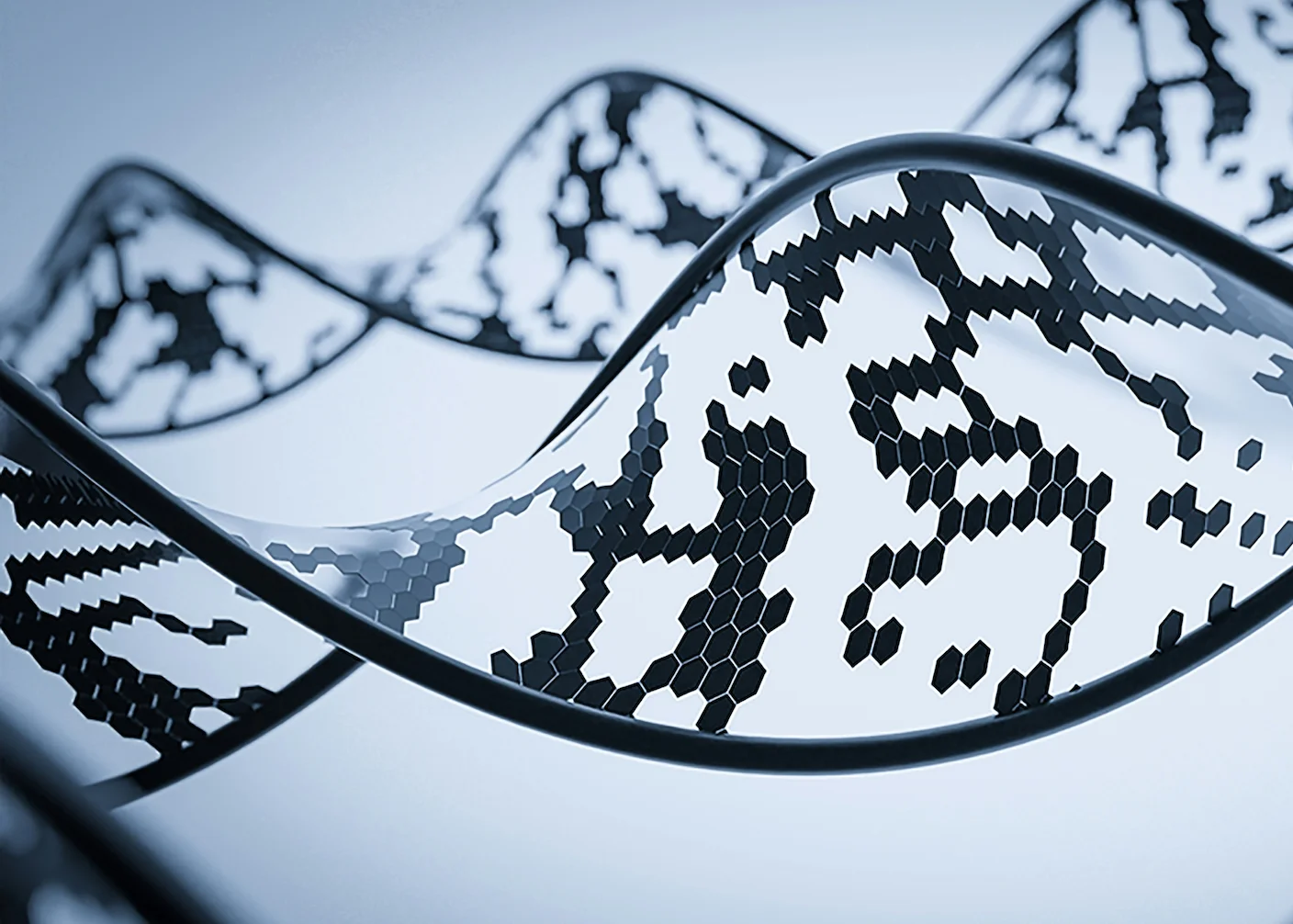
Humans have looked to the natural world for technological inspiration for millennia. AI and rapidly improving biotechnology are giving us new ways to explore four billion years of evolutionary experiments.
Long before biomimicry had a name, humans were practicing it. We have always studied living things for clues about how to build, move, heal, and survive. Nature wasn’t a separate category from technology so much as the place where many of our technological ideas began.
Modern engineering has made the connection easier to spot. High-speed trains have borrowed from the shape of kingfisher beaks. Adhesives have been modeled on mussels. Synthetic fibers have taken inspiration from spider silk. Even artificial neural networks trace their conceptual origins to the organization of neurons in the brain.
So the idea that nature can teach us how to innovate is hardly new. What is new is the scale at which we can look.
For most of human history, our access to nature’s accumulated knowledge was limited by what we could observe directly and gradually understand. Today, sequencing, imaging, sensors, bioinformatics, and artificial intelligence are opening biological systems to investigation at levels that were previously inaccessible.
In Living Tech: The Convergence of Biology and Innovation, Singularity expert Robert Suarez describes biology as perhaps “the largest dataset that has ever existed.” That is a useful way to think about what is changing. Biology represents roughly four billion years of evolutionary experimentation, and we are developing much better tools for reading the results.
Advances in biotechnology have steadily converted more of the living world into information that computers can analyze.
Source link





