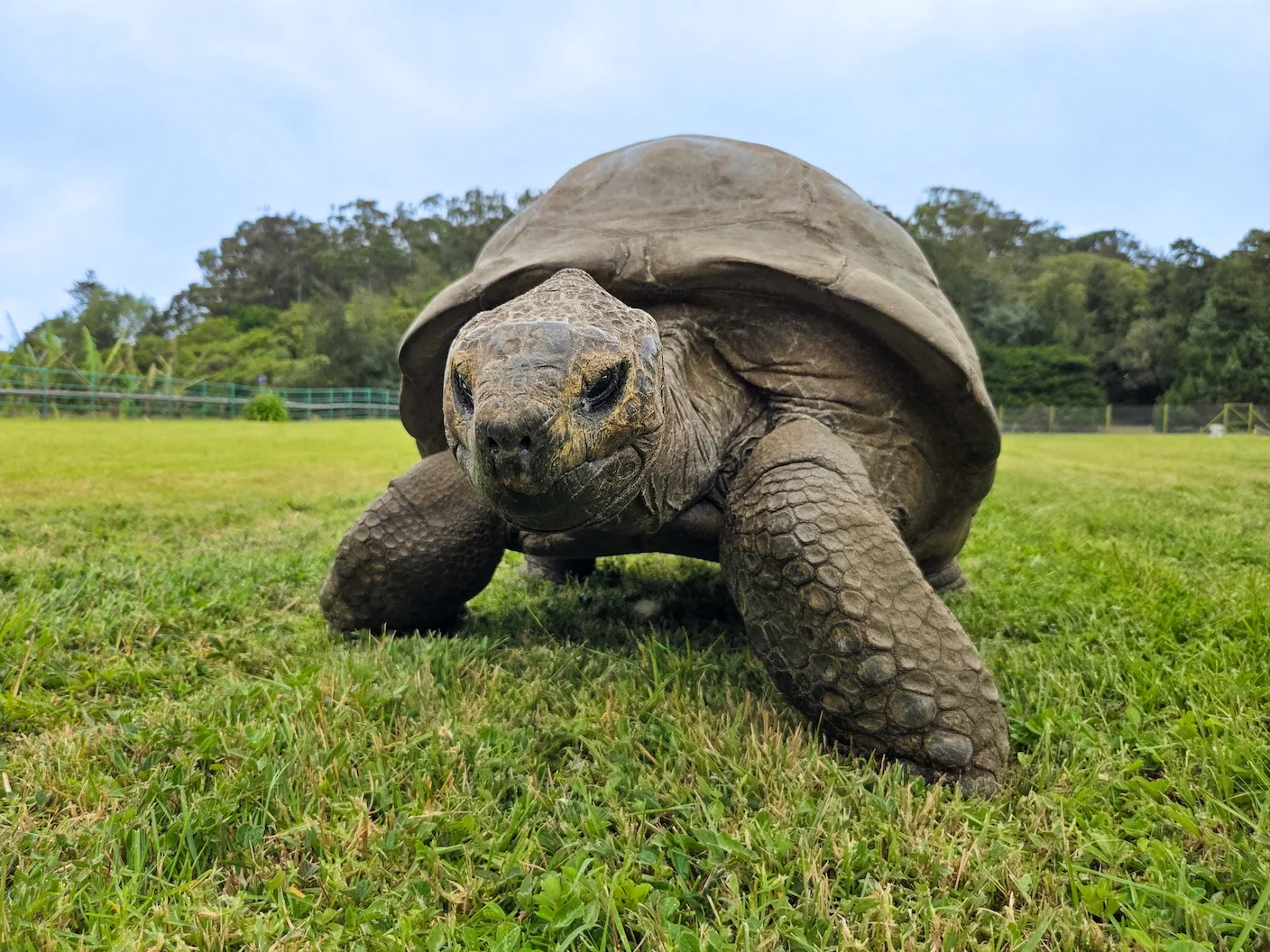
Jonathan the giant tortoise was born when Darwin was still a young man. Youthful gene activity may account for his exceptionally long life.
Getting a DNA sample is simple. Rub a Q-tip a few times inside your cheek, and voilà.
Not so with a 400-pound Aldabra giant tortoise. At the age of roughly 194, Jonathan is the oldest known living land animal on Earth. He’s spent most of his life lounging on the manicured lawns of the governor’s residence on the island of St. Helena, where he arrived as an adult. Though blinded by cataracts, Jonathan still chows down on grub and has excellent hearing.
Even among long-lived tortoises, Jonathan is exceptional. He’s lived around a century longer than others of his kind. Now, thanks to his DNA, an intrepid team of scientists may know why.
Getting a sample was tricky and dangerous. Jonathan’s veterinarian, Joe Hollins, lured him in with fresh greens, then quickly wedged his mouth open to scrape cells from inside his cheek. The tortoise tolerated the unusual procedure for only a few seconds. Any longer, and Hollins might have faced the wrath of Jonathan’s razor-sharp beak.
But the maneuver paid off. After sequencing the sample, the team found that Jonathan’s genome was better maintained compared to tortoises roughly a century younger.
As animals age, their DNA accumulates mutations. Telomeres, the protective end caps of chromosomes, shrink. Chemical tags that control which genes are turned on or off also go awry, straying from their normal patterns and settling on unexpected spots across the genome.
Source link