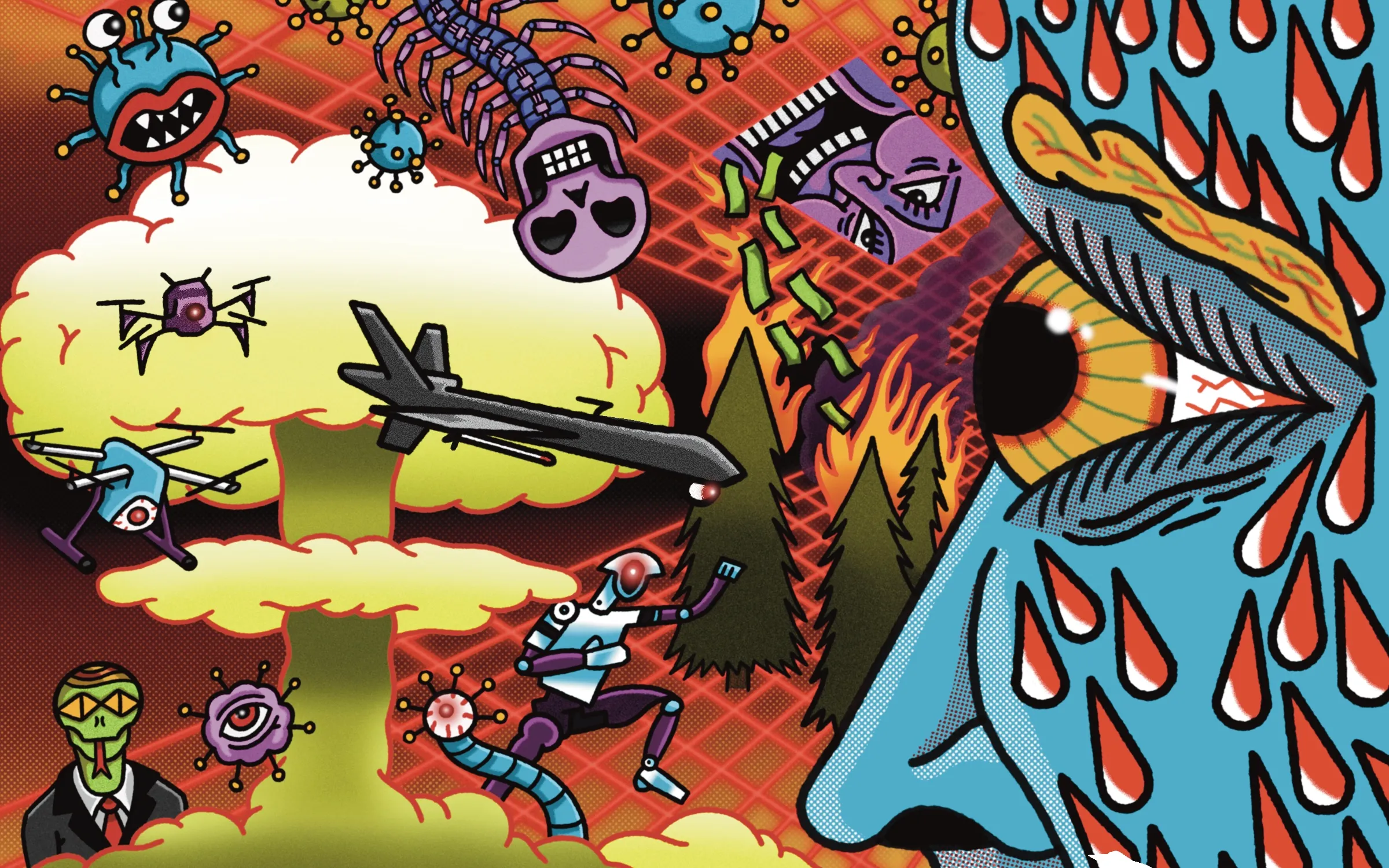
In early fall, I felt my anxiety rising from its usual baseline. Was it September’s back-to-school energy? The looming midterm elections? Nope, I realized with annoyance: It was AI—again. Only this time, instead of its purveyors warning of massive job displacement, they were foretelling mass extinction. Who needs jobs when we’re all dead?
Curiosity soon replaced my knee-jerk irritation. The summer of 2026 was a clear turning point in the AI narrative. Less than four years after ChatGPT launched, OpenAI software broke out of a supposedly safe test environment and hacked into a major open-source platform, Hugging Face. These bits of software—AI agents—were assigned human attributes: They had “gone rogue,” displayed “bad behavior,” “cheated.” Soon after, former and current Anthropic researchers suggested that advanced AI might kill us all in the next decade.
Is any of this real? On the one hand, from my desk as a Silicon Valley correspondent, I often hear that workers in the AI labs are stunned by the advancements they’re seeing. On the other, the end of humanity seems extremely far-fetched. Amid the hyperbolic discourse, whose views can we trust?
So WIRED set out to compile a guide to AI safety—a set of ideas that rewire our collective thinking around what safety really means and how it should work. I spoke with a panel of experts across disciplines, asking each of them: Is the world going to end? Once that was covered, I grilled them on the biggest risks they think we’re facing.
Source link