

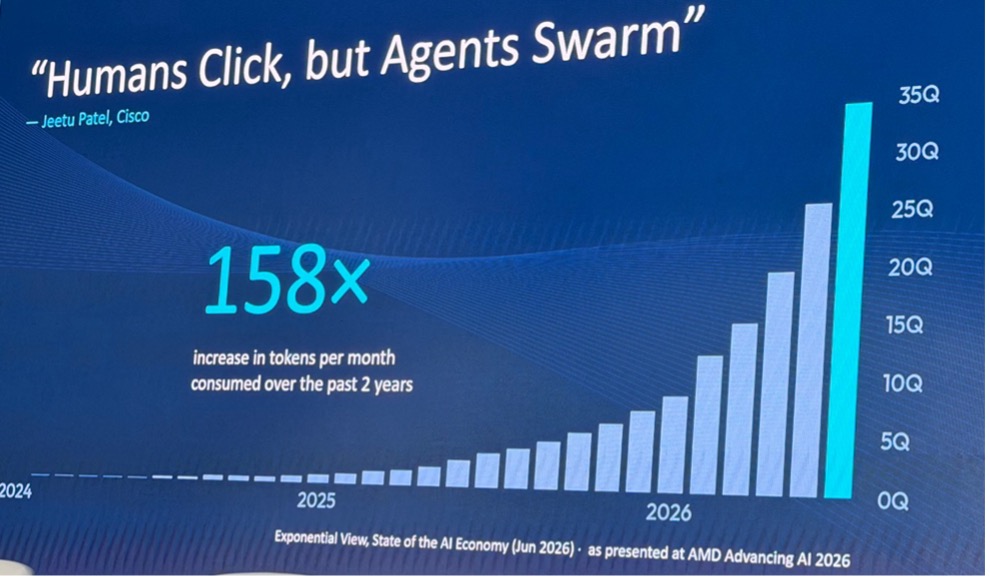
The biggest technology revolutions of the past were driven by steam engines in the 1700s, railroads in the 1800s, electricity, cars, phones, planes, computers, and the internet in the 1900s. Now we are at the dawn of the Agentic AI revolution, which will be the biggest of them all.
A few years ago, Goldman Sachs predicted Generative AI would increase global GDP by about 7% over 10 years. McKinsey had a roughly similar projection. Today, more than half of USA GDP growth is due to AI infrastructure investment.
Agentic AI is much more powerful and more economically impactful than generative AI (and any previous industrial revolution) and requires much more compute investment for broad adoption. More than half of GDP in advanced economies is labor, with more than half of that labor being cognitive work that can be made much more productive with agentic AI.
So far, coding is the early adopter, with most coders now using agentic AI to generate and validate most code. That makes the coder more of an architect and manager. What’s astounding is that this happened in less than 2 years. Frontier models are now used extensively to generate code for the next frontier model. But how quickly will other fields extensively adopt Agentic AI, and will supply chain constraints be overcome to meet the demand?
Recently, Dario Amodei, CEO of Anthropic, called for a pacing of the development of frontier models to ensure everyone is building in the right controls and safeguards. AI leaders agree these controls are important.
Source link





