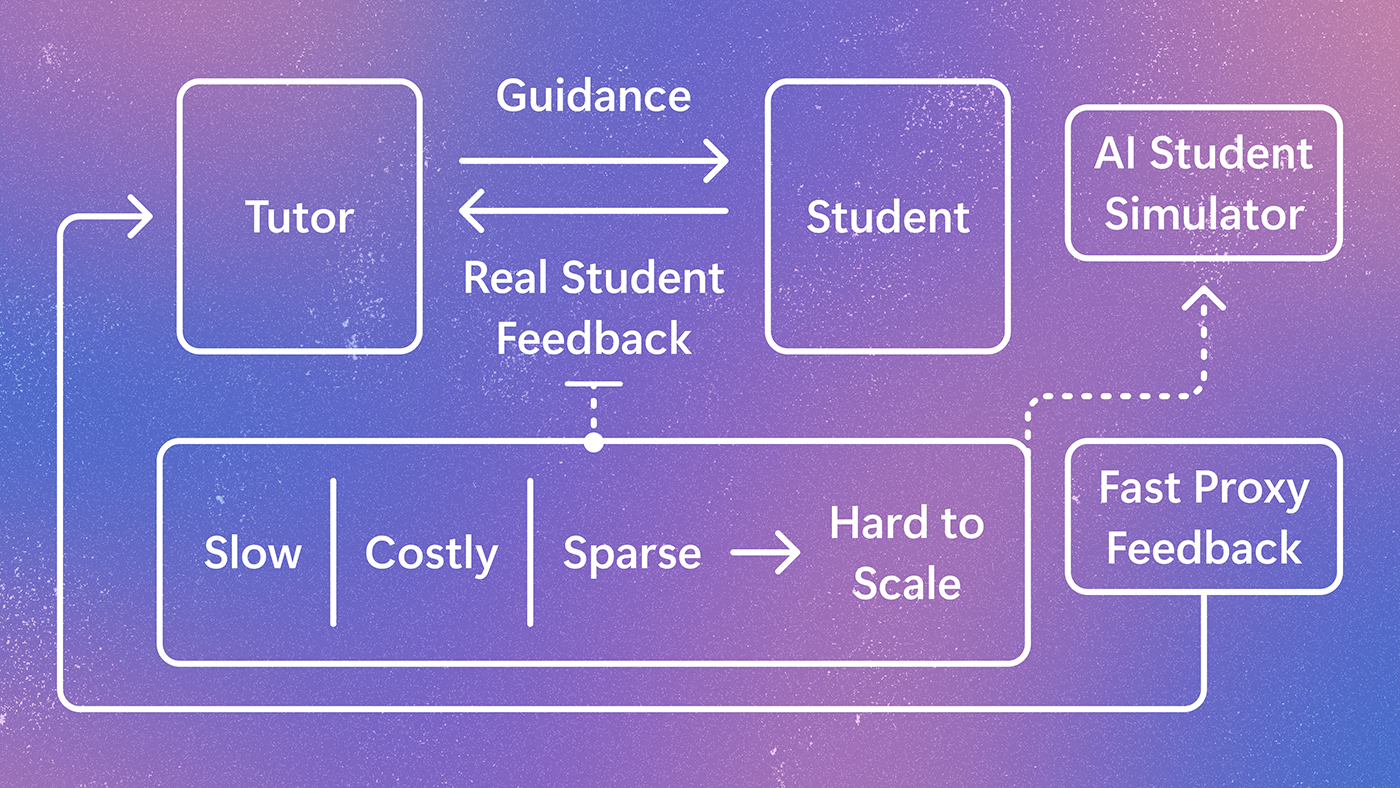
In research settings, teams are exploring how AI-powered tutoring systems can help explain a math problem, suggest an edit to a writing assignment, or guide a learner through a chess position. Yet the quality of teaching cannot be measured only from the tutor’s answer. A tutor needs to know what happens after the guidance reaches a student. Did the student correct the original mistake? Did the hint help them reason toward the answer, or did it give away too much? Would a different student need a different kind of support? In today’s AI tutor research, answering these questions often requires real learner studies. Those studies are valuable, but they are slow and costly to run, which makes it hard to use student feedback during fast model iteration.
StudentSim is an AI system that creates personalized simulators of individual students, modeling how they answer questions and how their answers change after receiving a tutor’s guidance. The goal is to make student feedback more available during AI tutor development. This research also introduces StudentSimEval, a benchmark and evaluation protocol spanning chess, second-language English writing, and mathematics.
Importantly, the goal is not to replace teachers or classroom learning. Instead, StudentSim helps researchers evaluate and improve AI tutoring systems during the research and development process before testing them with real learners. The research uses only publicly available learner datasets released for research use with de-identified records; no personally identifying information is used at any stage.
A simple way to build a student simulator is to ask a large language model to role-play a learner.
Source link