I’m sitting in a Rivian R1S SUV as it drives itself down the leafy streets of Palo Alto, Calif., through areas crowded with touchstones of tech history. We cruise near the landmark HP Garage, the one-car workshop where Hewlett-Packard, and, arguably, Silicon Valley, was founded in 1939. I skirt Stanford University, where a team led by computer science professor Sebastian Thrun won a US $2 million DARPA Grand Challenge in 2005. The team’s Volkswagen SUV, named Stanley, became the world’s first vehicle to navigate a grueling 212-kilometer Mojave Desert course with no human intervention.
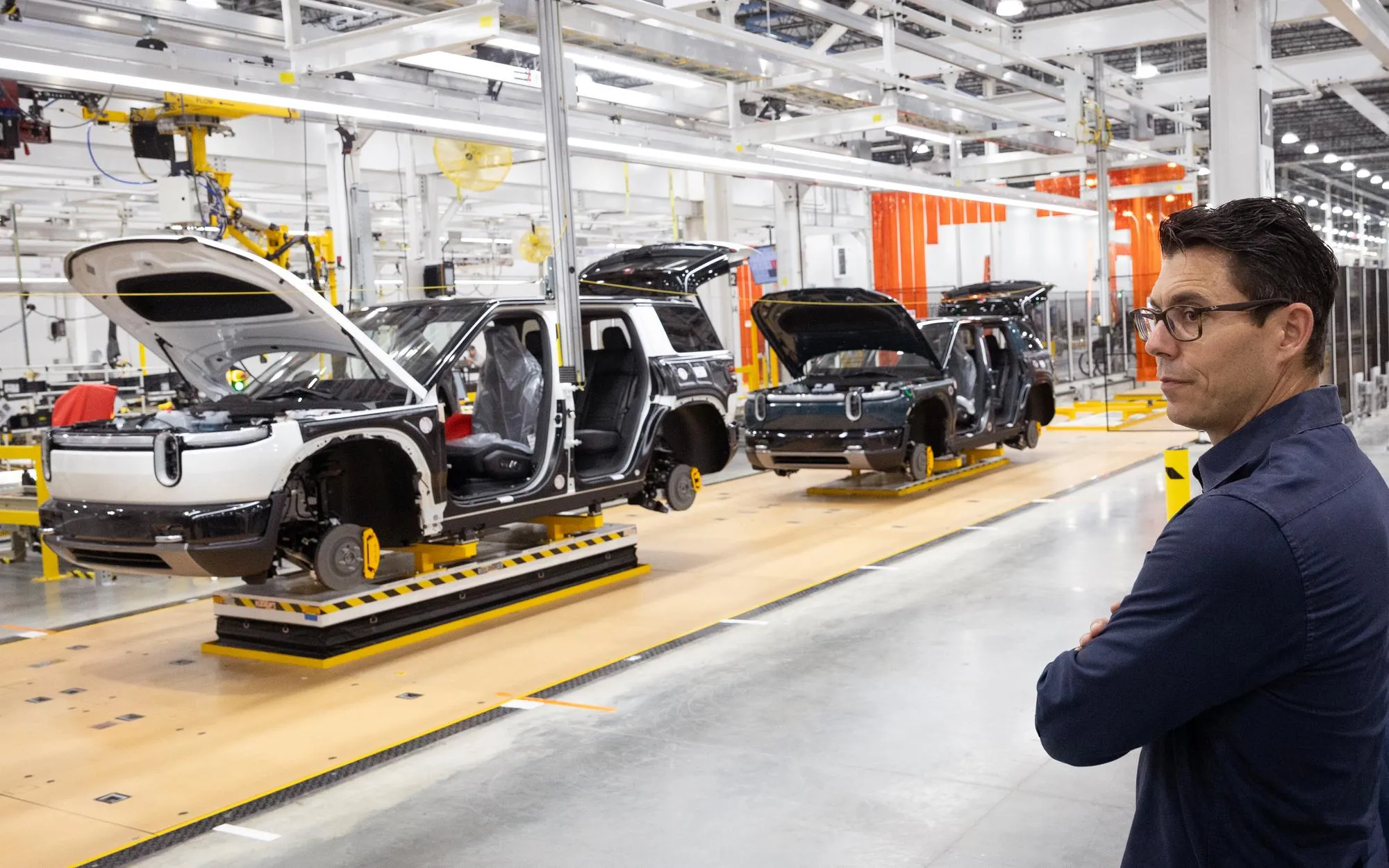
This Rivian might look like any other electric SUV in this affluent town, with its concentration of tech bros, venture capital, and startups. But inside this boxy EV is something special: an Autonomy+ system that will allow owners to enter an address, sit back, and let the vehicle drive to any mapped destination in the U.S. and Canada. This point-to-point system is one of the most advanced semiautonomous-driving systems coming to market. It is also a precursor of the company’s bid to make self-driving cars a reality, for robotaxis and—eventually—for everyday car buyers. After years of incremental advances and frustrating setbacks, self-driving has been swept up in the great AI resurgence, and is now a top priority for investors and global automakers, who envision vast new streams of profits.
So here I am, 21 years after that DARPA challenge, riding shotgun in Stanley’s vastly more advanced descendant. Rivian’s Autonomy+ is intended to operate seamlessly on suburban streets like these, sensing and responding to traffic lights, crosswalks, and stop signs.
Source link