LoRA support recently landed in TRL's AsyncGRPOTrainer with PR #7017, and ships with TRL v1.14. The asynchronous trainer can now train an adapter instead of the full model, and it syncs only the LoRA adapter to vLLM. This post covers a real-world project built on top of it, where training and inference no longer share a machine.
LoRA training is particularly suited for RL, as shown in Thinking Machines's blog LoRA Without Regret. They show that LoRA can match full fine-tuning for policy-gradient RL, even with rank 1. This stems from the fact that the advantage function only gives ~O(1) bits of information per episode, so there is not that much to learn from each step, from a total-bits-of-information point of view. A rank-1 adapter has enough capacity to absorb it.
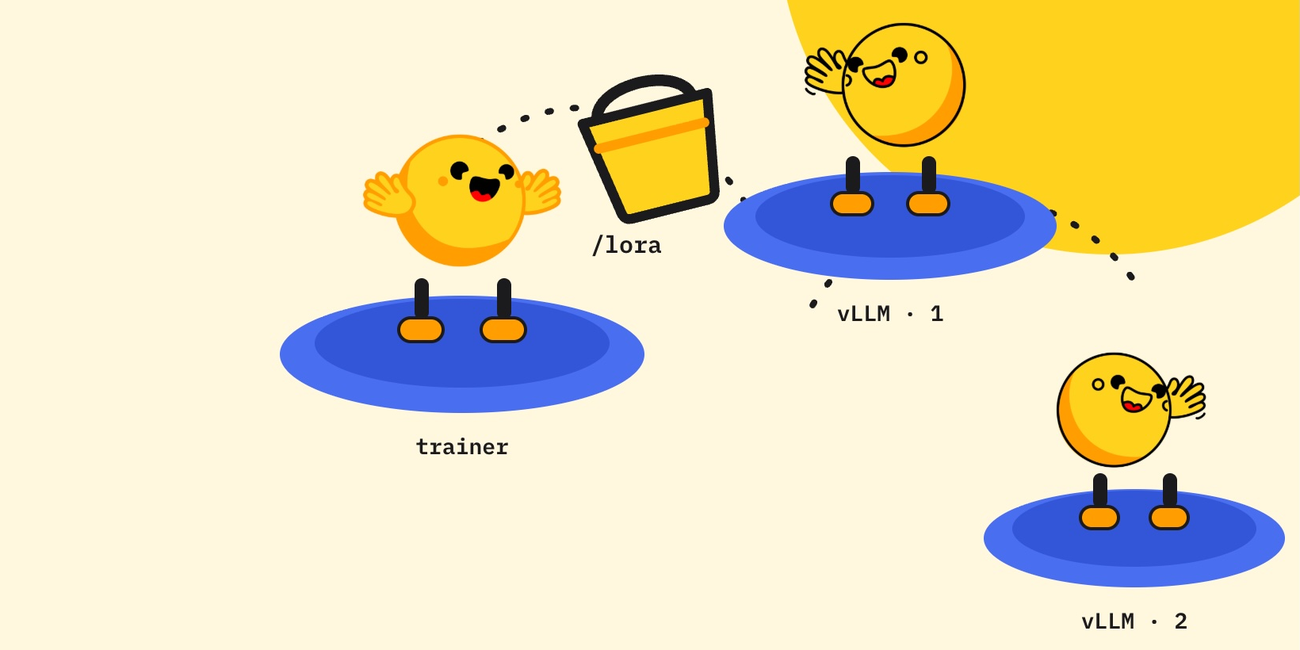
There is also a systems consequence of LoRA training. A rank-1 adapter for a 1.5B model is a few megabytes, while the full model is around 3 GB. Instead of sending the full policy to the inference workers after every update, we can just send the adapter. vLLM can also keep several adapters loaded at once. Old rollouts finish with the policy they started with, while new rollouts use the latest one.
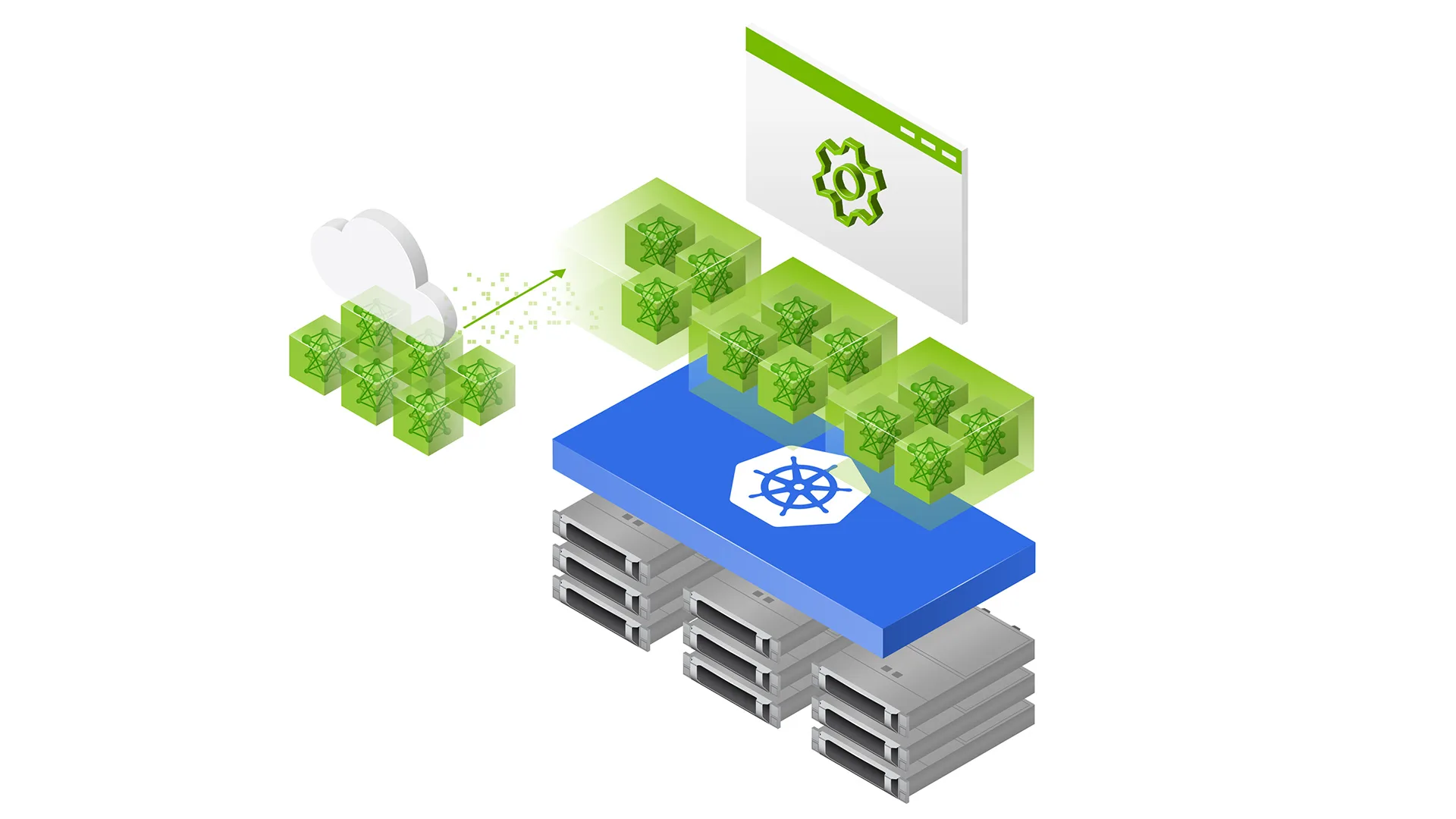
TRL's AsyncGRPOTrainer already separates training and generation. The trainer and vLLM can run on different machines and at their own speed. This is easy in a single-node or cluster setting where both processes share a filesystem or can form an NCCL group.
What we want is to run the same setup with Hugging Face Jobs .
Source link