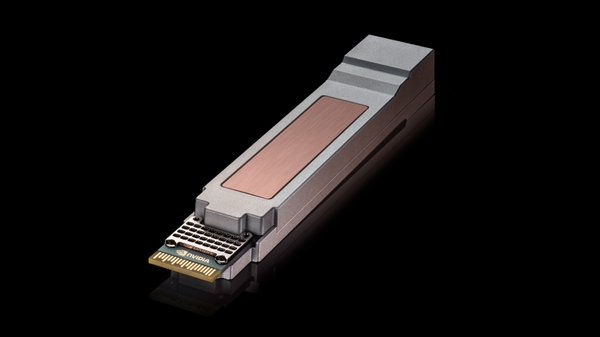
NVIDIA and Cisco today announced plans for Ultra-Dense Small Form Factor Pluggable (USFP), a new high-density 400Gb/s-per-lane optical module designed to equip the hardware ecosystem for the next generation of AI factories using pluggable transceivers.
As AI models grow and inference demand expands, AI factories must connect more computing systems while managing network complexity, power and costs. Moving more data per watt and per switch helps operators make better use of their infrastructure investments.
Scaling AI factories requires more bandwidth per connection and more connections per switch. When a switch reaches its capacity, further network expansion can require additional switch layers and optical links, increasing latency, power consumption and costs.
USFP is designed to enable AI factory builders to scale from 200 Gb/s per lane to 400Gb/s-per-lane Ethernet AI fabrics, while extending a deployment model proven at scale across multiple generations of data center networks. With USFP, customers can embrace next-generation optical technology and meet the performance demand of AI workloads without overhauling their data center infrastructure.
The first planned USFP-based transceivers will pack 16 full-duplex lanes in an octal small form factor (OSFP)-sized footprint supporting both switches and SuperNICs, with the ability to expand to 32 and more lanes in the future. By doubling both the lane count and bandwidth per lane, USFP enables AI fabrics to connect more 1.6Tb/s endpoints without adding network tiers. Customers will be able to achieve 12.8Tb/s of overall capacity with USFP.
3x the power efficiency, versus 200Gb/s-per-lane pluggable modules. This means AI builders can increase their compute scale within the same network footprint, while decreasing networking’s share of the overall AI factory power budget.
Source link