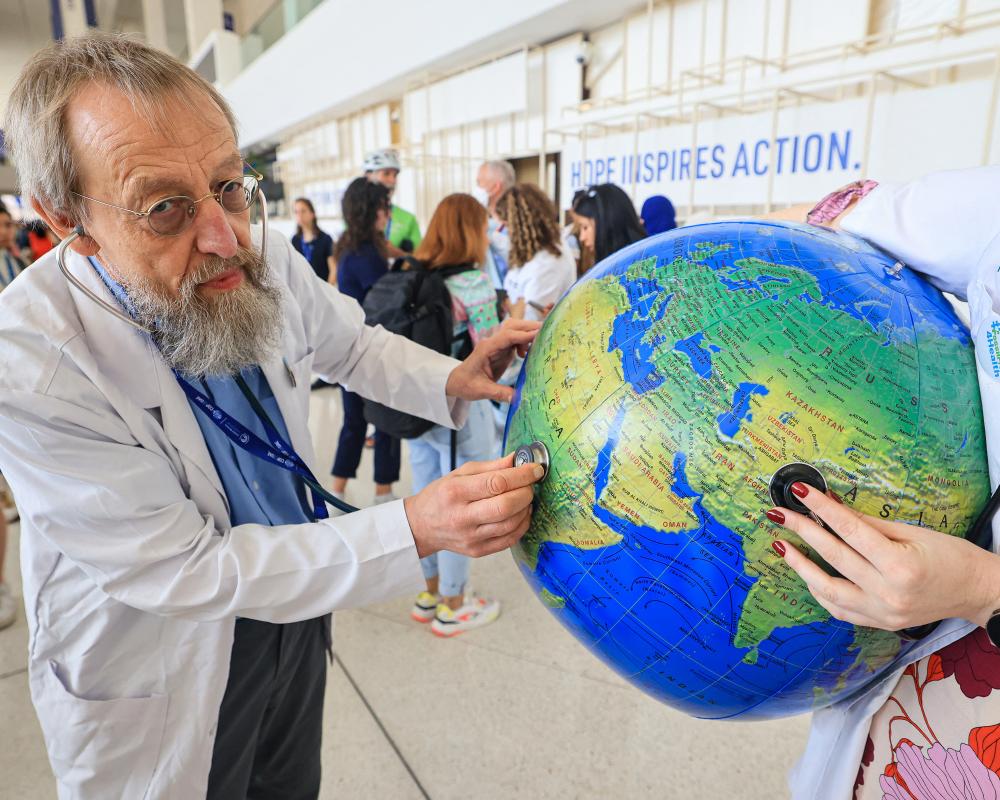
Newly established commission identifies 17 catastrophic threats to human health but says ‘realistic route to act’ on each exists
Humans could become extinct by the year 2100 due to malicious use of AI or nuclear conflict, according to a new global risk assessment.
They top a list of 17 major threats to human health over the next 75 years, which also includes cuts to aid spending by wealthy countries, the climate crisis and childhood malnutrition.
The experts behind The Lancet Commission on 21st Century Global Threats to Health said all the threats interact, meaning they must be addressed together – but stressed that there was “a realistic route to act” on each.
“Decisions made by leaders today will shape the health and wellbeing of the next generation,” said Prof Christopher Murray, commission co-chair and the director of the Institute for Health Metrics and Evaluation, University of Washington.
To create its list, the commission modelled how many years in good health might be lost due to sickness, disability or early deaths due to each threat, based on current trajectories – a measure known as disability-adjusted life years (Dalys).
“Malicious use of AI, including bioweapons, and nuclear conflict with nuclear famine carry risks of extinction in the next 75 years,” the report said, adding that while their likelihood remained low, they had the potential to end humanity in the case of nuclear conflict by injecting enough particles into the upper atmosphere to block sunlight and cause famine, or via AI-created biological weapons.
Source link