This article has been reviewed according to Science X's editorial process and policies. Editors have highlighted the following attributes while ensuring the content's credibility:
A large-capacity industrial chiller capable of providing cooling at temperatures of −120°C or below has been developed to remove heat generated during semiconductor manufacturing processes. Using nitrogen as a refrigerant with a global warming potential (GWP) of zero, the system combines environmental benefits with large-capacity cooling performance. The technology has advanced to a level suitable for commercialization and practical use in industrial settings.
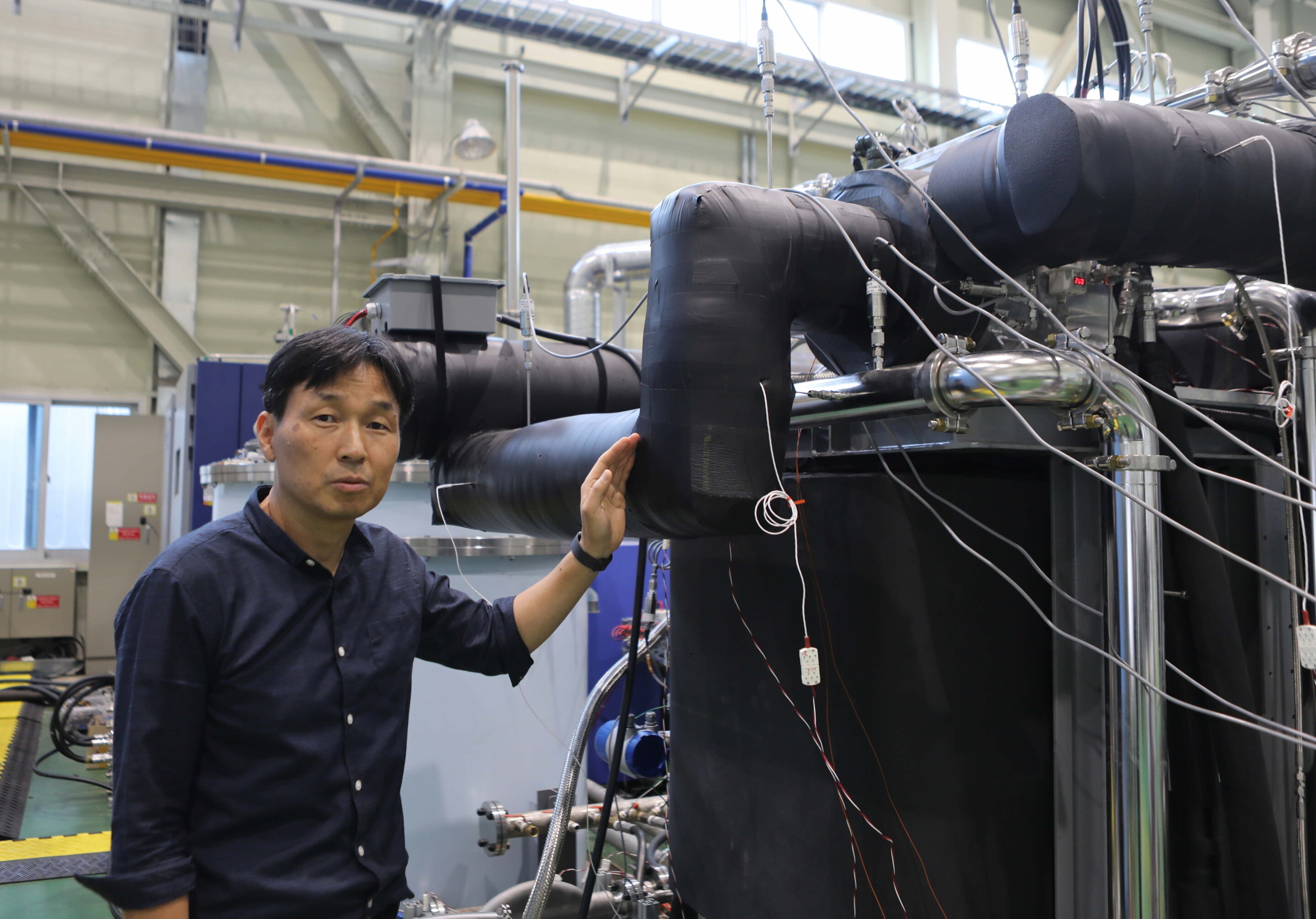
A research team led by Dr. Junseok Ko, head of the Department of Energy Storage Systems at the Research Institute of Carbon-neutral Energy Machinery of the Korea Institute of Machinery and Materials (KIMM), developed a Turbo-Brayton cryogenic cooling system capable of delivering 15 kW of cooling capacity at −120°C or below. The team independently secured the technologies required throughout the development process, from key components and system design to manufacturing, operation, and control.
The system was built into an industrial chiller measuring 1.6 m (5.2 feet) in width, 1.6 m (5.2 feet) in depth, and 2.1 m (6.9 feet) in height, and its performance was verified through testing.
As semiconductor devices become increasingly integrated, etching processes that create deep and precise patterns on semiconductor surfaces are becoming more important. These processes require cryogenic chillers that supply cooling fluids at temperatures around −100°C to effectively remove heat generated during manufacturing. However, conventional vapor-compression chillers often use refrigerants with high global warming potential and face technical limitations in increasing cooling capacity.
Source link