Researchers have developed software that enables 3D-printed objects to sense and respond to human movements. The system, called X-Hinges, automatically embeds sensors and conductive pathways made from different materials to improve signal accuracy and reduce interference.
The software allows users to customize objects by connecting shapes and selecting up to three axes of movement, with sensors placed at bending points to track motion.
The approach could enable interactive devices, including robotic hands, household objects, toys, and object-detection systems.
X-Hinges, developed by researchers at Massachusetts Institute of Technology (MIT) and Tianjin University in China, is a design software that enables 3D-printed objects to sense motion and respond to human interaction. The technology integrates sensors and conductive pathways directly into objects during fabrication, allowing them to detect movement across multiple axes.
The system addresses a key challenge in manufacturing interactive objects: interference between sensor-generated electrical signals and conductive pathways. By using different materials for these components, X-Hinges improves sensing accuracy and lets objects capture multiple types of movement at once.
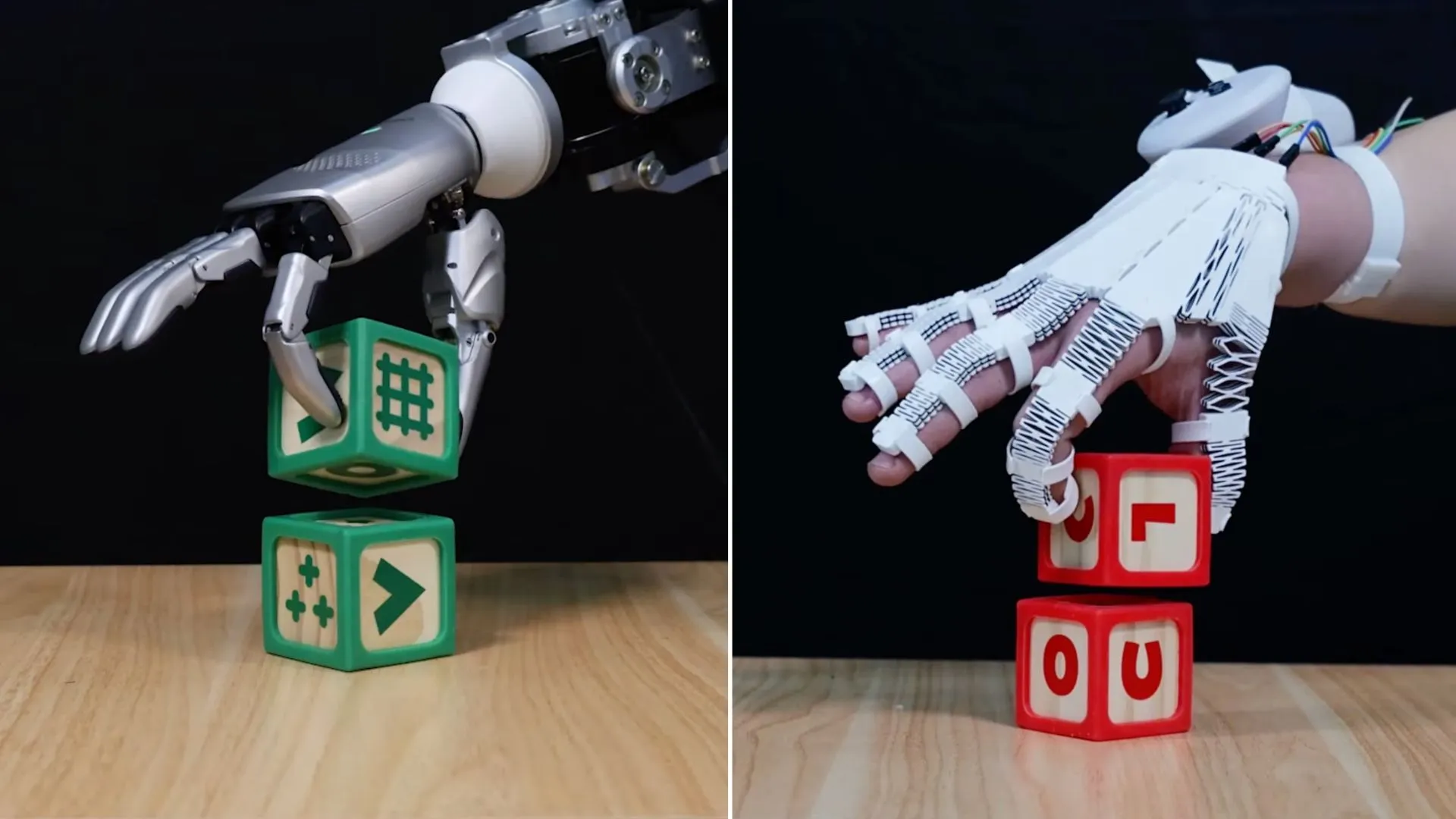
The researchers demonstrated the technology through several prototypes, including a glove that transfers human hand movements to a robotic hand, an adaptive lamp that responds to touch, and a device that identifies objects using tactile data.
Sensors detect physical changes, such as bending or compression, and convert them into electrical signals. Conductive pathways carry these signals through the device to electronics that process the data.
When both components use the same conductive material, their electrical responses can become difficult to distinguish. This interference can reduce sensing accuracy and make it harder for a device to determine how a particular section has moved.
Source link