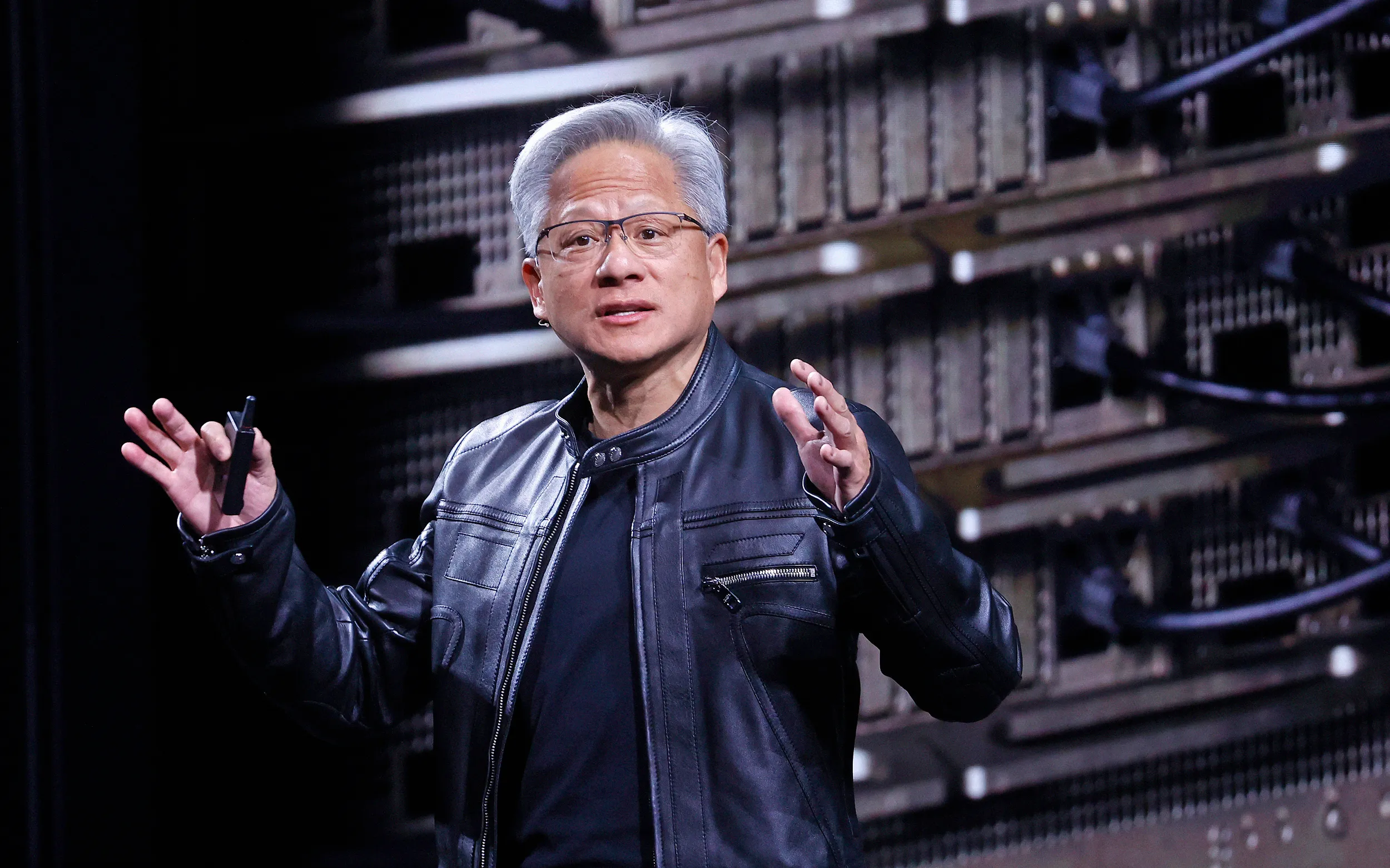
No executive has pulled the strings in the artificial intelligence era quite like Nvidia’s CEO Jensen Huang. He parlayed the boom into incredible wealth, became a close confidant of President Donald Trump, and emerged as a prominent voice in US-China relations. That now all stands in the balance.
Over the last few days, Huang’s status as an AI titan has come under scrutiny amid an admission that he had an affair with Alice Huang, an executive at a Singapore-based company whom US intelligence services concluded was a Chinese intelligence asset.
Nvidia’s board of directors said that the company would launch an investigation into the incident. Huang, the company said, “fully supports the review and has committed to cooperating with it.” Huang earned $36 million last year, owned about 3.5 percent of Nvidia as of March, according to a corporate filing—which also noted that Huang is an at-will employee who can be let go anytime without severance.
How exactly the investigation shakes out, and what it means for Huang’s future at the company, remains to be seen. But the incident at least puts his position at risk, and raises questions about how the industry will respond.
“He’s the person who decides who gets the chips and who doesn't,” says David Yoffie, a professor at Harvard Business School who tracks the chip industry.
Nvidia, which Huang cofounded in 1993, controls 90 percent of the market for chips used in training frontier AI models. With those chips in short supply, Huang has the power to determine which areas of AI get a boost next.
Source link