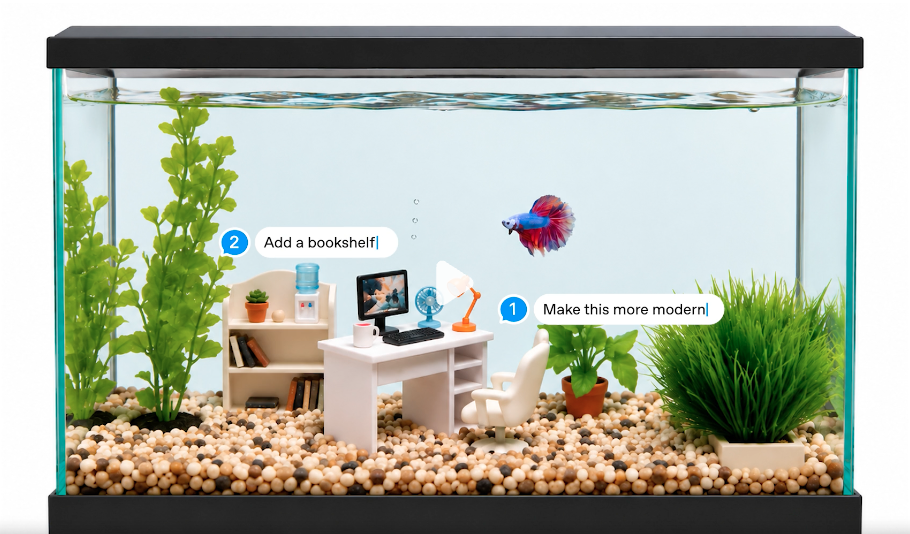
When OpenAI launched GPT Images 2.5 this week, the company promised better results for a common editing task: changing one part of an image without messing up the rest.
And so developers have two new models to try, Flare and Sunburst, but some homework awaits anyone choosing between them. OpenAI lists identical token rates for both, without explaining how their per-image costs compare.
Flare is positioned as the faster, “default” option for most applications, while Sunburst offers greater precision and control over edits, but with longer generation times. OpenAI lists the same token rates for both models, though it’s less clear how their real-world costs will compare.
OpenAI calls Flare “the default choice for most applications,” letting developers level up image quality with lower latency than its previous model. Per the AI company, that means the model can handle any everyday image-generation workload, such as social content, rapid image prototyping, visual search, and image generation.
Most interestingly, OpenAI says Flare delivers higher-quality images than does GPT-Image-2 with 50% lower latency.
Meanwhile, the AI company positions Sunburst as the more precise option, saying the image model is “built for premium visual workflows that benefit from tighter control across edits.” For developers working on high-stakes creative assets, like production-ready campaigns or product imagery, Sunburst looks like the better pick.
But OpenAI doesn’t make it clear how much Sunburst’s greater precision will cost compared to Flare in time and money.
On paper, OpenAI says Flare and Sunburst have the same token rates: $5 per million text input tokens, $8 per million image input tokens, and $30 per million image output tokens.
Source link