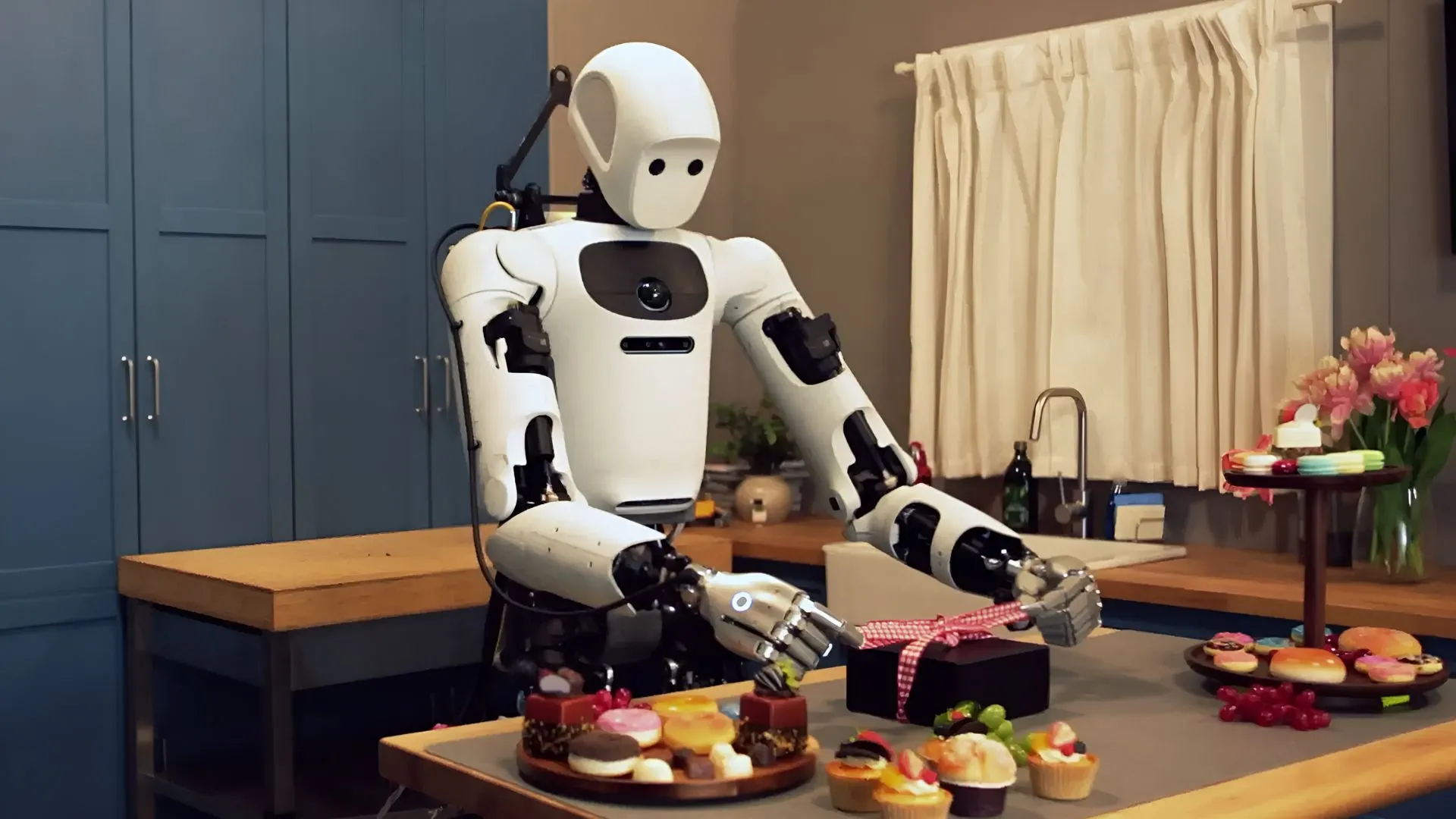
Google DeepMind has introduced Gemini Robotics 2.5, a new model designed to help robots learn physical tasks faster, handle delicate objects, and operate more reliably in real-world environments.
The model achieved a 96 percent success rate in a factory proof-of-concept involving Apptronik’s Apollo 2 humanoid robots on Mercedes-Benz production lines. The robots autonomously sorted automotive parts from bulk bins into organized trays, preparing components in the sequence required for vehicle assembly.
The trial took place at production facilities in Kecskemét, Hungary, and Sindelfingen, Germany. Google said the work could help automate repetitive and physically demanding tasks while allowing factory technicians to focus on more complex assembly work.
Gemini Robotics 2.5 is the company’s latest vision-language-action (VLA) model, which translates visual information and instructions into physical robot movements. It is currently rolling out to Google’s robotics partners.
Google evaluated Gemini Robotics 2.5 across more than 200 distinct tasks, including serving food with tongs, tying bows on gift boxes, and transferring liquids with pipettes.
These activities test a range of capabilities, from handling delicate objects to manipulating flexible materials and using everyday tools.
Compared with previous baselines, the model achieved success rates that were 30 percent to 100 percent higher, depending on the task. It also completed activities 20 percent to 30 percent faster, according to Google.
The model works across different robotic platforms, including Apptronik’s Apollo 2 humanoid and the Franka Duo system, which uses two-fingered parallel grippers.
5 controlled the robot’s arms and hands. Apollo 2 picked metal brackets from supply bins and placed them into sequencing containers, adjusting its movements when necessary.
Source link