This article has been reviewed according to Science X's editorial process and policies. Editors have highlighted the following attributes while ensuring the content's credibility:
Electronic engineers at Nottingham have found a new way to create sound effects by manipulating the interaction of sound waves, a method that could open new possibilities in music performance and production. It is a novel concept for sound effects that falls between electronic/digital and mechanical effects. The work has been published in the Journal of the Audio Engineering Society.
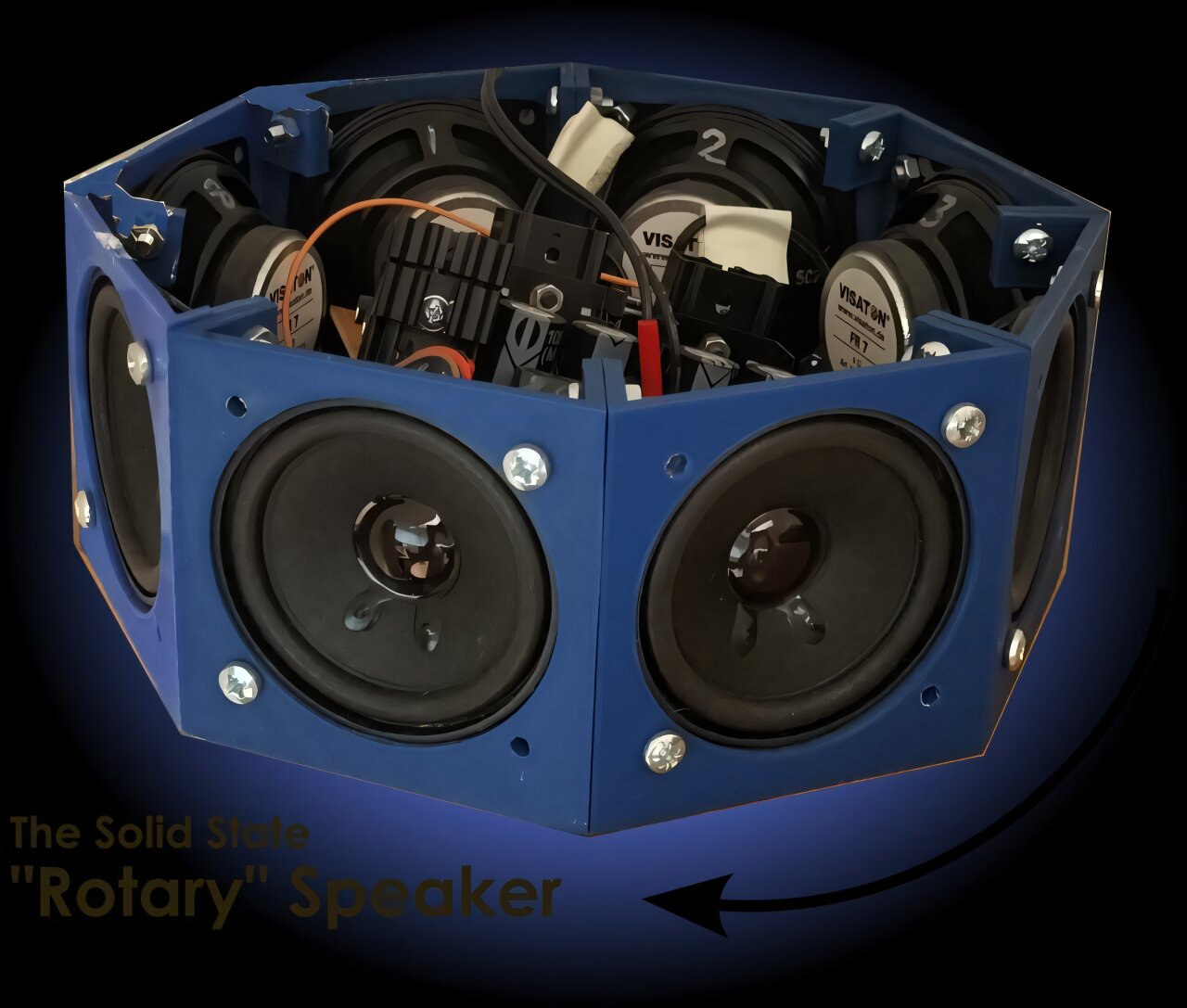
The Nottingham team has created a novel solid-state "rotary" speaker inspired by the classic electromechanical effect (the Leslie speaker). The device uses a circular array of speakers instead of moving parts. In this approach, the signal is translated across the array electronically rather than mechanically to emulate motion. The modulation of phase in this case does not occur on an electronic signal played on a single speaker, but on the physical sound waves approaching and surrounding the listener, making the character of the effect more organic and providing greater depth.
The Leslie or rotary speaker, developed in the 1930s for electric organs, uses motors and belts to move horns and baffles to create sound modulation. ). However, the character of the original acoustic-mechanical effect, provided by the movement of the sound sources, is considered far superior to its electronic and digital counterparts.
Source link