We built twelve training worlds for computer-use agents: ten deep domain worlds and two capability worlds, each drilling a single control rendered in many forms (date pickers and nested filters). Depth is what makes them worth training on: these worlds reproduce an application’s real behavior, come seeded with realistic data, and keep state coherent across screens and users. Trained on all twelve, a 9B model nearly doubles its base score (36.5% to 67.1%), coming within fourteen points of GPT-5.4. The experiment taught us several lessons:
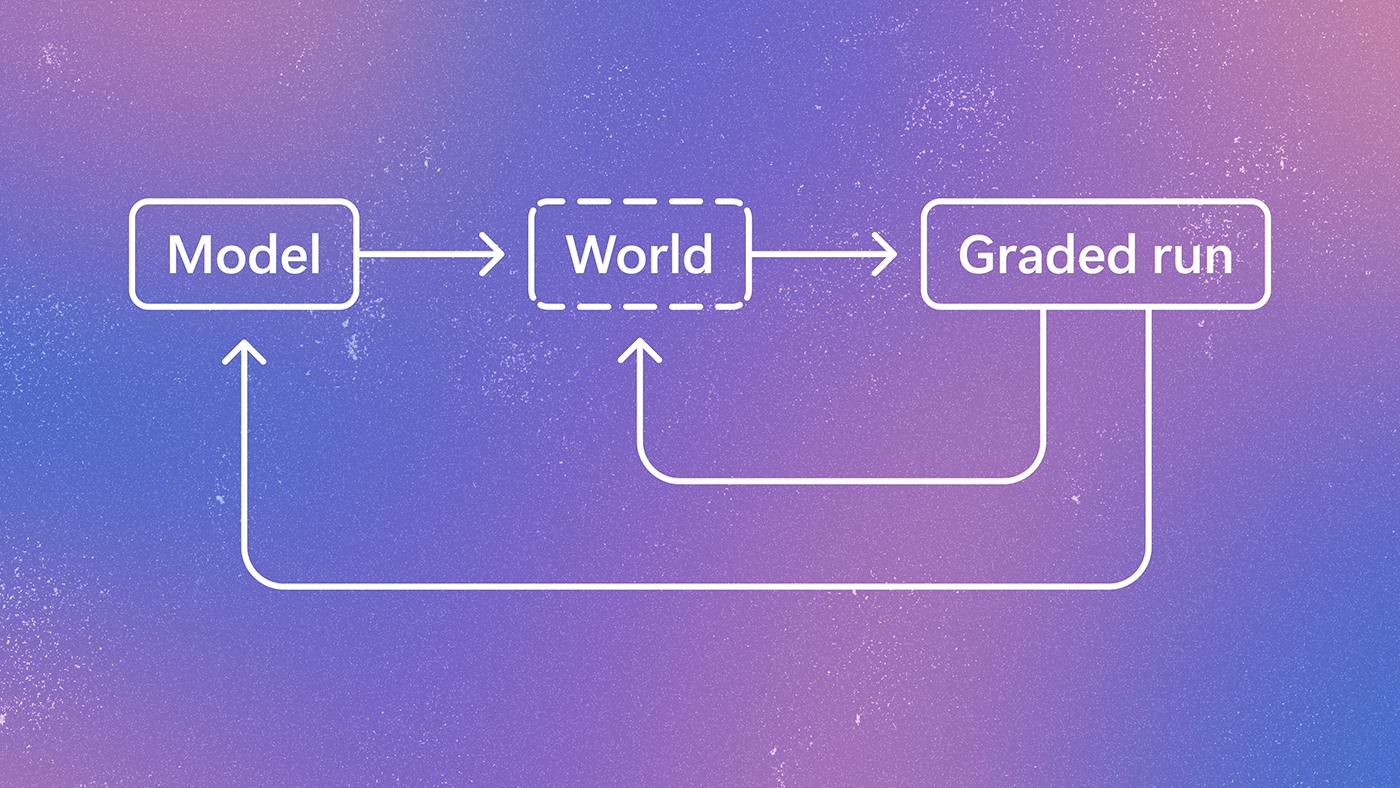
A computer-use agent learns the results of what its actions do only where they have real consequences. A click changes saved state, a message reaches a real person, or a page that refuses to move tells the agent its last move did nothing. A screenshot can show what an interface looks like, but only a working world shows what an action caused.
The consequences worth learning from are stateful, and most of them sit behind a login. The work people want automated lives in closed systems: email and chat, banking, health records, the internal consoles for cloud and ML. You cannot train an agent against the live versions of these. Every attempt writes to a real account, there is no reset between tries, and the true state stays hidden behind the screen. So you rebuild the system as a synthetic world where the database is yours: the state is real and changes for real, but it is safe to break, quick to reset, and graded from the data rather than a screenshot.
Source link