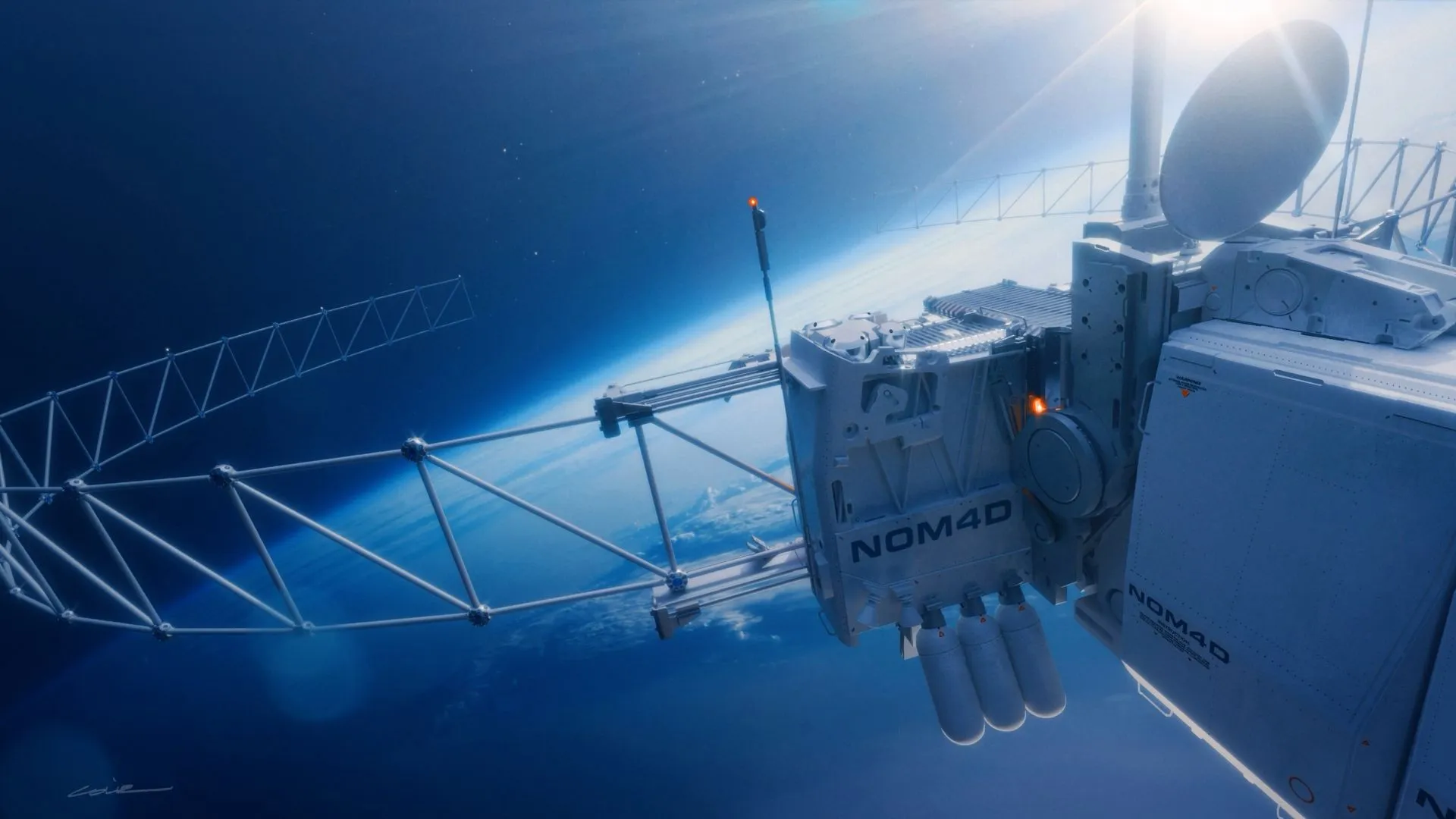
Caltech researchers have developed a robotic system that has successfully built a structure in space without human intervention for the first time.
The autonomous truss builder uses a robotic manipulator to collect structural struts and joints from nearby dispensers and assemble them into identical sections.
The technology was developed as part of the Defense Advanced Research Projects Agency’s (DARPA) Novel Orbital and Moon Manufacturing, Materials, and Mass-efficient Design (NOM4D) program.
According to the team, the demonstration marks a step toward enabling robots to autonomously construct large structures in space without requiring astronauts.
The robotic system is capable of assembling a structure in space without direct assistance from astronauts. The autonomous builder constructed a section of a truss structure in low Earth orbit, marking the first demonstration of its kind.
Called Autonomous In-Space Tensioned Reflector Assembly (ASTRA), the technology uses a robotic manipulator to collect structural components from onboard dispensers and repeatedly assemble sections, known as bays, of a perimeter truss. Its components include composite fiber tubes, aluminum joints, and a reflective surface made from a perforated Kapton film.
The system is intended to construct a 1.4-meter-diameter (4.6-foot-diameter) reflector antenna. Although the demonstration did not complete the entire antenna, it successfully assembled a third truss bay in orbit, establishing the feasibility of the autonomous construction approach.
ASTRA combines a robotic arm, motorized component dispensers, an assembly plate, and an onboard computer within a payload approximately 1 cubic meter (35 cubic feet) in size.
’s Vigoride 7 orbital vehicle. The vehicle carried ASTRA as one of 10 payloads on SpaceX’s Transporter-16 mission.
Source link