Chinese automaker BYD has unveiled the design of its first self-developed humanoid robot, marking a broader push into embodied AI and robotics that could eventually see the company deploy autonomous machines across its factories and dealerships.
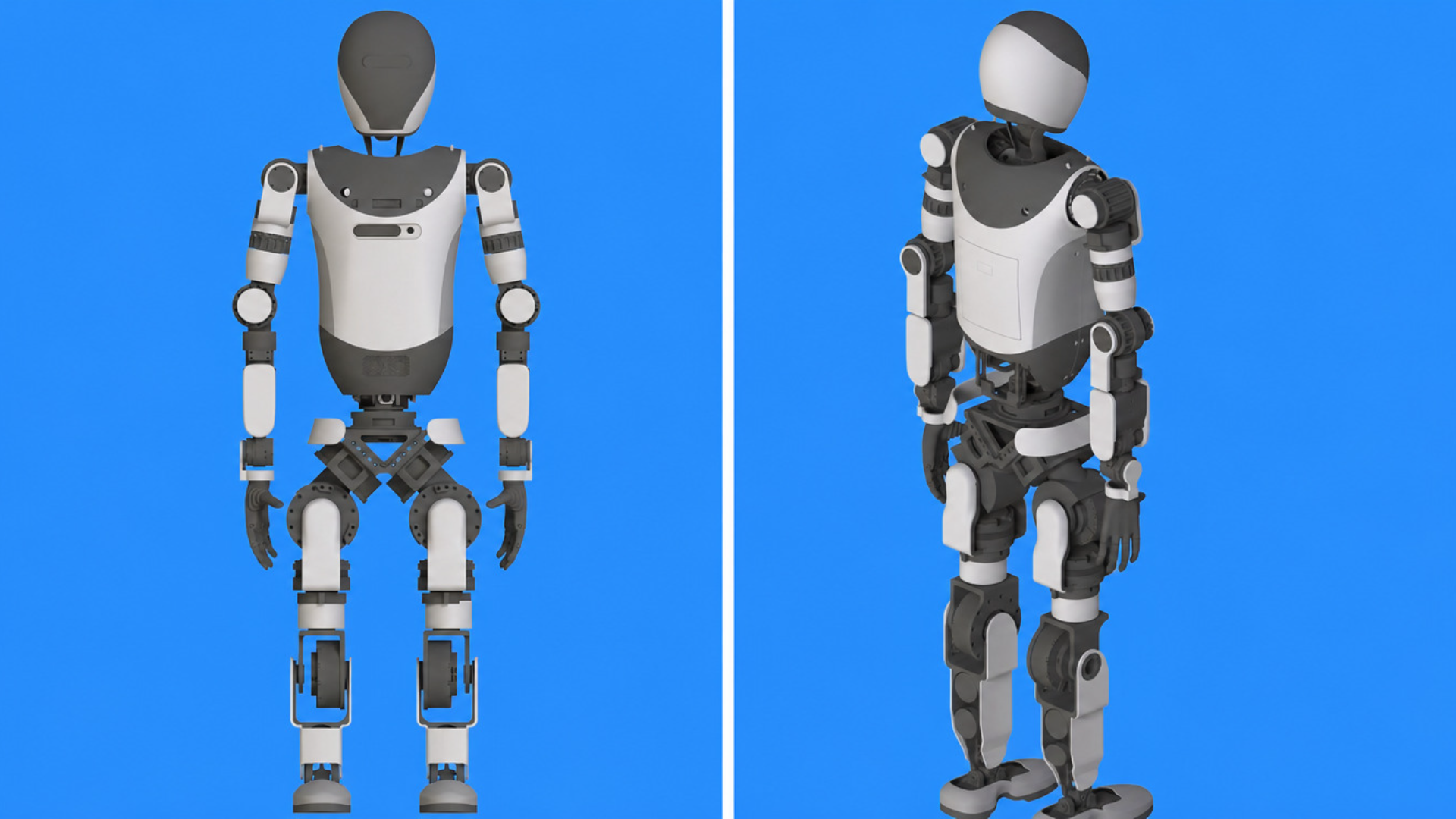
The design appeared in a patent published by China’s National Intellectual Property Administration, describing a robot designed to walk, maintain balance and interact with its surroundings.
The patent points to potential applications in service, education and industrial environments. Although the design resembles BYD’s previously teased humanoid robot, known as Xiao Di, the company has not confirmed whether the patent depicts the final production model.
The newly revealed design features a black-and-white body, a rounded head without a display and articulated joints across its torso, arms and legs. Its human-like proportions suggest a platform intended to operate in environments designed for people, rather than a robot restricted to a dedicated industrial workspace.
Previously disclosed specifications for the Xiao Di concept put its height at approximately 5 feet 3 inches and its weight at around 129 pounds (58 kg). The robot is reported to have 31 degrees of freedom, allowing movement across multiple joints, and a dexterous hand with repeatable positioning accuracy of approximately 0.04 inches.
These features could support tasks such as picking up objects, making gestures and pointing out information to people. However, the published design does not establish how reliably the robot can perform these tasks in real-world conditions, or whether the specifications will carry over to a production model.
As automakers and technology companies invest in embodied AI , which combines AI with physical systems that can sense and interact with the real world, humanoid robots face a more complex challenge than software-based AI.
Source link