Air Chief Marshal Harv Smyth says technological advances will reduce need for human involvement in warfare
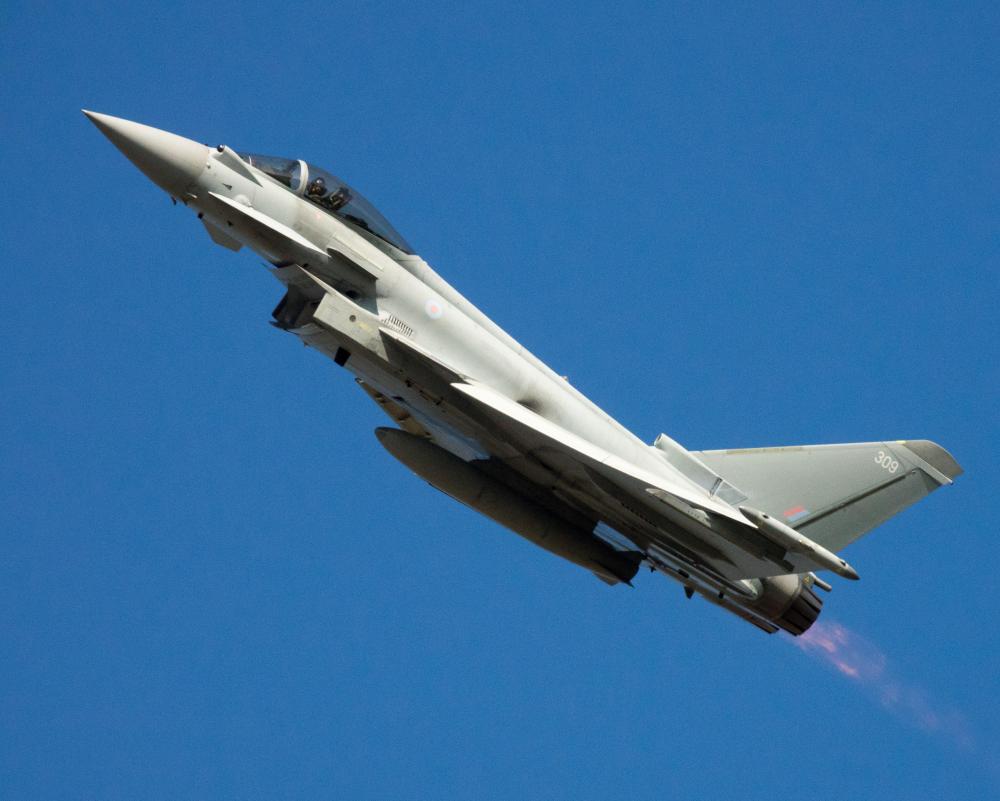
A future Royal Air Force will rely on “autonomy not flesh”, its chief said on Monday as he described plans in which Typhoon fighters are accompanied by four AI-enabled drones capable of patrolling hundreds of miles in the distance.
The technological shift would revolutionise warfare, limit the role of military personnel “towards the outside” and ease the pressure on recruitment, Air Chief Marshal Harv Smyth said in a speech in London.
The senior military officer was setting out a strategy for the RAF, which has been told it must be ready to fight against Russia by 2030, at a time when the use of artificial intelligence by the US, Israel, Russia and Ukraine has made warfare more deadly.
“AI will enable warfare that speeds well beyond human comprehension, meaning that our role will shift towards the outside, and it will shift towards controlling the activity and setting the guardrails,” Smyth said.
The aim, he added, was to mirror the Anglo-American second world war model of “steel, not flesh” – relying on tanks and combat aircraft rather than infantry – to avoid the bloody trench warfare that had led to millions of deaths in the first world war.
“Given today’s changing character of war, I would argue strongly that the modern paradigm must now become autonomy, not flesh,” the chief of air staff said in a lecture at the Royal United Services Institute.
Few examples were given about the future use of AI by the air force, but Smyth did point to the £300m Storm Fighter programme of “loyal wingman” drones announced in July as part of the delayed defence investment plan .
Source link