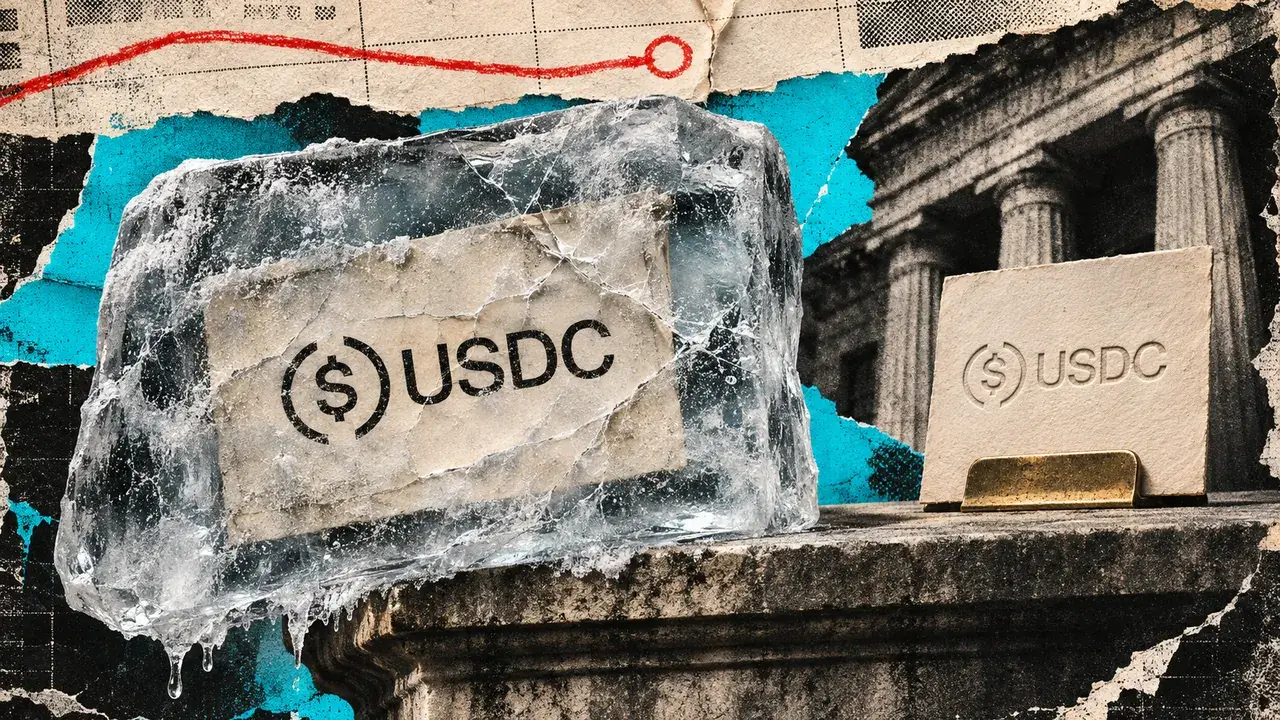
Circle has agreed to issue replacement USDC if a court approves forfeiture, allowing authorities to recover stolen funds while the original tokens remain frozen.
US prosecutors are seeking more than $1.1 billion in USDC stolen during the October Binance hack without accessing the attackers' wallets.
The Justice Department filed a civil forfeiture complaint in Washington, D.C., on Nov. 23, targeting frozen USDC associated with 36 wallet and smart-contract addresses across 18 blockchains.
Under the proposed recovery arrangement, stablecoin issuer Circle would create an equivalent amount of new USDC and transfer it to the US government if the court approves the forfeiture.
The original tokens would remain frozen in addresses allegedly controlled by the hackers.
Circle had already blocked approximately $1.1 billion in USDC following the Oct. 29 attack, which US authorities attributed to North Korea's Lazarus Group.
However, the company cannot directly transfer the frozen tokens because it does not control the private keys associated with the attackers' wallets.
Instead, its ability to block transfers and issue replacement tokens provides prosecutors with a mechanism to recover the value of stolen assets without obtaining the underlying wallets.
The proposed transfer would use new USDC equal to the blocked amount.
The two tracks distinguish Circle’s existing transfer restriction from the conditional substitute issuance described in paragraph 34 of the federal complaint. No figures are calculated.
Meanwhile, prosecutors are seeking a further restraining order to keep the stolen USDC immobilized while the forfeiture case proceeds.
Thanks for signing up to The Catalyst. Look out for your first daily email.
Source link