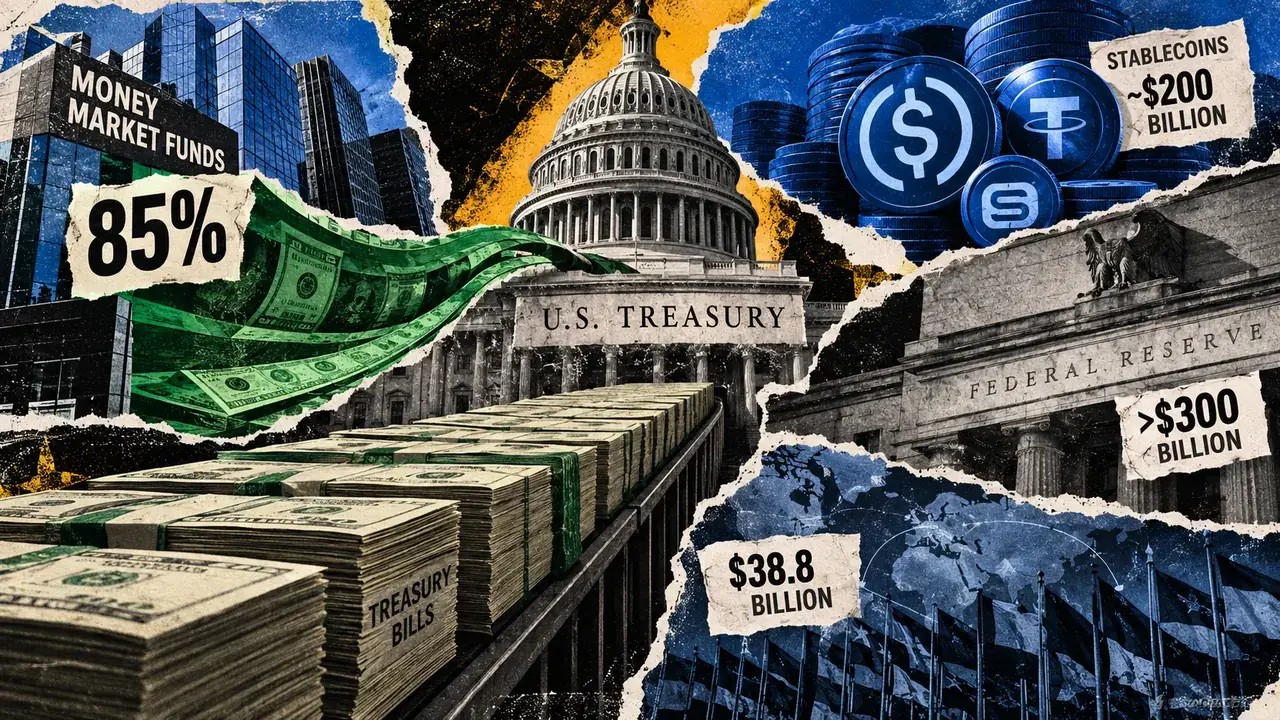
Money-market mutual funds absorbed approximately 85% of the US government's latest Treasury-bill surge, giving traditional cash managers the clearest claim to the marginal demand behind the summer issuance wave.
The Treasury Department said net bill supply grew by more than $550 billion in July and August, an increase of about 8% in two months. Money funds took down most of that additional supply, according to remarks delivered Sept. 22 by Deputy Treasury Secretary Francis Brooke.
Stablecoin providers remain important holders of short-dated government debt. Treasury puts their holdings at nearly $200 billion. Yet that number measures a stock of Treasury bills and other close-to-maturity securities, while the money-fund figure measures purchases associated with a specific two-month supply increase. The categories can also overlap because stablecoin reserves may be invested through government money-market funds and repurchase agreements.
The result is a more precise picture of crypto's role in government finance. Stablecoins are already material Treasury-linked investors and could become a larger source of demand as regulation takes shape. The documented incremental buying in 2026, however, has come primarily from money funds and the Federal Reserve, with foreign investors returning in July.
Four figures frame the market, but they use different clocks and measure different things. They are context for one another, not amounts that can be added into a single buyer total.
Treasury's 85% estimate directly addresses the latest increase in supply. It applies to the additional bills issued during July and August rather than the entire bill market. The remaining share was not allocated among other buyers in the speech.
Source link