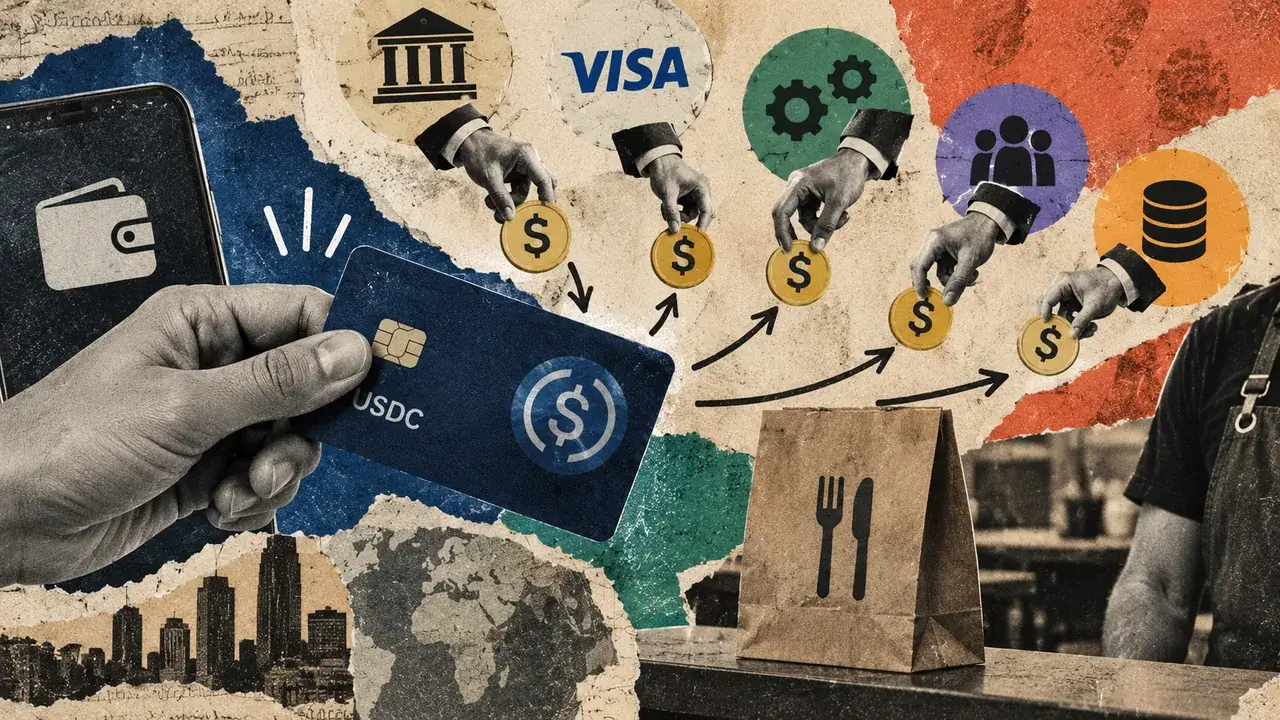
Every stablecoin card purchase sends money through a chain of businesses most customers never see.
Someone paying for lunch with a stablecoin card doesn't need the restaurant to know what USDC is. The card works like any other at the terminal, with the customer's digital dollar balance funding the purchase while the merchant receives regular dollars through its usual payment provider.
Visa enables this arrangement through its partnership with Bridge, which allows customers in Colombia to spend stablecoins while merchants receive Colombian pesos.
Bridge handles the conversion, so neither the restaurant nor its payment provider needs to accept cryptocurrency, letting customers spend stablecoins without first withdrawing them to a bank account.
On Oct. 1, Visa reported more than 160 stablecoin-linked card programs, with payment volume up nearly 200% from the previous year, creating a growing business for companies such as Bridge, Wirex, and Rain that provide the infrastructure behind those cards.
Much of their revenue comes from payment fees, with additional opportunities in currency conversion, settlement financing, and customer subscriptions. The new funding source hasn't removed the traditional costs of running a card program, which still need to be covered every time someone makes a purchase.
The name printed on a stablecoin card rarely identifies every company involved in processing the payment.
The consumer app manages the customer relationship, the regulated issuer provides the card, the payment network connects participating institutions, and the merchant's provider handles acceptance, with conversion or settlement services sometimes supplied by another business.
Those responsibilities can overlap, but funding the purchase with USDC doesn't eliminate them, and each participant needs enough revenue to cover its part of the transaction.
Source link