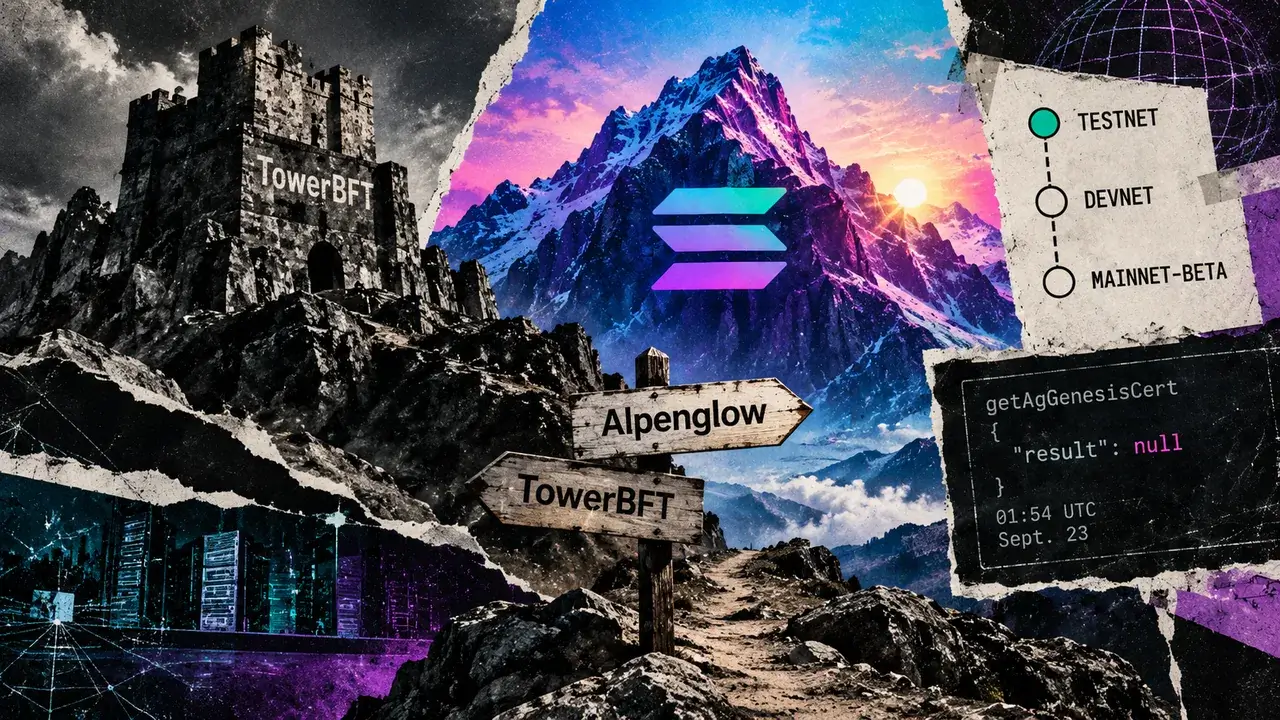
Solana has begun rolling out Alpenglow on testnet, moving its planned blockchain consensus overhaul into a public testing environment.
The upgrade targets finality of about 150 milliseconds, down from roughly 12.8 seconds under TowerBFT, the system Solana validators currently use to agree on blocks. Alpenglow replaces that consensus layer while leaving the Solana Virtual Machine, transactions, programs, and fees unchanged.
Its first phase introduces Votor, which replaces the vote transactions validators currently put onchain with votes sent directly between validators. Those votes are combined into certificates that can finalize a block within one or two voting rounds, cutting the wait for an irreversible transaction by about 99%.
Anza, the developer behind Solana’s Agave validator software, said that testnet was entering the rollout process, ahead of deployments on devnet and eventually mainnet-beta. The migration builds on months of preparation across validators and infrastructure providers, which must adjust systems that stream blocks, track votes, or rely on Solana’s existing commitment structure.
Alpenglow will later add Rotor, a replacement for Turbine, Solana’s system for distributing block data across the network. Rotor is scheduled separately, leaving Votor and faster finality as the rollout's immediate focus.
The consensus overhaul follows another wave of performance upgrades. Solana activated Transaction V1 this month, lifting maximum transaction size to 4,096 bytes from 1,232, while its slot-time roadmap has progressively cut the target from 400 milliseconds toward 200 milliseconds.
The technical push is arriving alongside a recovery in SOL and expanding activity across several parts of the ecosystem.
Source link