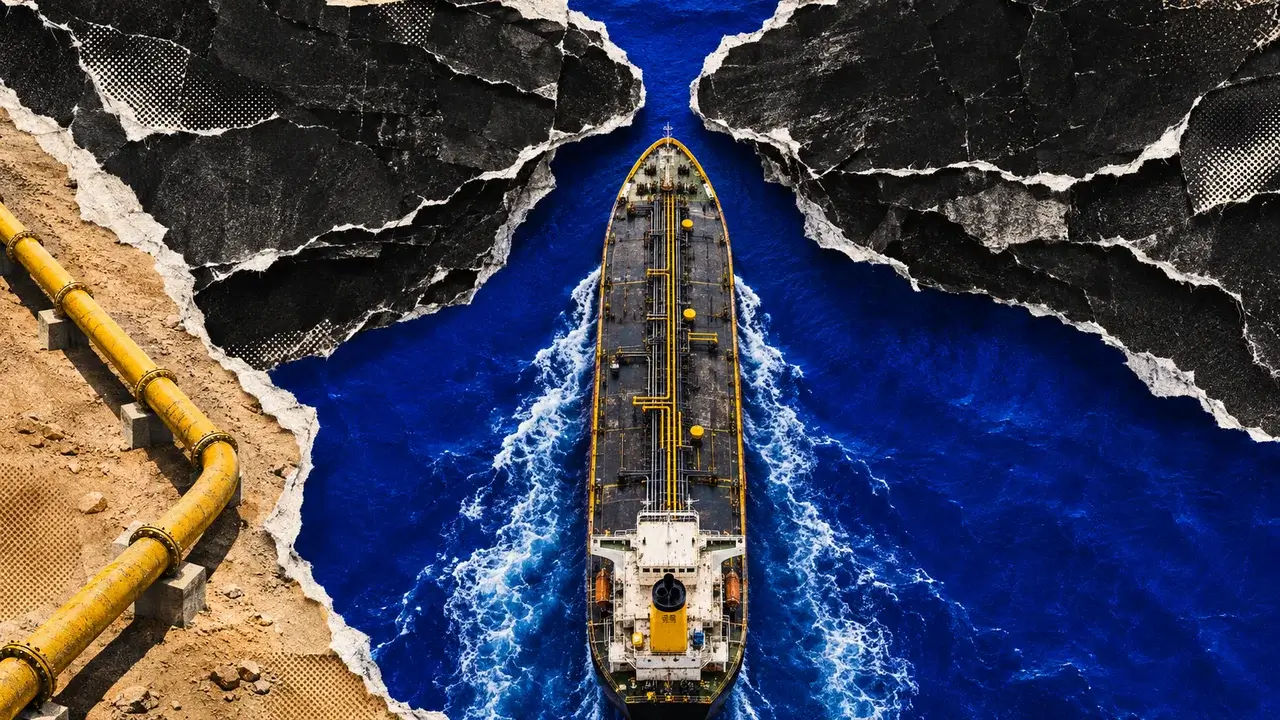
Kuwait was pumping 650,000 barrels a day below its October target, but permission to produce more oil only goes so far when tankers have trouble getting it out.
Saudi Arabia can send oil from its eastern fields to an overseas customer without putting a tanker through the Strait of Hormuz, the narrow passage connecting the Persian Gulf to the open sea. The crude travels by pipeline across the country to Yanbu, a port on the Red Sea, where a ship collects it.
Kuwait, just up the Gulf from those Saudi fields, loads its regular overseas cargoes inside the Gulf, so its tankers have to pass through Hormuz to reach customers beyond it. For a buyer choosing between the two suppliers, that difference can determine how easily an order gets delivered.
Both countries belong to OPEC+, the alliance of oil producers that includes Russia and agrees on how much its members should pump.
Whenever the group meets, an increase in production allowances leads to a pretty straightforward calculation: if you give a country permission to pump another 100,000 barrels a day, buyers should have another 100,000 barrels available to buy.
However, last month's numbers from Kuwait show it's not always such a straightforward case.
The International Energy Agency (IEA) estimated Kuwaiti production at 2.03 million barrels a day against an implied target of 2.68 million, leaving it 650,000 below its allowance. Iraq, another member exporting through Gulf ports, pumped 4.6 million against a target of 4.43 million, putting it 170,000 above.
Source link