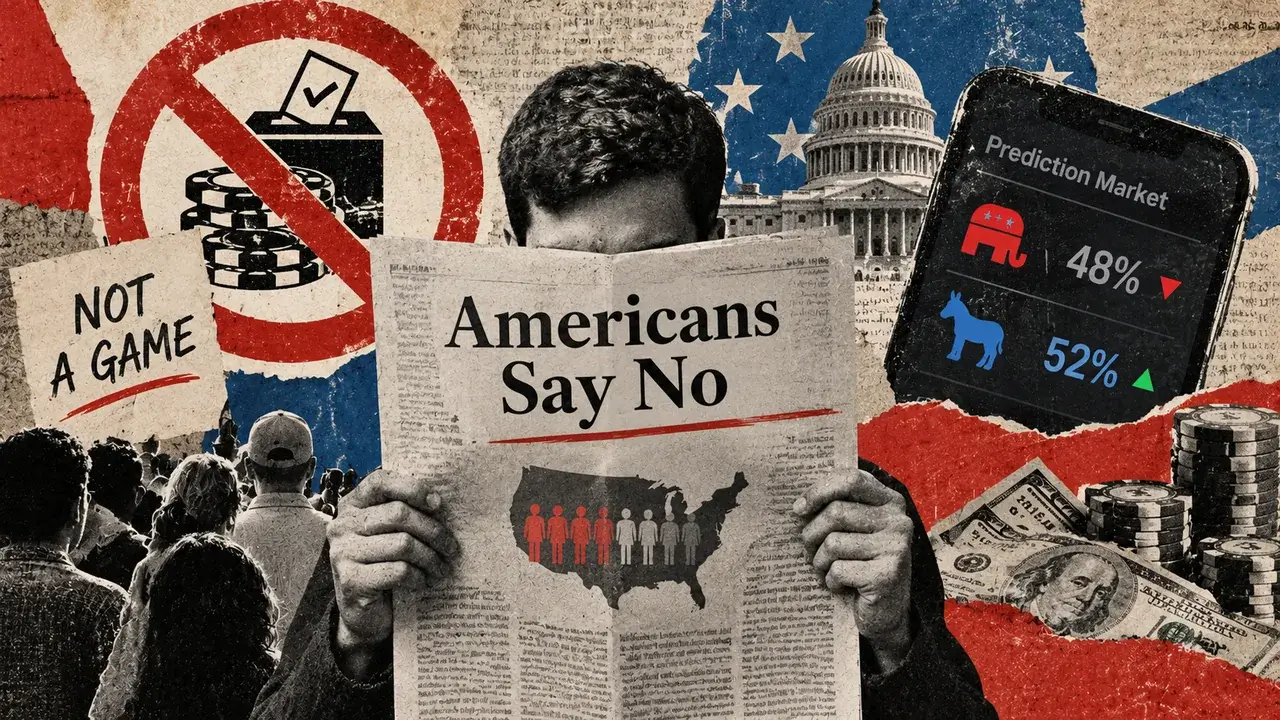
Prediction markets have found an audience for their numbers without securing universal approval for their bets.
Prediction markets want you to see them (and use them) as one of the best possible instruments for finding out what’s happening in the world.
Open any election market, and you’re immediately given a probability that shifts in real time as people trade. It’s a single number, easy to check in a few seconds, that condenses something as uncertain and volatile as an election campaign into a number that essentially tells you the likely outcome.
That clarity is their main appeal, and it explains why so many people now treat these markets as a running scoreboard for the race.
The catch is that the number exists only because many strangers are wagering on who will govern you, a premise plenty of Americans now find pretty distasteful.
A recent Ipsos poll Reuters published found that 69% of Democrats and 61% of Republicans opposed using prediction markets to bet on election results. They also opposed using prediction markets to bet on other things, like military actions and government policy decisions.
The survey interviewed 4,506 US adults from Sept. 30 to Oct. 5 and measured approval of betting, so those answers don't show whether people trust the forecasts or which objections drove their views.
The results complicate the industry's favorite defense, which is that they produce better information. While accuracy is prediction markets' strongest card, it does nothing for the separate question of whether the bets behind those numbers should exist at all.
Source link