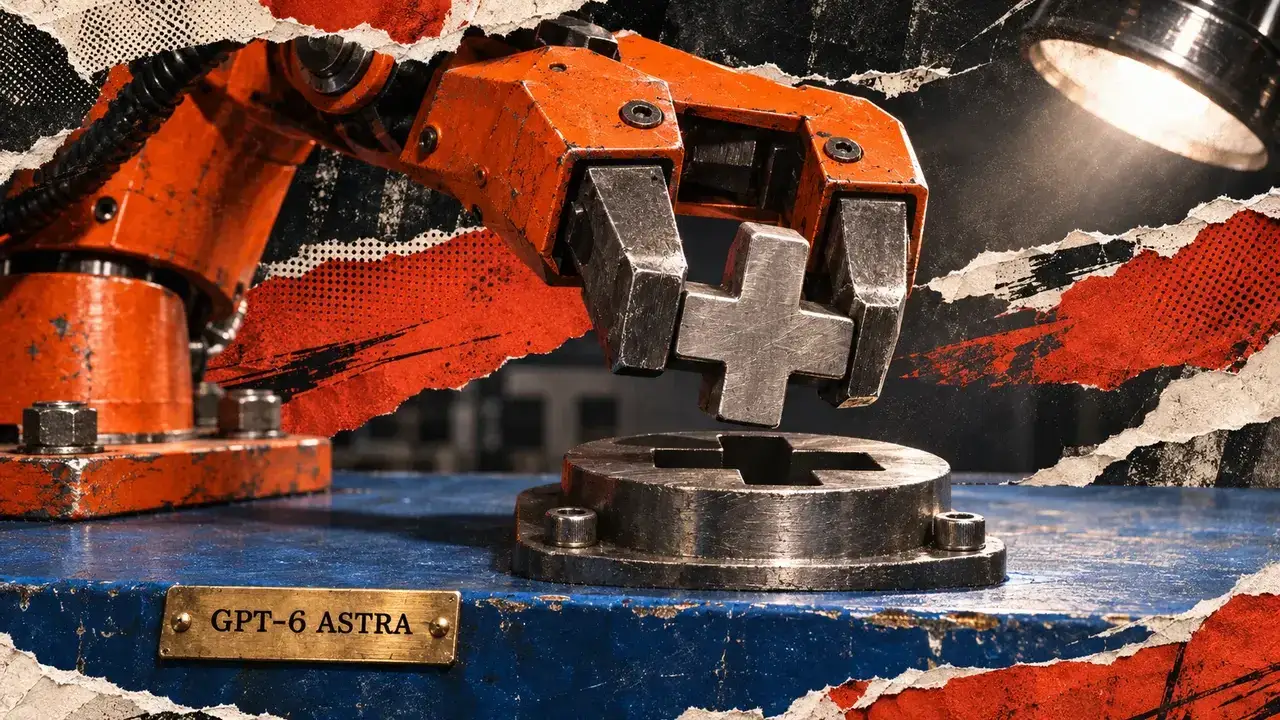
Astra recovered from 57.7% of failed actions across 12 robot benchmarks. It was much better at recovering a grasp than lining up parts.
GPT-6 Astra recovered from nearly two-thirds of grasp failures when it directly controlled robots in a new study. It got past roughly one in three failures to line up parts or to make a tool produce the intended effect through contact.
Researchers from Carnegie Mellon University, the University of Illinois Urbana-Champaign and Bosch Research co-authored the AgentRoboCritic preprint, submitted Nov. 19. The team collected new runs on seven robot manipulation benchmarks and reanalyzed previously released GPT-6 Astra runs on five more.
The model recovered from 7,024 of the 12,163 failed actions the researchers analyzed, or 57.7%, by the end of the trials in which those failures occurred. The sample came from 1,989 officially scored trials with at least one annotated failure. One benchmark, RoboDojo, supplied 9,923 of the failed actions, giving it the most weight in the pooled rate.
After a missed grab, researchers counted a recovery when a later grasp visibly lifted the object. A workaround counted too. In one trial, Astra failed to grasp a ball inside a cup, then lifted the cup with the ball still inside to prepare for a pour. Both kinds of recovery counted even if the trial ended in failure.
7% when a robot failed to pick up or hold an object. 6% when a tool failed to produce the intended physical change. In two benchmark settings where the model used vision alone, alignment was the most common failure.
Source link