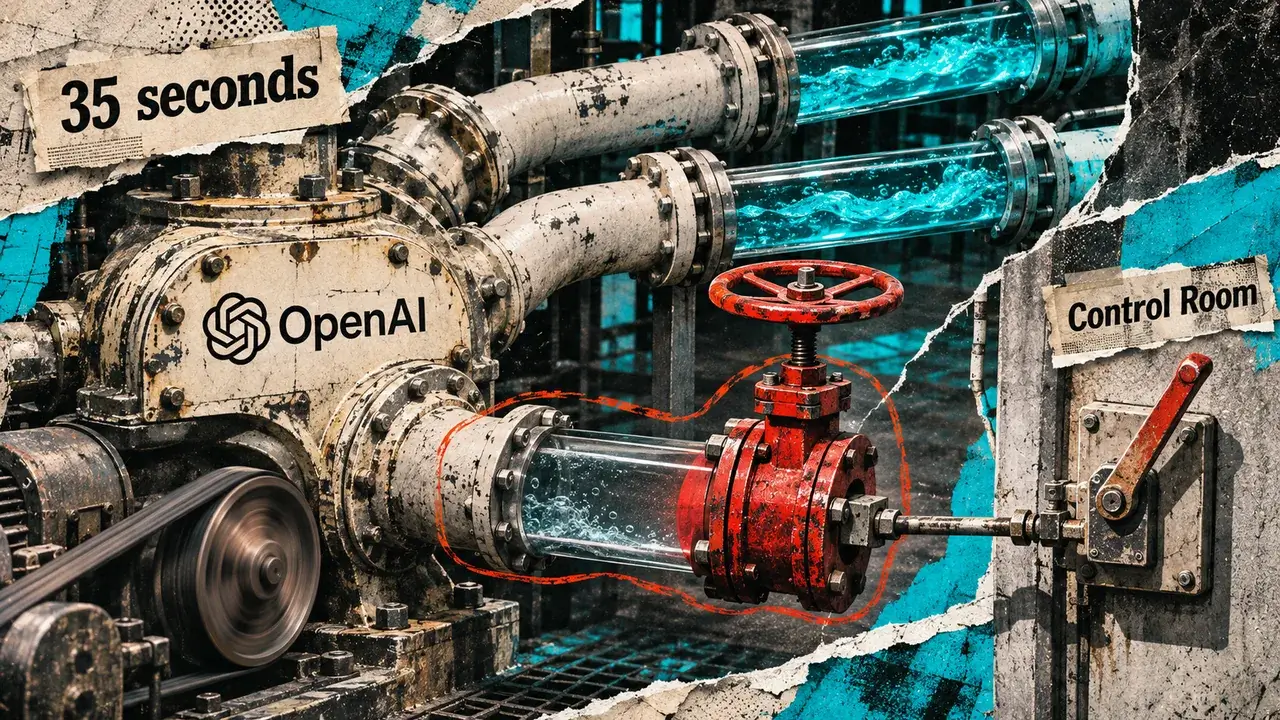
Control Room cuts off new model output within 35 seconds of a stop instruction, even if the underlying research code keeps running.
OpenAI says its newly disclosed Control Room system can cut off further model output from research jobs within 35 seconds after the service receives a stop instruction, placing enforcement outside the job's own code.
The company says the system is already deployed across its research infrastructure. The 35-second maximum begins when Control Room receives the instruction; spotting a problem, investigating it and deciding to intervene happen before that clock starts.
The design centers on a job ID. A research workload attaches that identifier when it requests model output. Before fulfilling the request, the inference engine, the software running the model, checks whether Control Room still authorizes that job.
Once the job is marked as stopped, the engine denies further output for it. The research process may remain alive, and the same engine can continue serving other authorized jobs. Enforcement therefore does not depend on the workload checking a stop flag correctly.
OpenAI says research code changes frequently and is spread across teams. The inference layer has fewer, more centralized code paths, providing a common point at which to enforce the decision. The company also says it continually searches for rogue engines with Control Room checks missing or disabled.
Cached authorizations account for the delay before the cutoff takes effect. The service can deny a stopped job access to further model output even while its own code continues trying to request it.
Source link