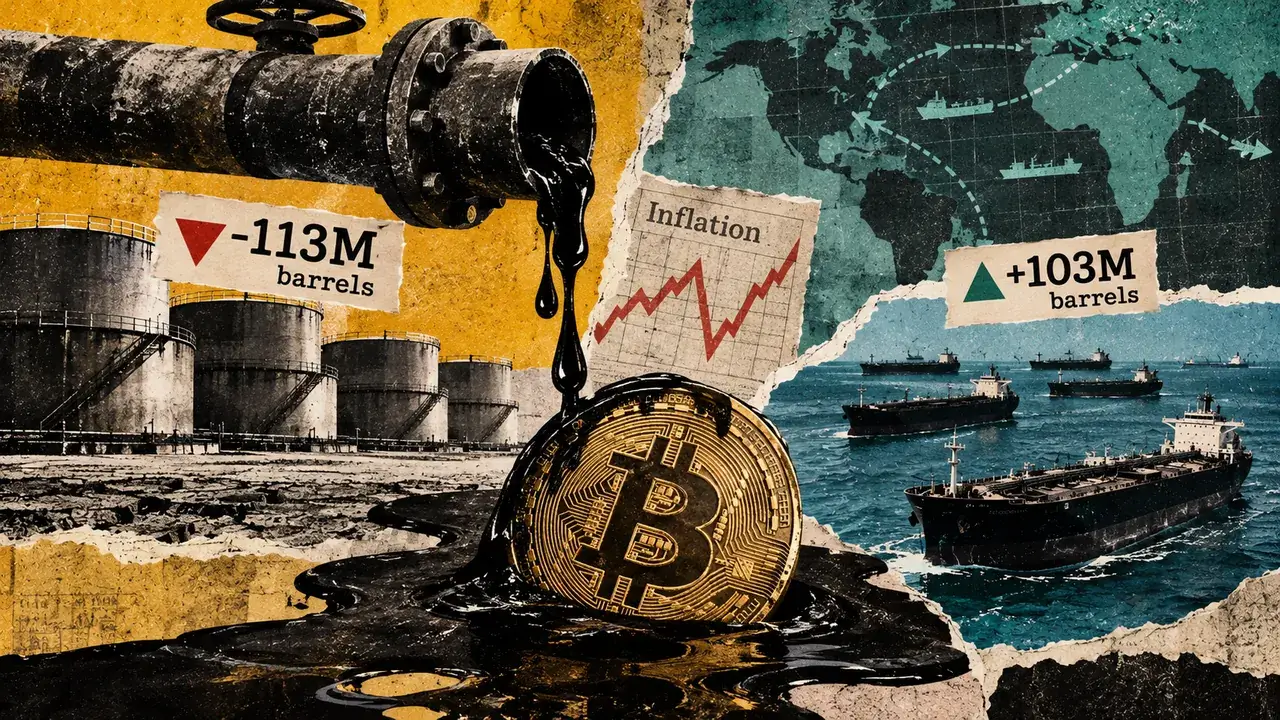
The IEA’s September estimates show oil accumulating at sea while land-based buffers shrink, leaving inflation and financing relief uncertain.
Global onshore oil inventories fell by an estimated 113 million barrels in September, according to the International Energy Agency’s October 14 report. A buildup at sea offset most of that draw, leaving the prospects for energy-led inflation relief uncertain for Bitcoin investors.
Global observed inventories fell just 10 million barrels because oil on water increased by 103 million barrels. The small net decline therefore concealed a much larger loss from onshore buffers.
The IEA linked the waterborne buildup to recovering Gulf exports. Gulf crude shipments reached 13.9 million barrels a day in September, more than 75% of pre-war levels. Oil afloat remains part of global inventory.
Recovering exports are a route toward relief, but storage and delivery still matter. The IEA put end-September onshore stocks near their lowest levels since at least 2016. It also said record tanker rates raised crude delivery costs and squeezed refinery margins in Europe and Asia.
The Federal Reserve’s October 14 Beige Book described the transmission into business costs. Contacts reported elevated diesel prices and fuel surcharges passing increased costs through supply chains. Those observations were collected on or before October 5. Consumer-facing firms also reported resistance to price increases and squeezed margins, limiting their ability to pass costs on.
Source link