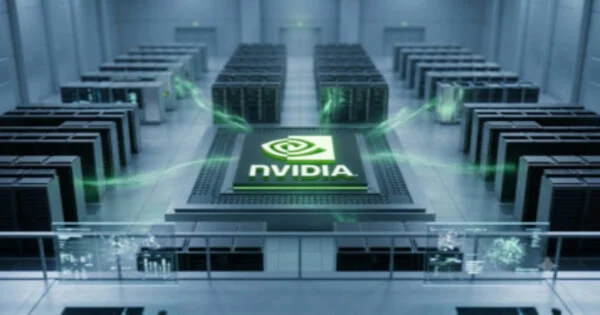
NVIDIA outlined how KvikIO and cuFile route Python reads into GPU memory and how to verify whether GPUDirect Storage used nvfs or posix.
NVIDIA published a technical guide on October 22, 2026 explaining how Python applications can read data directly into GPU memory with Magnum IO GPUDirect Storage, and how to verify whether a read used the accelerated path or a CPU-staged fallback. The post says the distinction matters because KvikIO and cuFile make separate routing decisions before a request reaches storage.
According to NVIDIA, GPUDirect Storage creates a direct data path between supported storage and GPU memory, avoiding unnecessary staging through CPU memory and reducing overall CPU utilization. In the Python stack described in the post, KvikIO sits above cuFile: KvikIO decides whether to call cuFile at all, while cuFile decides whether the request uses the accelerated nvidia-fs path or a compatibility path that stages data through host memory.
The company says reaching the cuFile API alone does not prove the accelerated path was used. That distinction is central to the tutorial, which shows how to inspect KvikIO defaults, confirm GDS components with gdscheck.py, and then use gds_stats to determine whether operations were counted under nvfs or posix.
18. The setup also used a local NVMe device formatted with ext4, a PIX connection between the GPU and the NVMe device, IOMMU and ACS disabled, and the nvidia-fs kernel module loaded to provide the accelerated path.
Source link