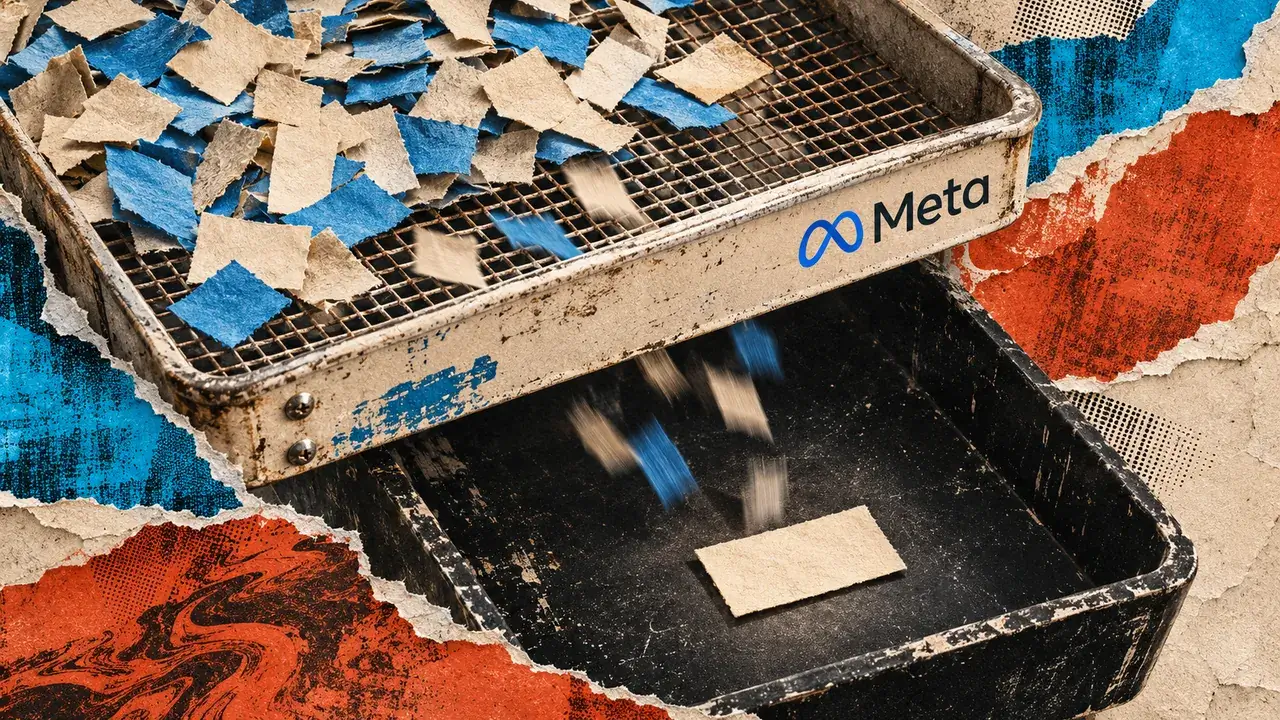
The automated engineering campaign consumed 360,000 GPU-hours and exposed the trade-offs between AI-driven optimization and user experience.
Meta researchers deployed AI agents to run 1,097 machine-learning experiments in 31 days, consuming approximately 360,000 GPU-hours to improve search activity by 0.23%.
The experiment, detailed in a Nov. 18 research paper, demonstrated how autonomous AI systems can develop and test improvements to large-scale recommendation models with limited human intervention.
However, the resulting model also slowed the rendering of Meta's search interface, exposing a trade-off between automated performance improvements and the resources required to achieve them.
The researchers developed a system that lets AI agents propose changes to machine-learning models, modify their code, train new versions, and evaluate performance.
The experiment targeted Meta's search-suggestion system, which determines the recommendations users see when opening the search bar before typing a query.
Traditionally, improving such systems requires engineers to identify potential changes, implement them and assess their performance through repeated training and testing.
Meta's approach automated much of that process, allowing agents to conduct multiple experiments simultaneously while engineers retained control over research priorities and final deployment decisions.
The system used Anthropic's Claude Opus 4.8 to explore architectural improvements and generate candidate changes. Across 31 days, the agents completed 1,097 candidate experiments and accepted 325, representing a 29.6% acceptance rate.
Agents screened candidates offline. Meta’s engineers reviewed the combined model before testing it on live traffic.
The combined model drew more search sessions, and the search interface took longer to render.
Source link