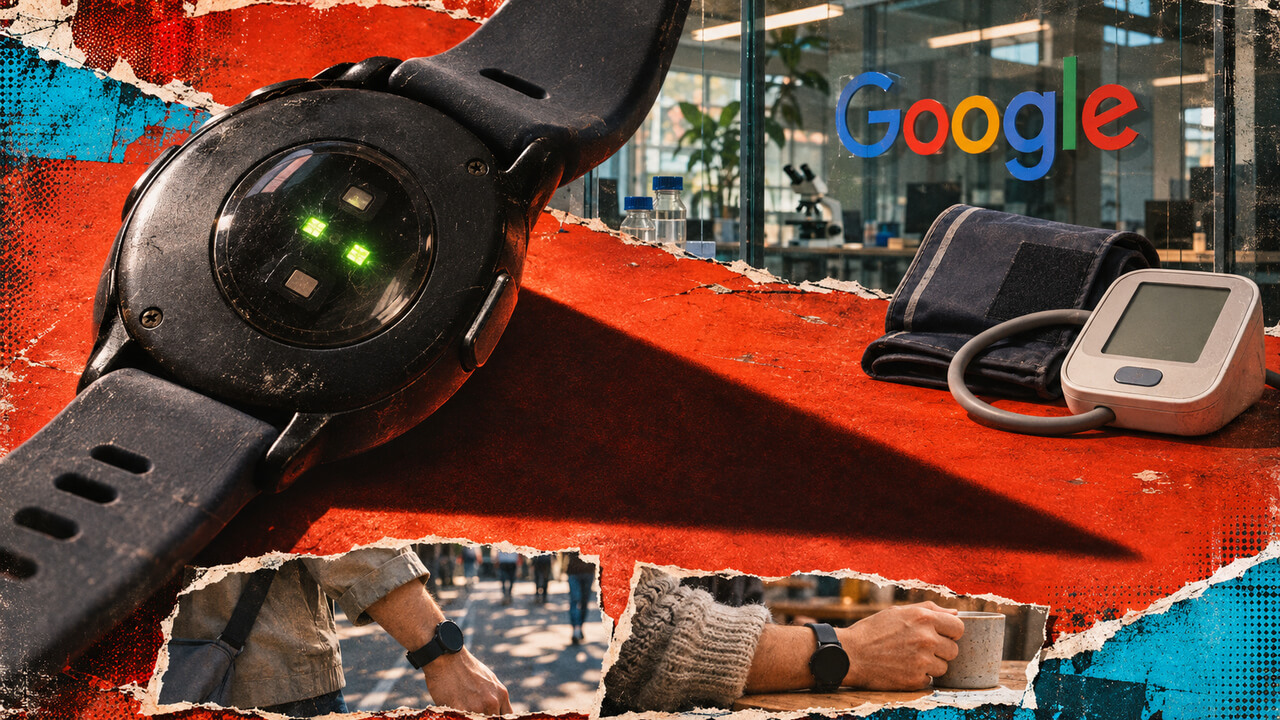
Google's smartwatch AI detected 65.8% of hypertension cases in a study, pointing to cuff-free screening using everyday sensor data.
Google researchers and medical collaborators have used ordinary smartwatch signals to flag possible high blood pressure without calibrating the watch against an arm cuff.
A study published in Nature on Nov. 5 suggests a way to prompt clinical checks during everyday wear, although the system missed about 33% of hypertension cases.
The AI identified 65.8% of participants with hypertension according to a clinical reference test (sensitivity), while it correctly screened 90% of those without the condition as negative (specificity).
The prospective, multicenter study followed 196 participants through seven days of smartwatch monitoring and compared results with 24-hour ambulatory blood-pressure monitoring. Participants had no known cardiovascular disease and were not taking blood-pressure medication, limiting how far the findings extend to people already receiving treatment.
The 95% confidence intervals were 54% to 76.3% for sensitivity and 83.2% to 94.7% for specificity.
The research system turns seven days of pulse and motion data into a screening score. Its detection rate leaves a substantial blind spot.
Of participants with hypertension on 24-hour ambulatory monitoring, 65.8% were detected and 34.2% were missed.
Of participants without hypertension on the reference test, 90.0% screened negative and 10.0% produced false alerts.
Screening can flag a reason for a clinical check; a negative result cannot exclude hypertension.
196 participants in a selected, risk-enriched cohort, without known cardiovascular disease or antihypertensive medication. Bars show conditional study rates, not predictive values for all smartwatch users.
Source link