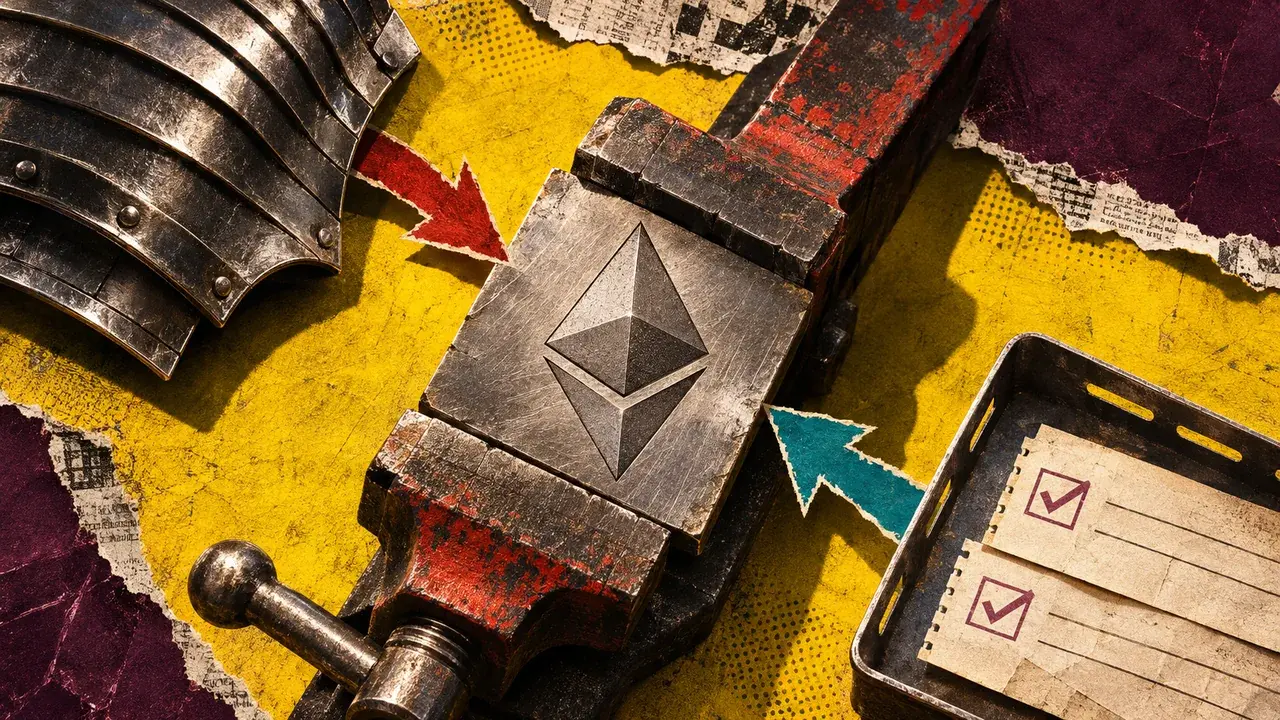
Ethereum developers weigh how to deliver transaction censorship protections alongside work on quantum-resistant consensus.
Ethereum’s core developers kept a proposal to curb transaction censorship on the schedule for an upgrade called Hegotá at their Nov. 26 meeting.
They deferred a final decision while client teams considered whether the work could run alongside efforts to make the network’s consensus system resistant to quantum attacks.
The proposal, known as FOCIL, remains Hegotá’s lead consensus change. The All Core Devs call record puts the next review of the fork’s scope around Dec. 10.
Under draft EIP-7805, a committee of validators would broadcast lists of transactions waiting in the public queue. Validators that vote on the next block would check the lists they received before a cutoff.
If a builder leaves out a listed transaction that is still valid at the end of the block and fits in the remaining gas, those validators would withhold their votes. They would ignore lists from a committee member they saw send conflicting versions.
For someone whose eligible transaction makes a timely list, a builder’s decision to leave it out could cost that block its votes.
EthPandaOps’ October Heze devnet plan carried forward tests of list propagation, timing, and how inclusion lists interact with the separation of block builders and proposers.
The team kept Frame Transactions, another Hegotá proposal, on a separate test track. The proposed Bogotá devnet would focus on execution-layer testing while teams wait for a decision before running a combined test.
FOCIL co-author Jihoon Song argues that developers and testers can move inclusion lists toward release while researchers work on post-quantum decoupled consensus, a redesign of how Ethereum agrees on blocks .
Source link