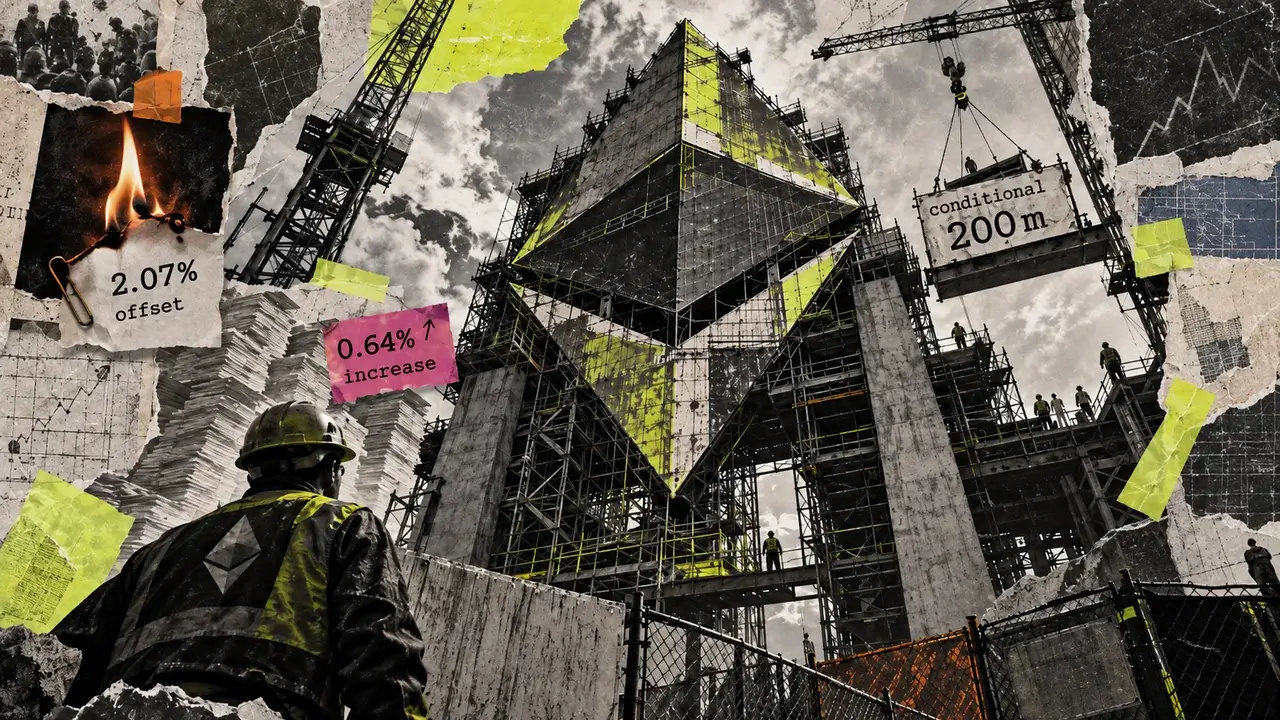
Ethereum's transaction fees have burned enough ETH to offset just 2.07% of the new coins issued in 2026, according to an Oct. 9 supply ledger.
After fee burn, validator penalties, and other destruction, the network has added approximately 778,413 ETH, increasing supply by about 0.64% from the window's opening level.
A larger gas limit can spread the necessary fee spending across more activity, lowering the required fee per gas and creating a hurdle for holders that expect scalability to make ETH scarcer. Developers pursue a conditional 200 million maximum gas goal after the Glamsterdam upgrade.
Using one current finalized accounting sample, an illustration puts the execution base fee needed to offset gross issuance at about 13.85 gwei with today's 60 million gas limit, or 4.16 gwei with a hypothetical 200 million limit.
Both require roughly 2,992 ETH of daily burn under the model's assumptions.
The ethsupply.fyi retained ledger covers Jan. 1 at 00:00:11 UTC through Oct. 9 at 15:44:23 UTC. It reports 796,623.377 ETH of gross issuance against 16,524.553 ETH destroyed through execution and blob transaction fees.
A further 1,685.919 ETH was removed through consensus penalties, with 0.059 ETH in other execution destruction. Subtracting these components leaves 778,412.846 ETH in net additions.
Those categories explain why the fee-burn offset is 2.074%, while the offset from all destruction is 2.286%. The latter includes penalties that do not represent customers paying for Ethereum activity. Treating the larger figure as transaction-fee demand would overstate how much issuance users have offset.
The provider's methodology separates newly created validator rewards from execution base fees, blob fees, penalties, and rare destruction through SELFDESTRUCT.
Source link