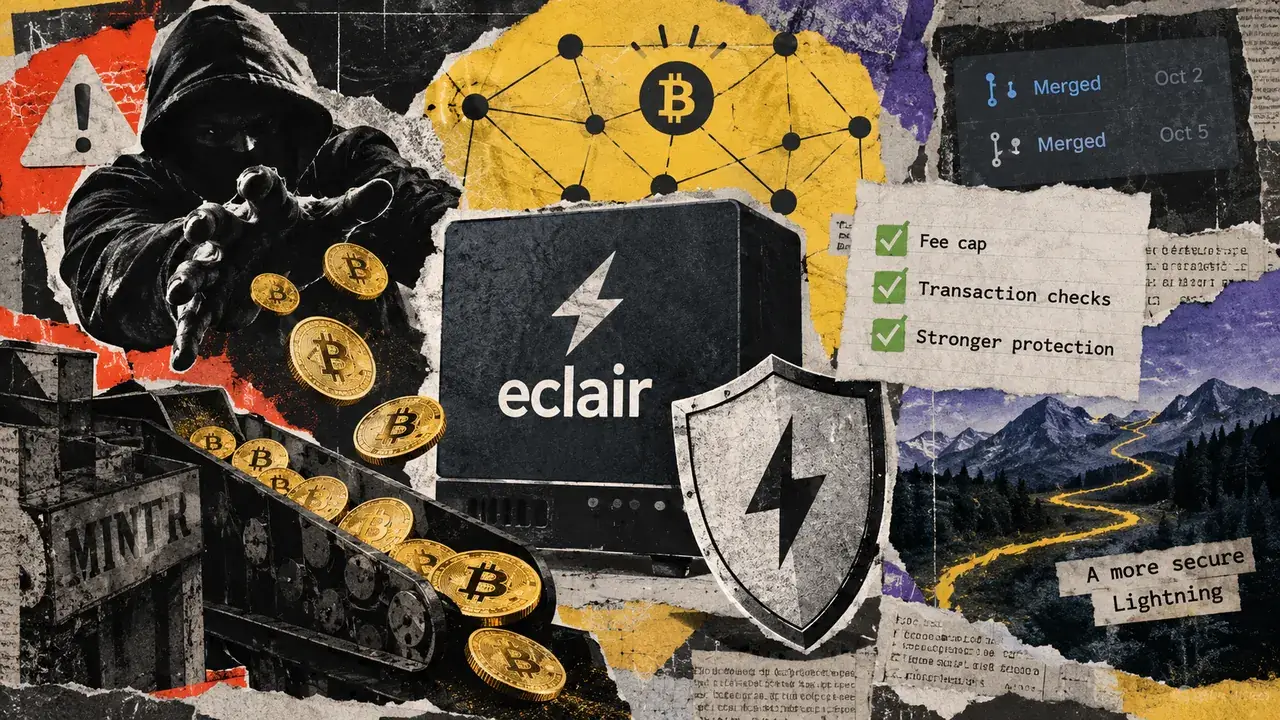
Eclair, ACINQ's Lightning node software, has merged two repairs for gaps that could make a node lose Bitcoin through excessive mining fees during channel funding and splicing. One limits a peer's fee-bump demands when Eclair contributes funds; the other checks transactions from a compromised Bitcoin backend while Eclair retains the signing keys.
The repairs merged into the project's master branch on Oct. 2 and Oct. 5. As of Oct. 12, its release page still listed September's v0.14.3 as latest. The two October fixes postdate that packaged release.
Bitcoin Optech's Oct. 9 newsletter highlighted both changes as closing protection gaps during dual funding and splicing.
The first repair, PR #3388, concerns peer-initiated replace-by-fee, or RBF, attempts during a dual-funded channel opening or a splice that adjusts a channel's funding. A peer could request a replacement transaction with a higher fee rate. Eclair kept its wallet contribution and paid for its inputs at that rate, without an upper bound or fee budget on this path.
That let a malicious peer impose an arbitrary mining fee rate on the contributing node while contributing nothing itself. The loss would be paid as fees to miners rather than transferred directly to the peer.
The repair rejects attempts above the maximum funding fee rate Eclair recommends to its peer. Two exceptions remain: the peer buys liquidity and pays the fees for Eclair's inputs, or the Eclair node contributes no funds to the transaction. In those cases, Eclair does not bear the cost addressed by this limit.
Source link