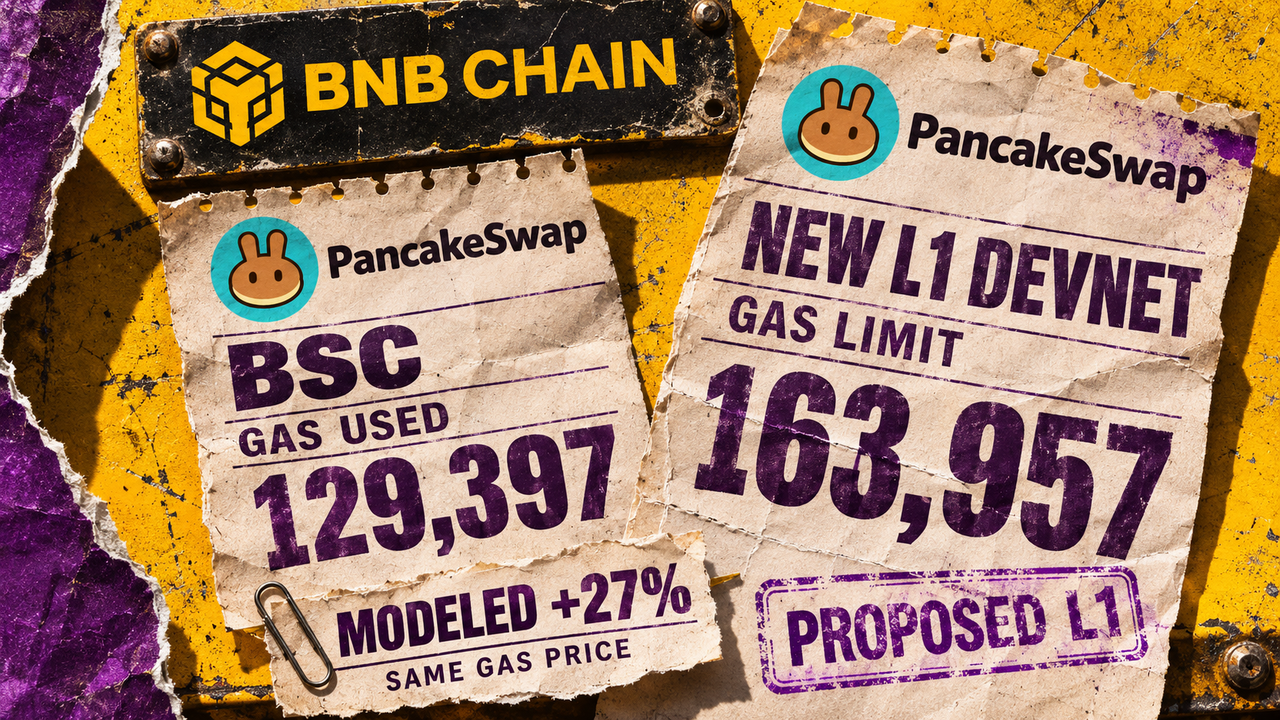
BNB Chain’s proposed gas rules would raise the network fee for a sample PancakeSwap trade by 27% at the same gas price.
On BNB Chain’s proposed network, a trader would pay for all the computing capacity a swap reserves. Applying that rule to one PancakeSwap trade on BNB Smart Chain would raise its network fee by about 27% at the same gas price.
BNB Chain published its new layer-1 litepaper on Nov. 26, describing a separate network being developed alongside BNB Smart Chain (BSC). The design keeps BNB as the gas token, and a public testnet is in preparation.
For trading apps, the proposal pairs early feedback about where a transaction might land with reserved capacity for eligible activity. The devnet bills ordinary transactions for the room they request in a block.
A gas limit is the maximum amount of computing work a transaction can use. On BNB Smart Chain, the network fee for an ordinary transaction reflects the gas it actually uses.
The new devnet orders transactions before execution, using the declared limit to allocate room in the block. An ordinary transaction with a valid sequence number and sufficient funds at execution pays for that full amount, even if it finishes with gas to spare.
On June 26, a successful swap through PancakeSwap’s v3 router used 129,397 gas at 0.05 gwei per unit and paid 0.00000646985 BNB.
00000819785 BNB. 000001728 BNB to that one swap’s fee.
Source link