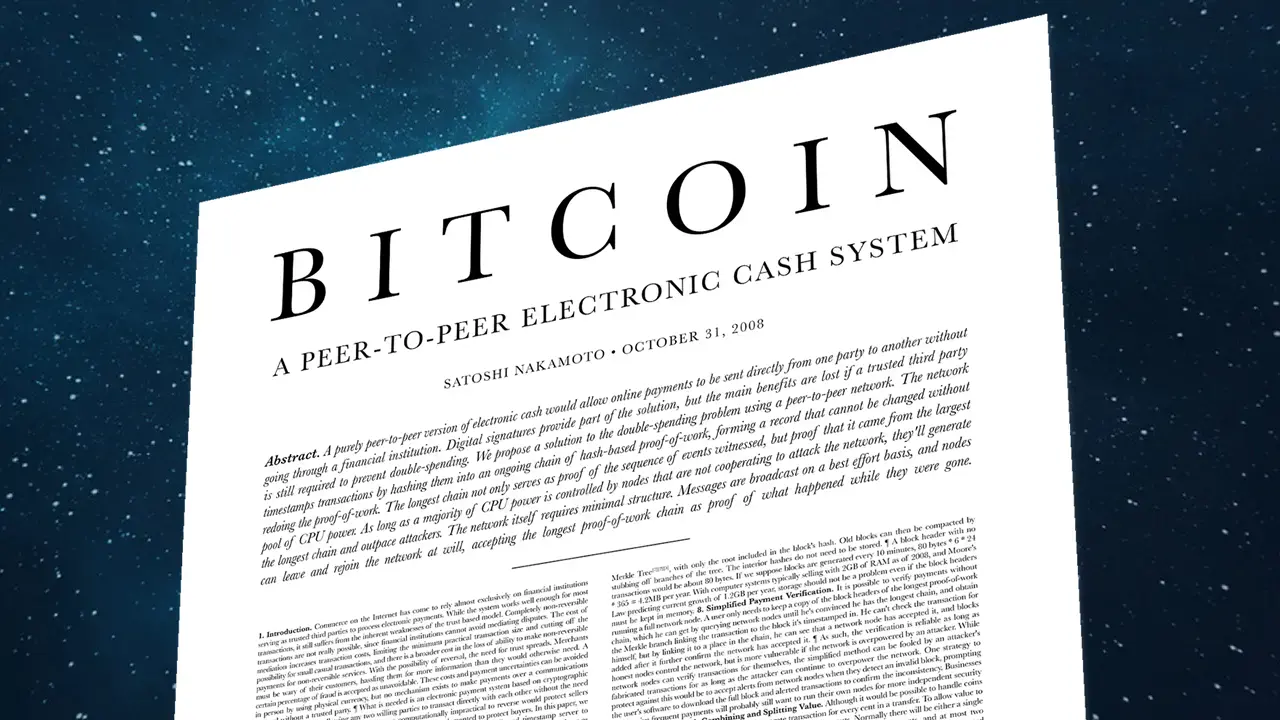
Bitcoin’s founding paper proposed a way to send money without a bank. Eighteen years later, its reach spans Wall Street funds, government reserves, and an unresolved question about who will pay to keep the system secure.
Bitcoin was designed to let people send money without a bank. Now, 18 years later, Wall Street sells access to it, and Washington has ordered a national reserve.
That contrast frames the anniversary of “Bitcoin: A Peer-to-Peer Electronic Cash System.” Published on Oct. 31, 2008, the nine-page paper addressed a deceptively simple problem: how to stop someone from spending the same digital money twice without a trusted institution keeping score.
Oct. 31, 2026, marks 18 years since its release. The story is no longer simply whether that idea could work: It is what happens when a system built to reduce reliance on institutions becomes an asset those institutions want to own.
The announcement arrived on a cryptography mailing list, not at a bank or government briefing. Writing as Satoshi Nakamoto, its author described a system that was “fully peer-to-peer, with no trusted third party.”
The timing mattered. Lehman Brothers had filed for bankruptcy on September 15, 2008. Governments and central banks were rescuing financial institutions as confidence fractured. But Bitcoin’s intellectual roots were older than the crisis. They reached into the cypherpunk movement, whose members used cryptography to defend privacy.
The paper cited Wei Dai’s b-money proposal, Adam Back’s Hashcash, and earlier work on digital timestamps by Stuart Haber and W. Scott Stornetta. Nakamoto brought those tools and incentives into one system for agreeing on who owned what.
Source link