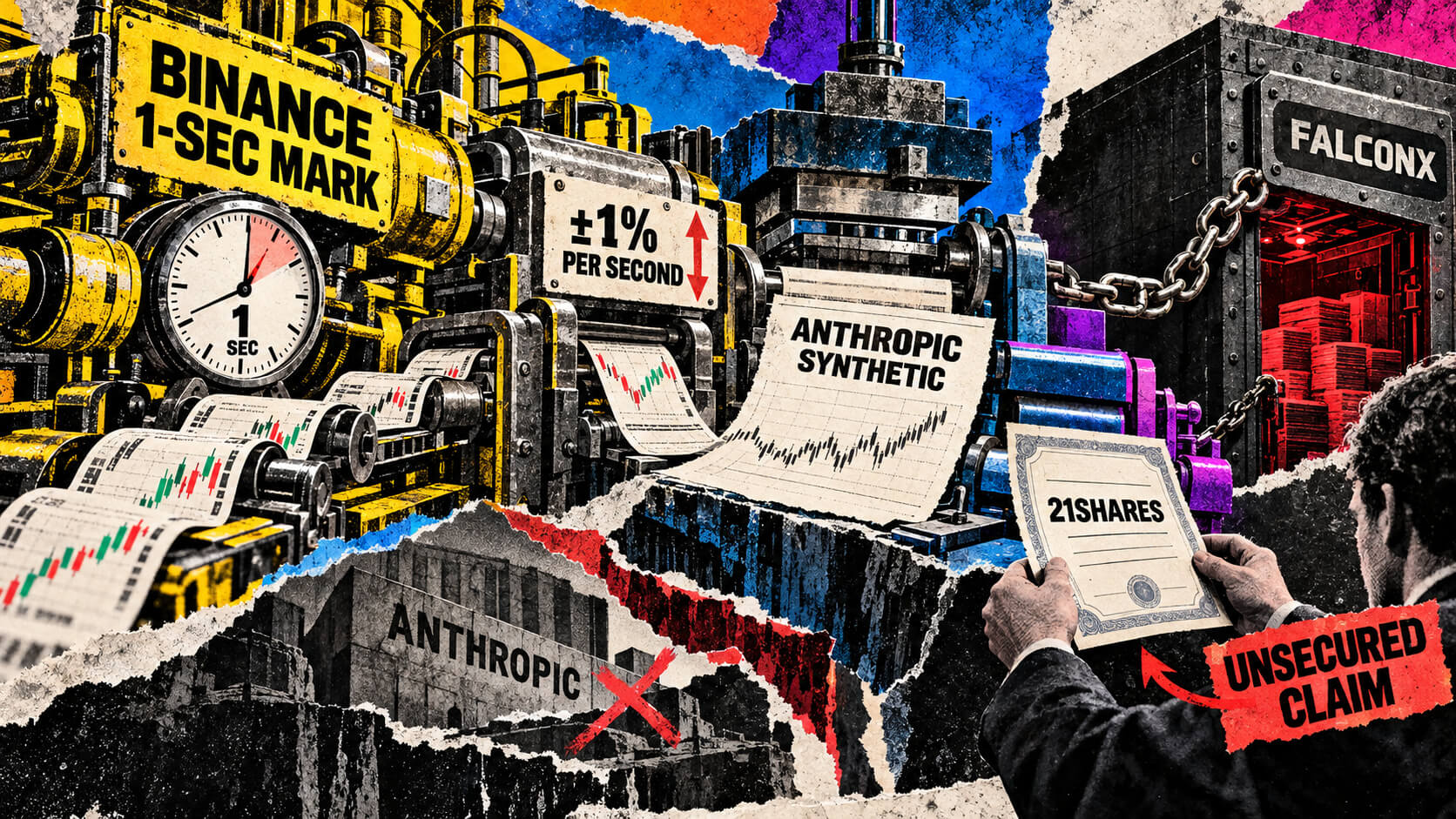
Shunyet Jan describes Binance’s perpetual pricing method, while 21Shares’ certificate adds issuer-only recourse, affiliated note terms and costs beyond the 1% fee.
Shunyet Jan, Binance’s Head of Exchange and Trading, explained how Binance prices Anthropic-linked perpetual futures in an Oct. 13 article published by 21Shares.
He describes a mark updated each second from executed trades, with limits on each second’s movement and fallbacks when trading slows.
That explanation accompanies the Oct. 13 contractual issue date of the 21Shares Anthropic Synthetic ETP, an exchange-traded certificate giving synthetic exposure to the private company.
Buyers become unsecured creditors of a Cayman issuer, whose FalconX note counterparty manages the underlying exposure. Their returns depend on that chain’s ability to pay, as well as the direction of Anthropic-linked prices.
The issuer’s legal summary discloses that affiliated contract terms are negotiated within the same corporate group, without an independent director empowered to approve their fairness or an external check that they match an arm’s-length deal. Its advertised 1% annual product fee also sits alongside financing, trading and perpetual-funding costs.
A public listing would force crypto’s synthetic Anthropic valuation to converge with a real stock-market price, testing whether pre-IPO liquidity survives repricing or unwinds once Wall Street sets the benchmark.
This certificate adds a counterparty-failure dependency that can damage returns even if the reference price performs well.
The final terms identify the certificate issuer as 21shares x FalconX Limited, incorporated in the Cayman Islands. They specify one-time long synthetic exposure through an unlisted structured note, with FalconX Sandpiper SPC as the relevant contract counterparty.
Source link