His proposed dollar-settled contracts track a FLOP-priced benchmark, leaving inference buyers to match token, model and rollover exposure.
Arthur Hayes’s proposed AI-compute futures could offset a rise in a FLOP-priced benchmark while leaving a dollar-funded buyer exposed to the token’s exchange rate. The distinction affects businesses that would buy FLOP as they pay for inference, the work of running AI models to generate answers.
His October 26 blueprint connects financial contracts to FLOP Network, where AI agents would pay for model responses with the planned FLOP token. Receiving dollars from a hedge would stabilize the buyer’s dollar bill only to the extent that the contract matches its workload and currency exposure.
Hayes explicitly recognizes the currency link. He says pricing these proposed quanto contracts requires an adjustment for covariance between the compute index and the FLOP-dollar exchange rate, meaning how the two move together. Pricing that relationship and matching a particular customer’s bill are separate tasks: model choice, currency funding and purchase timing can leave residual exposure.
The market remains proposed. FLOP’s GPU-provider guide, updated October 30, says it operates only as a development network and involves no real money. Its official status page says no real FLOP token is trading.
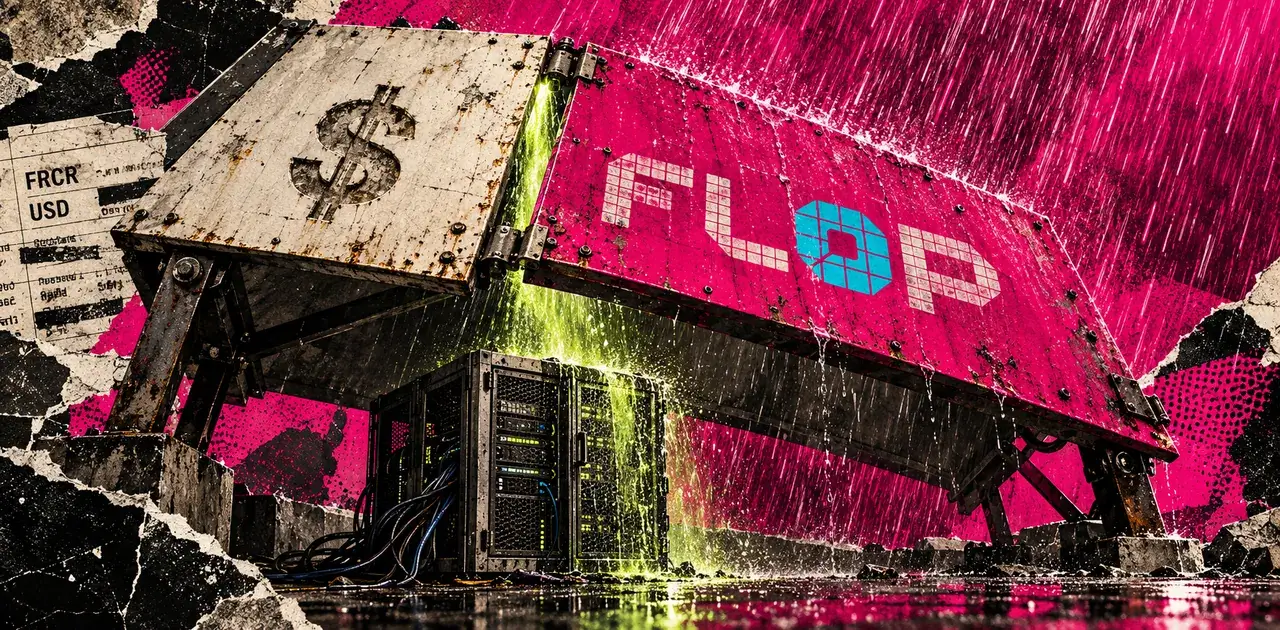
Hayes calls the underlying index the Flop Reference Compute Rate, or FRCR. His essay labels it an hourly volume-weighted FLOP/GigaFLOPS rate and outlines quarterly futures and perpetual swaps that entrepreneurs could bring to traditional-finance or crypto exchanges.
The proposed quarterly contract uses USD margin and a multiplier of $1 per index point.
Source link