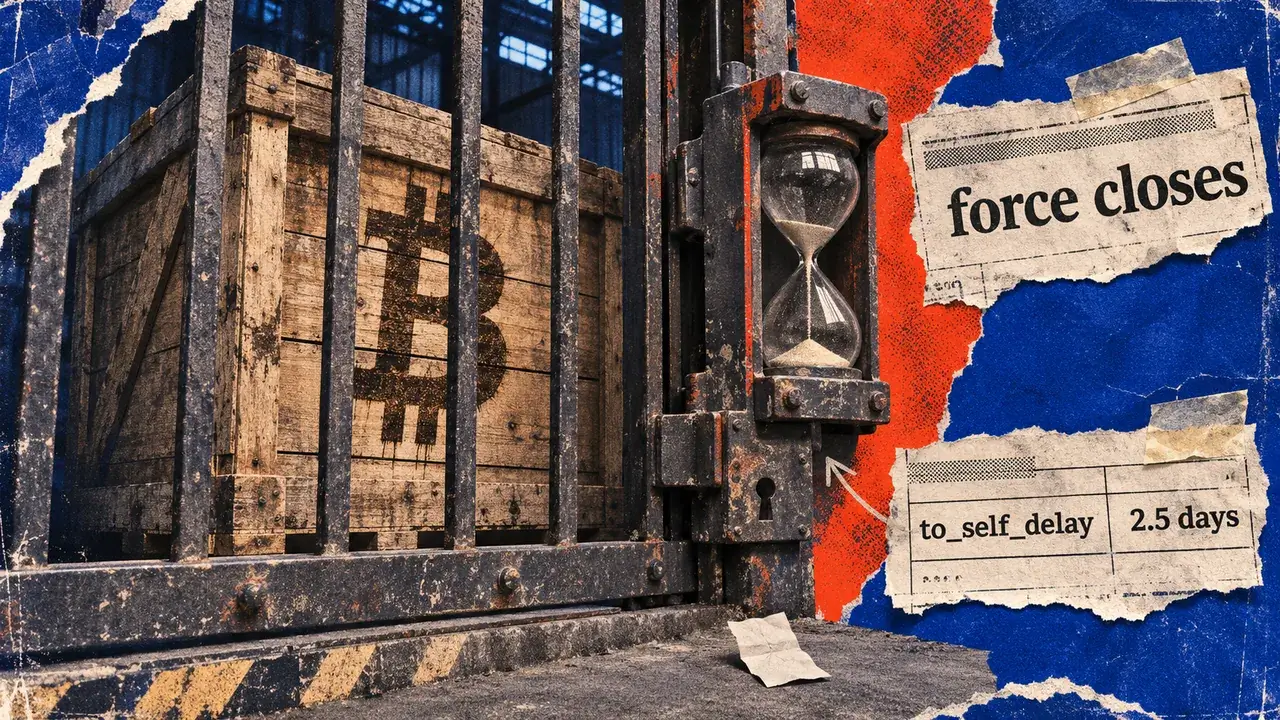
A study of public channels found a median force-close cost of 925 satoshis across both sides. The party who closed the channel waited a median 2.5 days before they could sweep their balance.
When a Bitcoin Lightning channel closes without both parties agreeing, the fees can be small but the wait can stretch for days. In a 2026 sample of public channels, forced closures cost a median 925 satoshis per channel across both parties, while the party that initiated the closure waited a median 2.5 days before it could reclaim its own balance, according to Saurabh Kumar's November 12 preprint.
Kumar, of Bitcoin Data Labs, reports 973,581 channel closes from January 2018 through October 31, 2026, including 523,815 force closes. The detailed 2026 cost cohort covers 14,435 public force closes through October 4, leaving four weeks to follow their outputs.
For comparison, the paper reports a 2026 cooperative-close median of 197 satoshis. The ratio between the force-close and cooperative-close medians was 4.7 to one. Its force-close total includes the commitment transaction, required balance sweeps, pending-payment resolution, observed same-block owner fee bumps and later owner anchor cleanup, with batched spending fees divided among inputs.
A unilateral close uses a previously signed commitment transaction to settle a channel on Bitcoin. Under Lightning's BOLT 3 specification, the output returning the broadcaster's own balance carries a delay called to_self_delay. That gives the peer time to penalize a broadcaster that submits a revoked channel state.
5-day figure measures the wait before that balance becomes eligible to be swept.
Source link