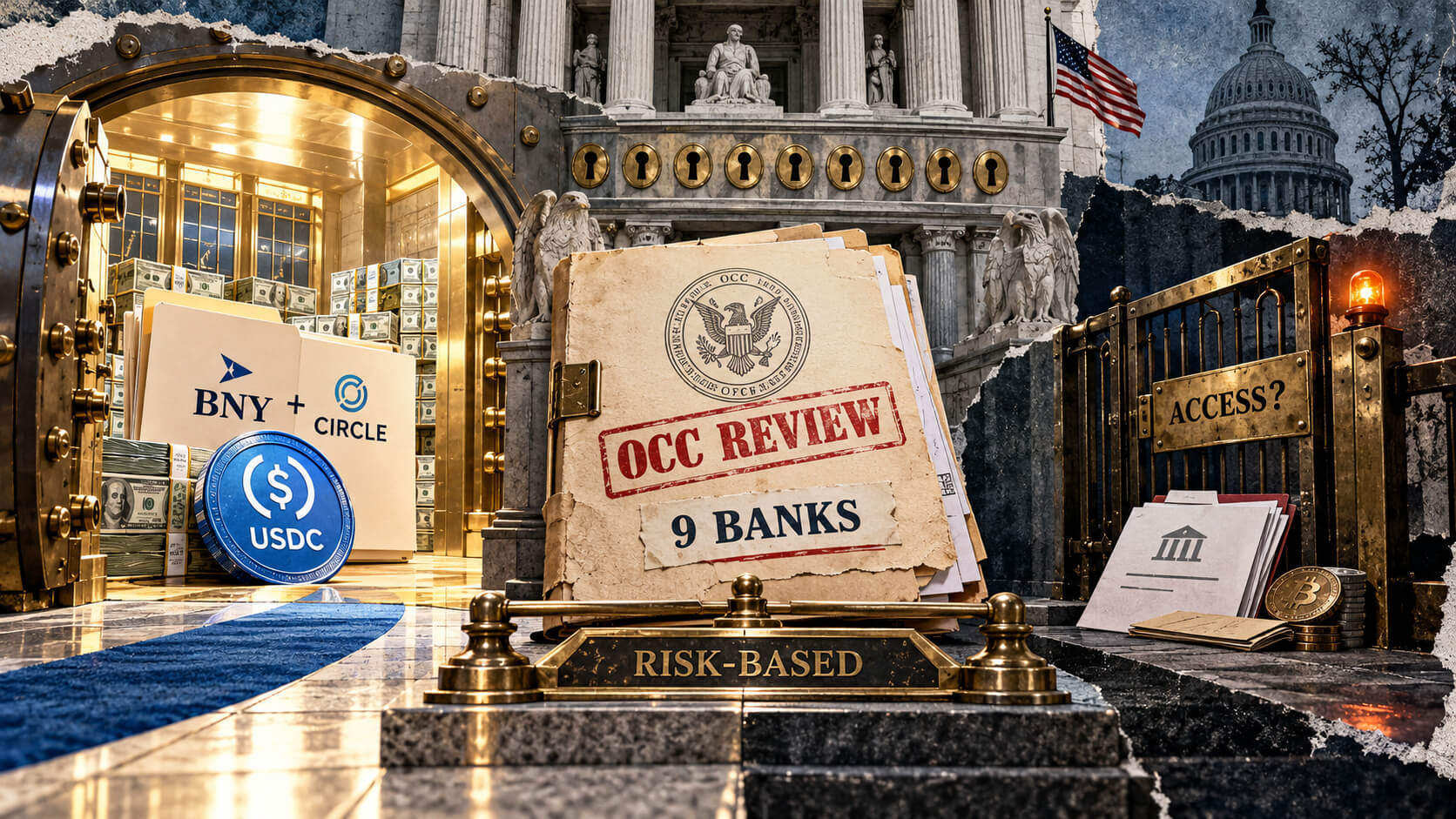
New OCC findings put crypto restrictions in a nine-bank record, while AML, sanctions and operational assessments still shape access.
The Office of the Comptroller of the Currency’s Oct. 14 debanking findings identify historical restrictions on digital asset issuers, exchanges, and administrators, often attributed to financial crime considerations.
The findings review crypto banking decisions across policies at the nine largest national banks the agency supervises.
For smaller crypto businesses, an individual bank’s risk assessment remains an important gate to access. Comptroller Jonathan Gould is preserving objective customer decisions while challenging improper exclusion.
The consequential test is how the OCC distinguishes financial, operational, or compliance constraints from disapproval of a lawful business, and whether its scrutiny produces usable banking services.
The functions at stake extend beyond opening a deposit account. On June 29, 2026, BNY announced stablecoin services for institutional clients, including holding USDC in BNY custody and instructing Circle through BNY to mint USDC from dollars or redeem it for dollars.
The arrangement links digital asset custody with the dollar side of stablecoin activity. BNY described service availability for its institutional clients, while eligibility for smaller crypto businesses and broader competitive effects remain unresolved.
The OCC’s findings cover policies between 2020 and September 2025. The reviewed banks were JPMorgan Chase Bank, Bank of America, Citibank, Wells Fargo Bank, US Bank, Capital One, PNC Bank, TD Bank and BMO Bank.
The agency said it reviewed nearly 100,000 complaints and received about 50,000 documents totaling about 420,000 pages, as part of its broader inquiry across customer sectors.
Source link