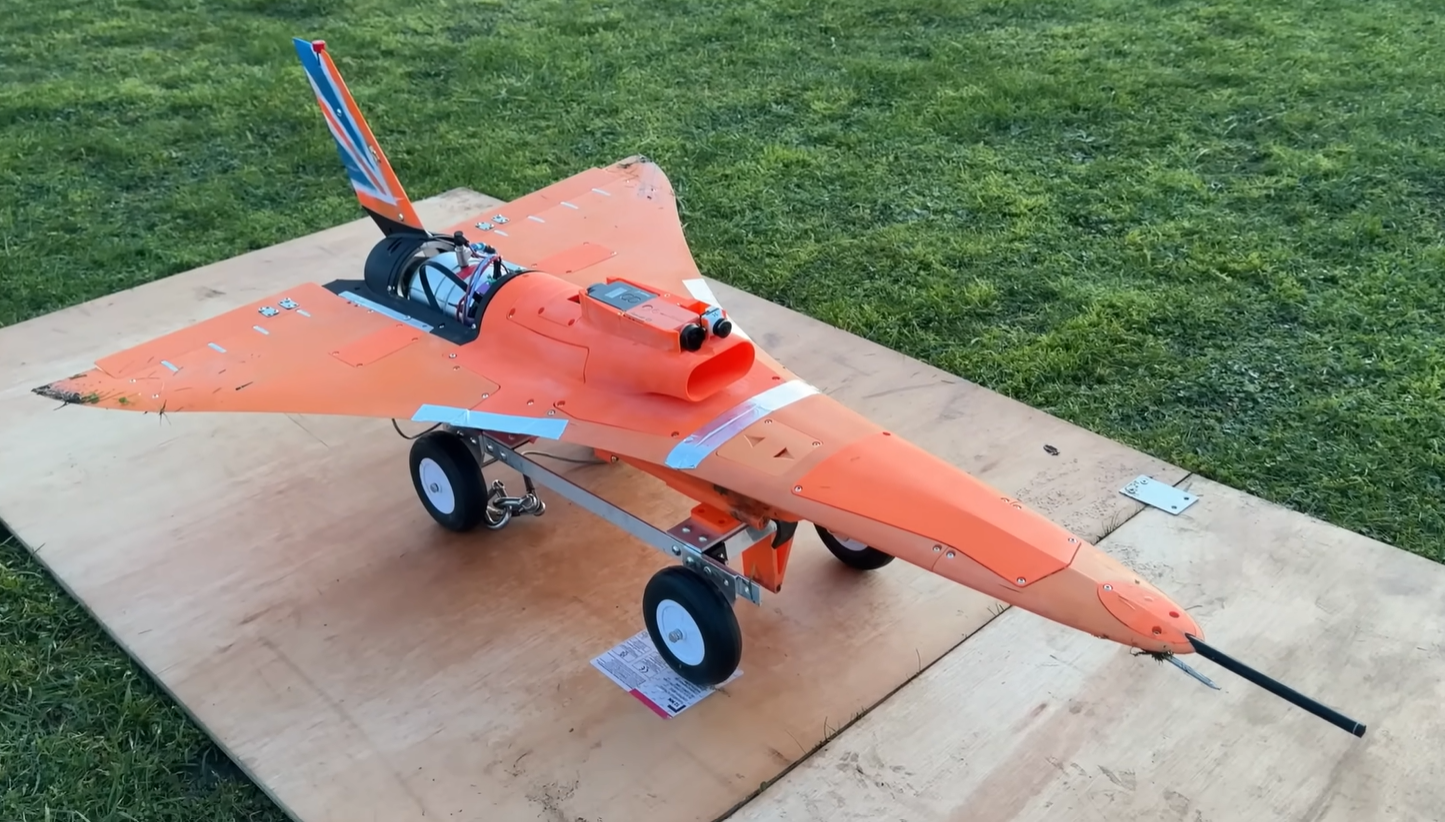
The Kingchaser, a 3D-printed jet-powered remote-controlled aircraft made out of PETG, PPS-CF, carbon-fiber rods, and aluminum, aims to take the world speed record after its maiden flight, with a target of Mach 0.8. The Mach Initiative aims to break the current Guinness World Record held for 9 years by German pilot Neils Herbrich. The team of graduates from the University of Bath has posted their maiden flight of the Kingfisher to YouTube.
The team started out with their first miniature prototype, the Kinglet, made out of PETG, PET-CF, and some PLA. It didn’t use a jet turbine yet, opting instead for an EDF (Electric Ducted Fan) as a safe and low-cost way to iterate. The Kinglet used a modular design to rapidly prototype the aircraft in sections and replace any broken parts without needing a whole new body.
Once the Kinglet had reached a level of performance the team was happy with, they moved on to the Kingfisher, measuring just under a meter, propelled by the Jetcat P60, a miniature jet turbine engine capable of 63 N · m of thrust, reaching a top speed of 205 mph (330 km/h). The Mach Initiative stated that this engine is not powerful enough, nor is it intended to break the record, aiming solely to achieve flight with a jet engine. The team had to make some major design changes from the Kinglet due to the larger size and much higher forces the aircraft would have to endure. The Kingfisher is still also made mainly out of PETG, with the housing of the engine out of annealed PET-CF.
Source link