
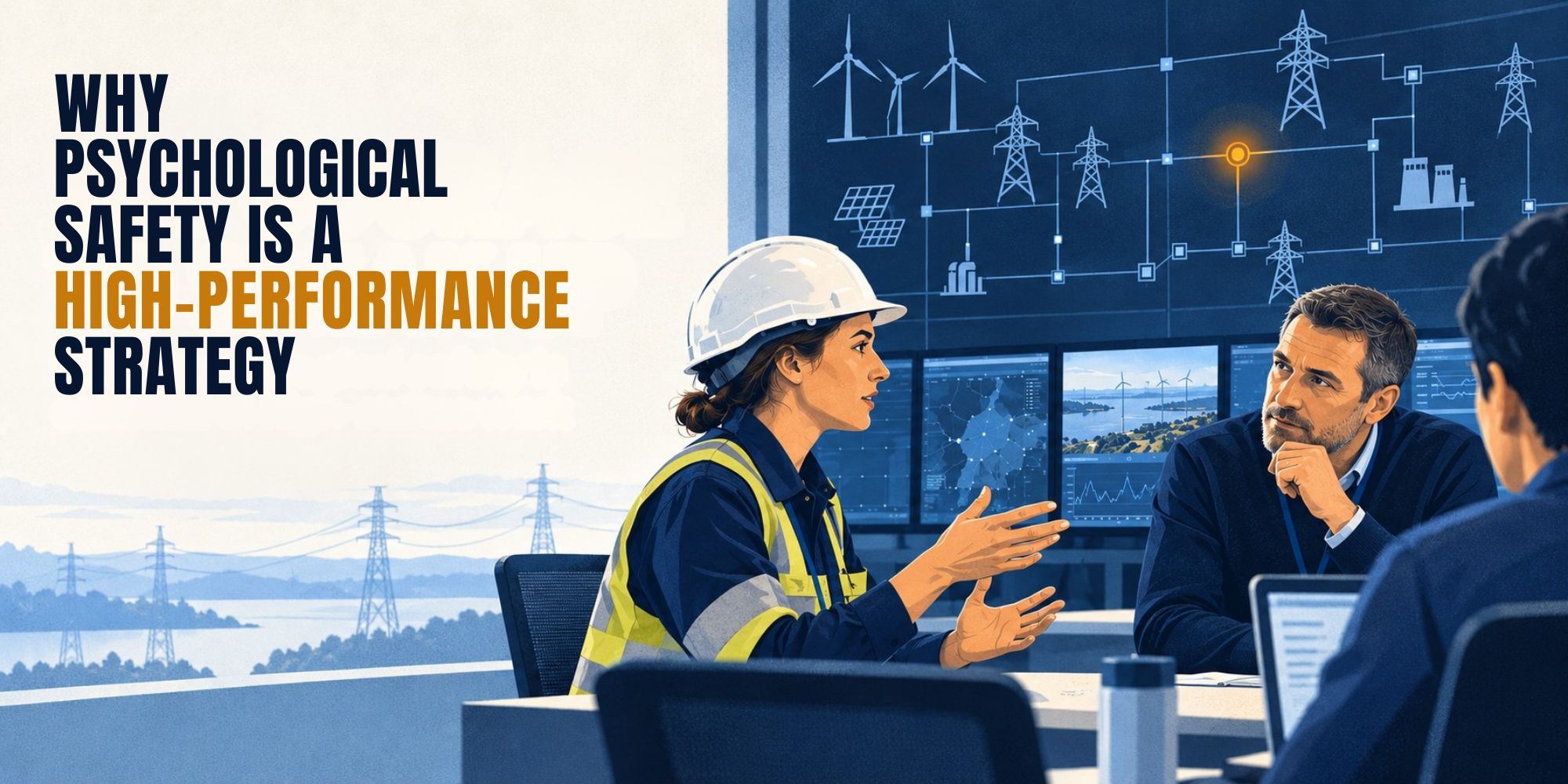
Some of the most significant organisational challenges in a high-growth workplace rarely stem from a lack of technical capability. It begins with a silent choice: an engineer noticing a structural flaw during design review but choosing not to push back; a manager realising a commissioning timeline is no longer viable yet absorbing the pressure rather than escalating the risk; a junior team member withholding a critical operational insight because the perceived cost of speaking up outweighs the comfort of remaining quiet.
On the surface, everything appears on track. The project milestone stays green on the executive dashboard, the meeting ends on schedule, and the targets remain unchanged. Yet, somewhere within the organisation, valuable information may not be flowing as effectively as it could.
It is neither an employee perk nor a shift toward softer management. In large-scale energy and infrastructure workplaces, psychological safety is core risk management. It is the organisational capacity to surface uncomfortable truths early, before they compound into systemic failures.
High-performance organisations rely on decentralised decision-making under conditions of ambiguity. In multi-gigawatt energy developments, complex engineering interfaces, tight capital allocations, and strict grid-interconnection timelines leave very little margin for error. Execution quality depends not just on individual technical mastery, but on whether that mastery can move frictionlessly across institutional hierarchies.
When employees do not feel fully comfortable expressing candid perspectives, organisational efficiency and decision quality can be affected. Operational risks are flagged late in the build cycle, driving up rectification costs exponentially. Teams spend disproportionate resources correcting flawed baseline assumptions that could have been challenged at inception.
Source link





