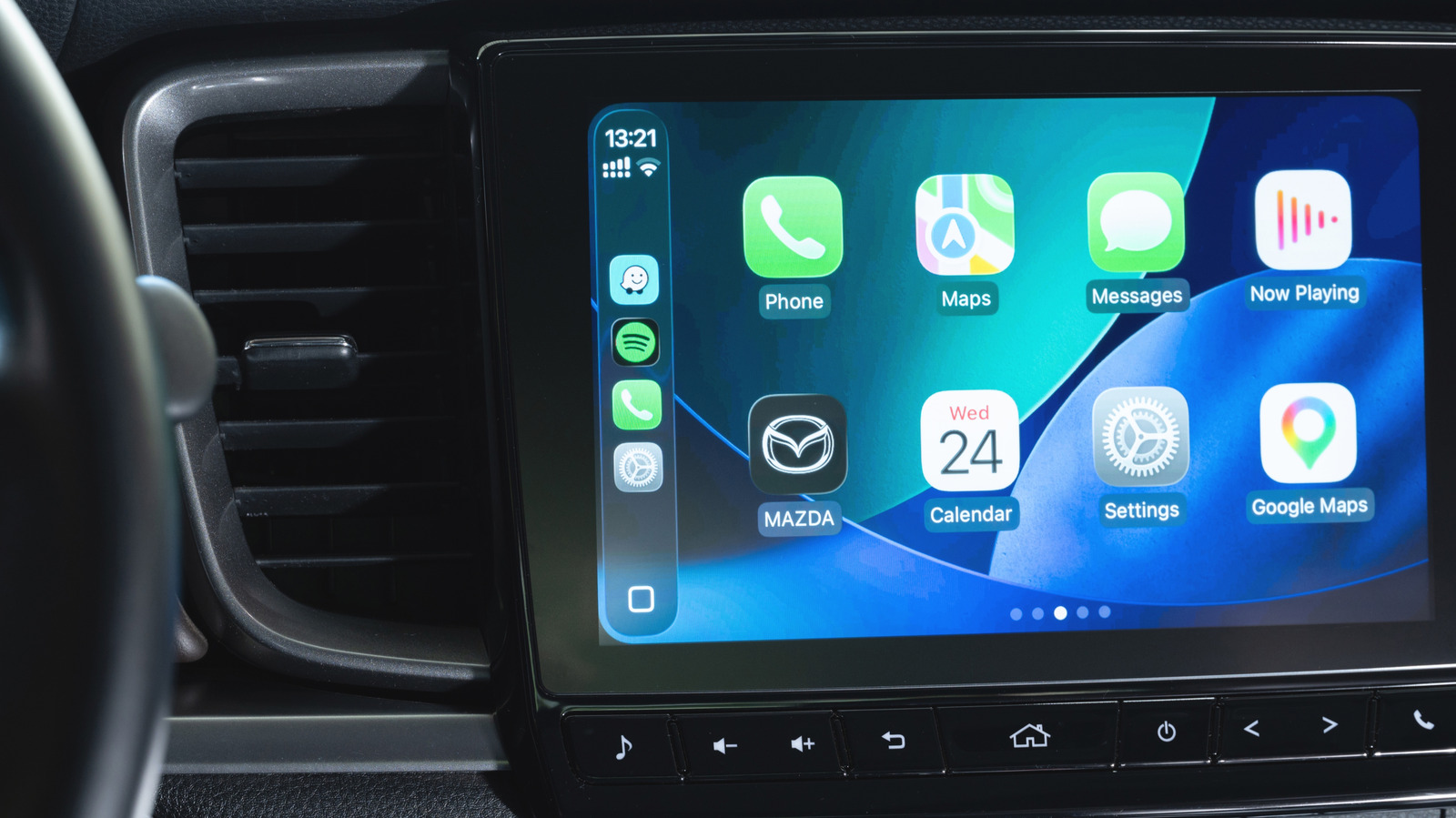
If you own a modern vehicle and a smartphone, you probably find CarPlay or Android Auto as indispensable as we do. Sure, you can always tap on your phone in a mount, or dare to rely on your car's built-in apps. But even a 6-inch phone screen can feel tiny from behind the wheel, and those built-in apps are often slow or poorly designed. With phone projection, you've got a number of high-performing apps ready to go in any compatible vehicle — even rentals.
There are drawbacks. For one thing, both platforms can suffer from cut outs at specific locations, which can be linked to electromagnetic interference. Your phone is a weak link in many respects, actually. CarPlay navigation can run substantially smoother on 5G than 4G, even if you have a relatively recent iPhone. The obvious explanation is that apps like Apple Maps are constantly processing data as you drive.
If your phone starts to overheat, that can make matters far worse. To prevent crashes or damage, it may need to throttle performance, halt charging or shut down completely. Why does using CarPlay or Android Auto make this a possibility, though? Blame it not just on environmental conditions, but power and software demands.
In some situations, environmental conditions could well be the main factor. If your phone is exposed to bright sun for hours at a time, it's naturally going to soak up a lot of heat. It's probably a bad idea to use a windshield mount if you're driving through the Texas Hill Country in July.
Source link