
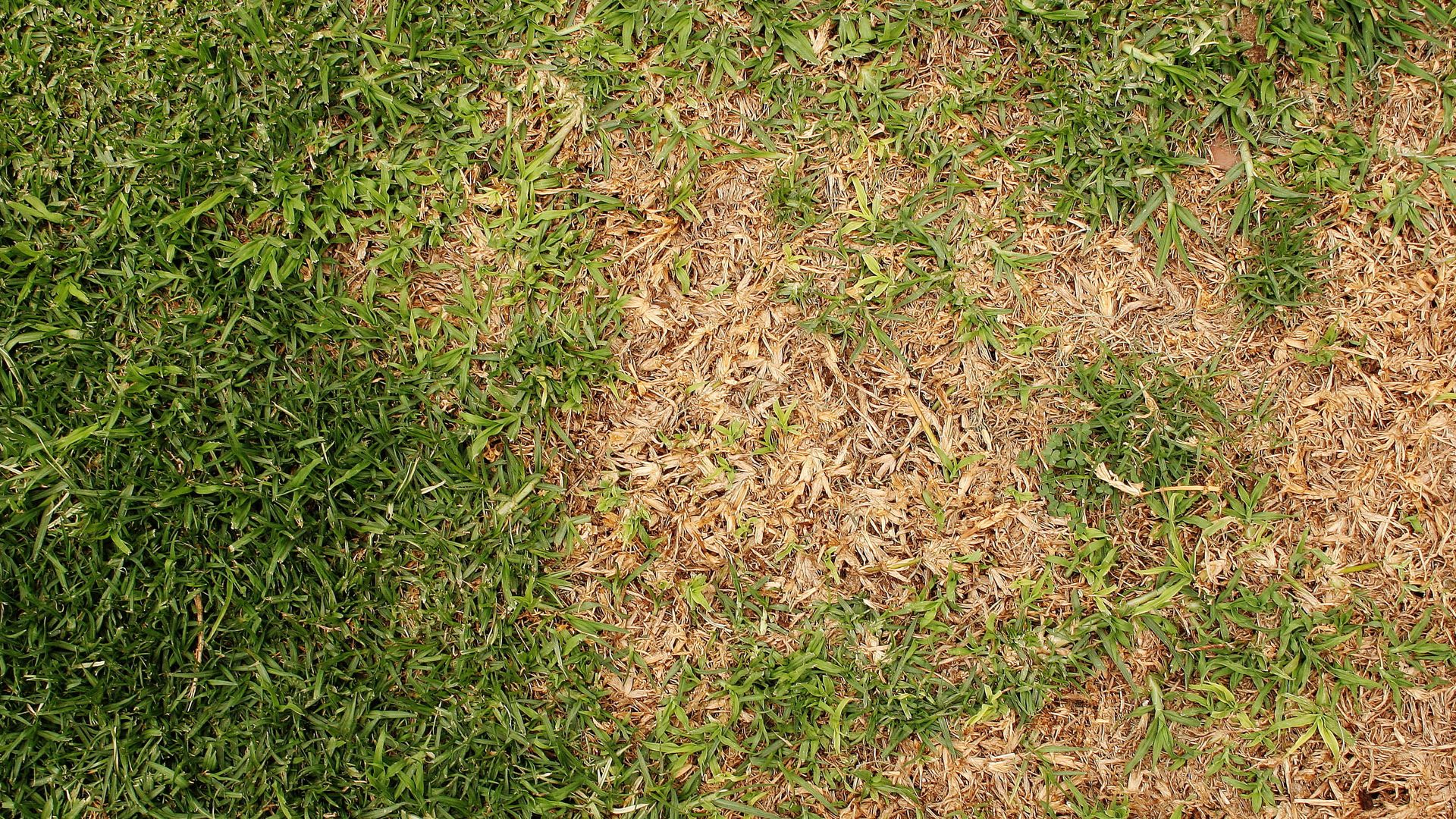
Fall is official here, and it’s already taken its toll on my previously lush and green grass. But, before things get too chilly, October is the ideal time to repair your damaged lawn and prepare for the colder months ahead.
And if, like me, you’ve tackled this by scattering grass seed on those sparse or bare patches, it can be a little disheartening when you haven’t seen any growth sprouting through at all.
That's why I called on a lawn care expert to find out why my grass isn't growing, common mistakes to avoid, and top tips on how to fix it.
According to experts, now is the time to do those all-important lawn repairs. But the process just takes a bit more preparation than expected, and results will naturally depend on weather conditions and technique.
“Thriving spring lawns are built in fall. Thanks to a shift in weather patterns, soil temperatures are staying warmer for longer,” says Chris McIlroy, a lawn expert at The Grass People.
“If temperatures start to stay consistently below 46.4 °F to 50.0 °F, then the window for sowing is closing, so do keep an eye on the forecast. You need a two-week window where the temperatures are above this.”
If temperatures start to stay consistently below 46.4 °F to 50.0 °F, then the window for sowing is closing
In addition, be sure to check your soil temperature using a soil thermometer before seeding. Typically, cool-season grasses like Kentucky bluegrass need soil temperatures below 65°F, while warm-season varieties like Bermuda grass need at least 65°F.
Source link





