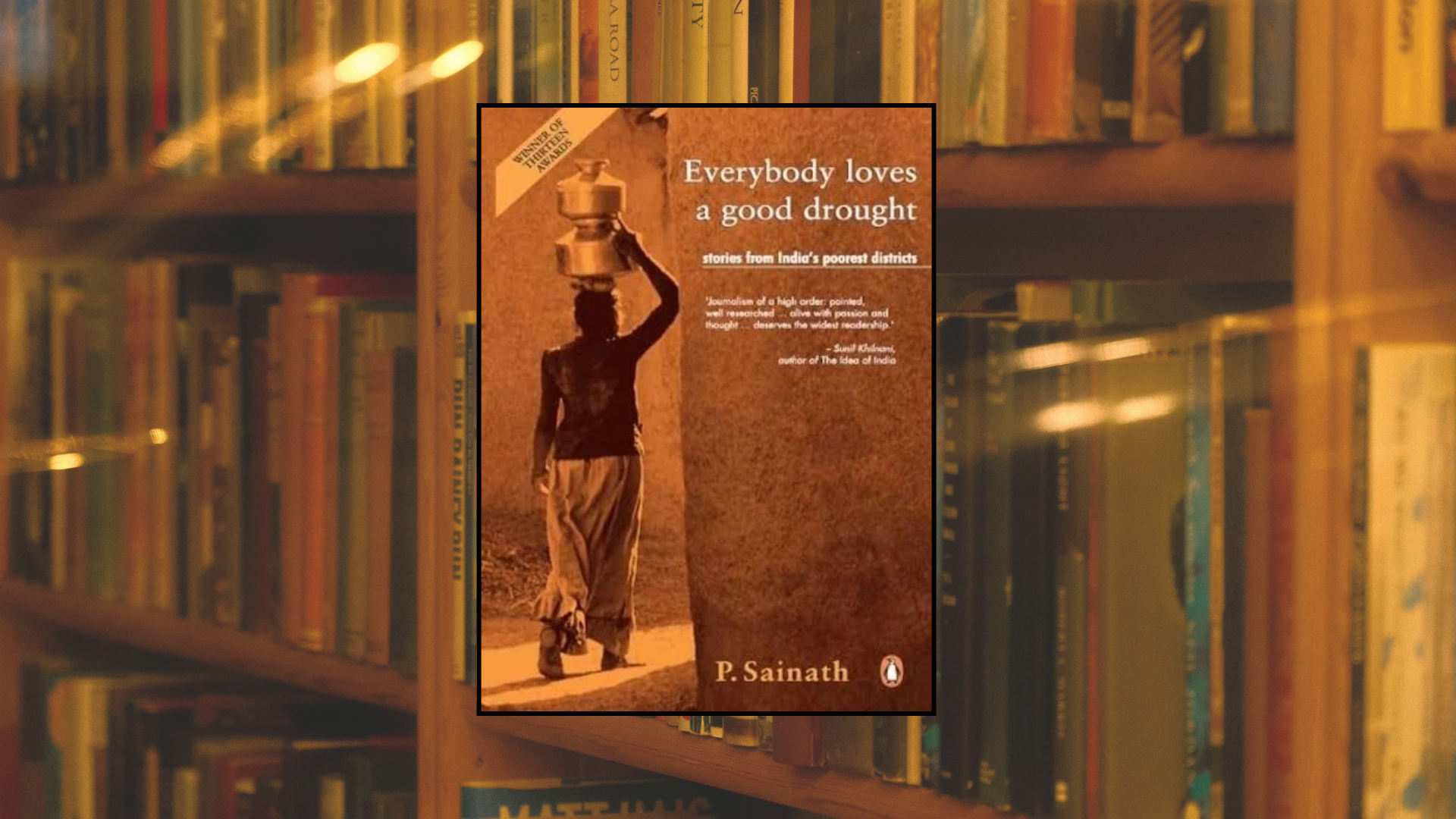
What does poverty look like beyond the statistics, government reports and economic discussions?
What happens when development projects promise progress but leave the poorest communities struggling to access basic necessities? These are some of the difficult questions explored in Everybody Loves a Good Drought: Stories from India's Poorest Districts by Palagummi Sainath.
First published in 1996, this landmark work of investigative journalism examines rural poverty, inequality and the realities of development in India.
Through deeply researched reportage and stories from some of the country's poorest districts, Sainath brings attention to communities that often remain overlooked in mainstream discussions.
Rather than presenting poverty through numbers alone, the book focuses on the people living through it. It explores their everyday struggles with healthcare, education, displacement, debt and government policies.
Poverty is often discussed through statistics, income levels and economic indicators. However, these numbers rarely capture the everyday experiences of people struggling to access food, healthcare, education and other necessities.
In Everybody Loves a Good Drought, Sainath moves beyond these figures to document the lives of India's rural communities. Through his reporting, readers encounter people whose circumstances reveal the difficulties of living in regions affected by economic hardship and inadequate public services.
The book explores how poverty influences nearly every aspect of life, from children's education to access to medical treatment and opportunities for employment.
By focusing on individual experiences, Sainath makes an important point: poverty is not simply an economic condition but a reality that shapes people's choices, opportunities and futures.
Source link