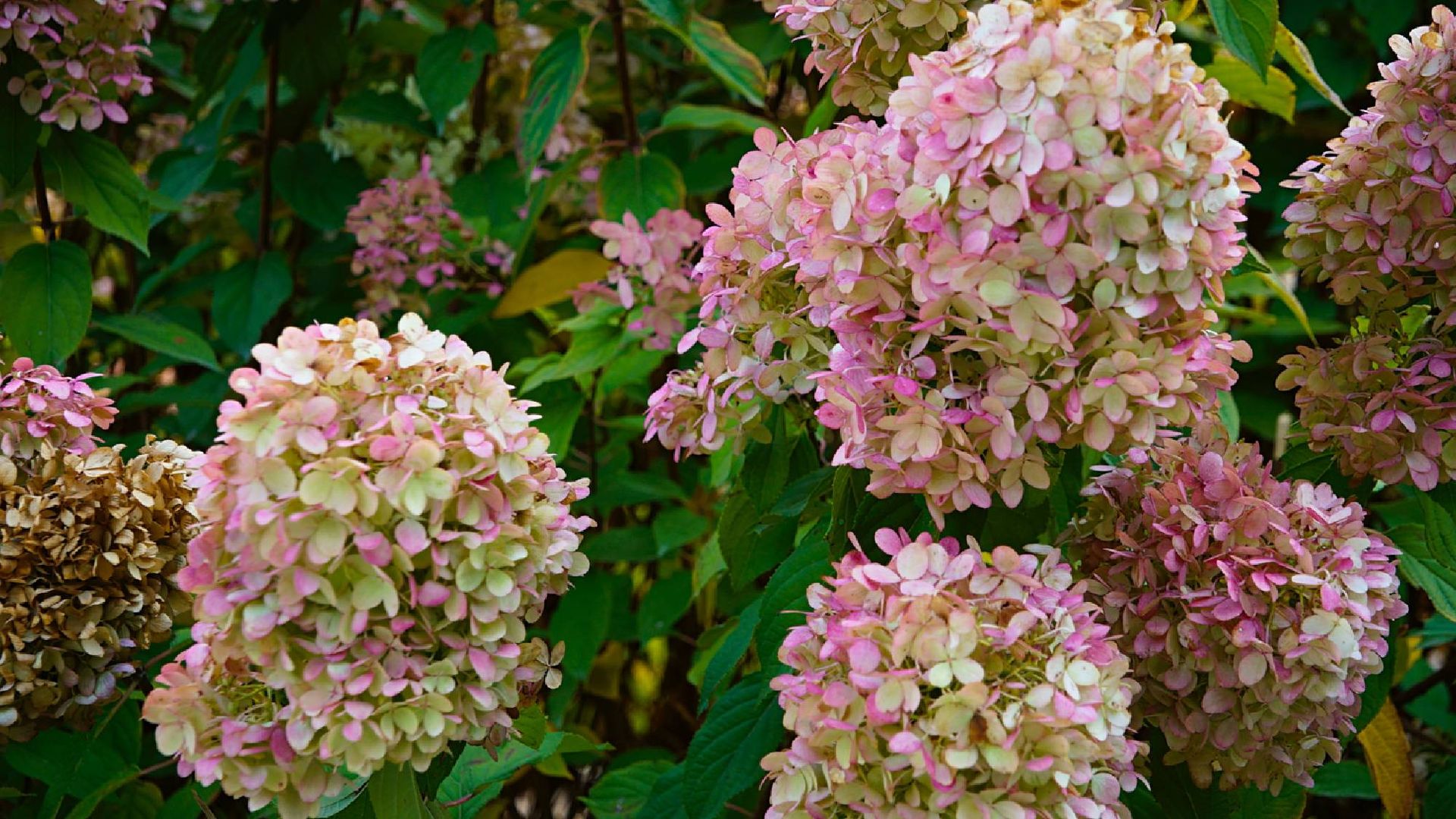
Nothing brightens a home quite like a vibrant bunch of hydrangeas. With their colorful blooms and distinctive cone-shaped clusters, it can be disappointing to watch them droop and lose their hue.
But what does it mean when those beautiful flowers start turning green?
I called on a gardening expert to reveal the reasons why your hydrangeas are fading to green — and top tips to help your blooms last longer throughout the season.
So if hydrangeas are known for their vibrant blooms, what's causing them to (surprisingly) turn green?
"As many hydrangea blooms mature, they naturally develop green tones,” states Paul Parker, plants and bulbs specialist at J. Parker’s. “This is part of the normal ageing process and often adds interest late in the season, particularly in autumn arrangements.
“Green tones are a natural stage in the life cycle of many hydrangea blooms, although the timing and extent of this colour change can vary depending on the variety and growing conditions.”
Parker also notes that while hydrangeas are generally reliable shrubs, a few routine factors can influence their growth and blooming performance.
”Factors such as extreme weather conditions and incorrect pruning can lead to poor flowering. Proper care helps them perform at their best rather than keeping them alive.”
Luckily, there are some top care tips you can follow to protect your hydrangeas during the harsh winter months.
Harsh temperatures can often take their toll on your plants, and so you’ll need to safeguard hydrangeas against cold and frost ahead of time.
Source link