

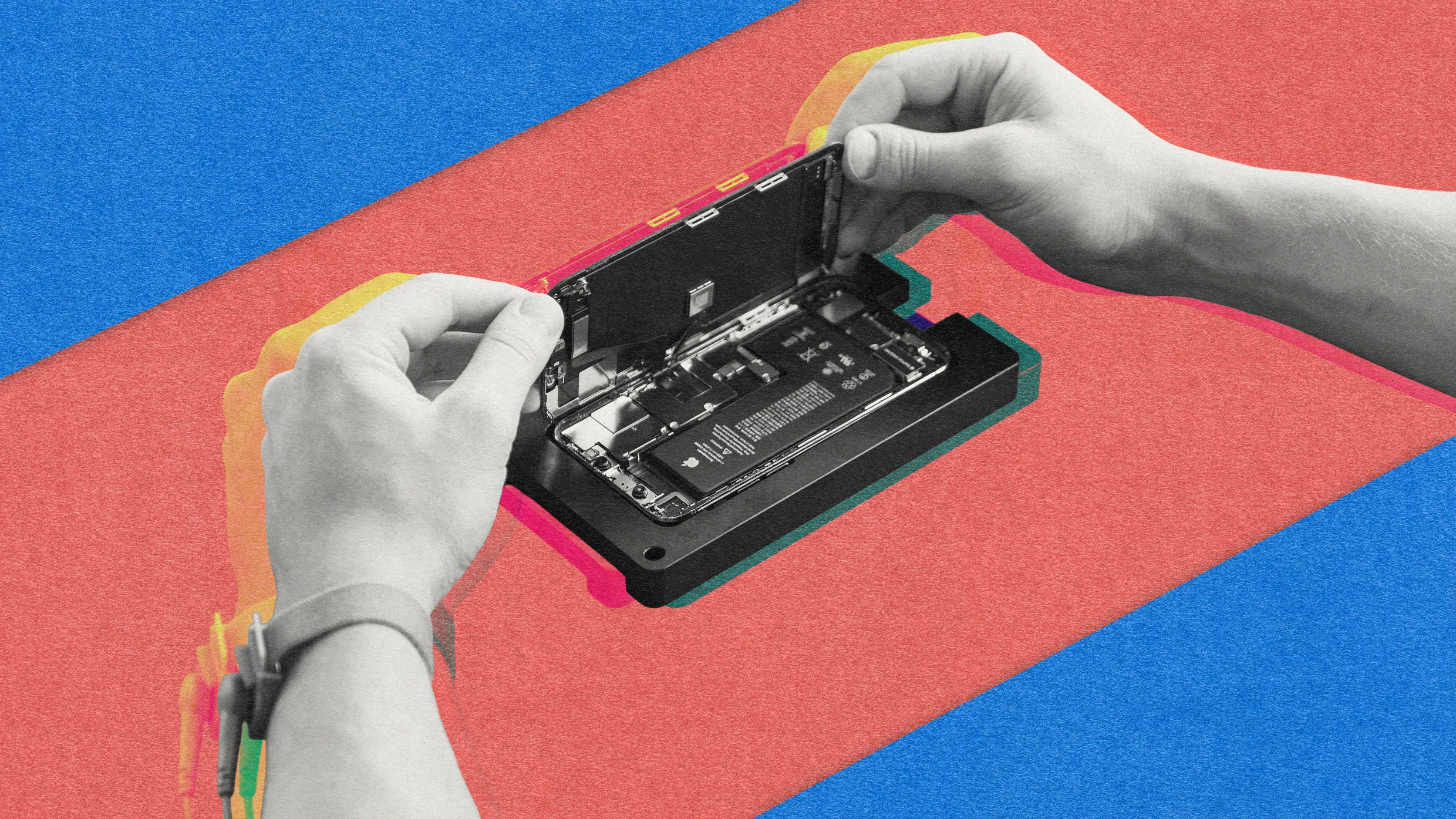
For six decades, I’ve worked on product design and manufacturing for companies such as Polaroid, Seiko, and Apple, as well as startups. When I worked at Polaroid and Apple, they still had their own factories and chose to go to Asia to build products. As noted in Patrick McGee’s bestseller Apple in China, I was responsible for bringing Apple’s first product to Taiwan in 1994. As a product design engineer and program manager, I was always involved in where my products were manufactured, because of the impact manufacturing has on a product’s success.
In my jobs at Polaroid and Apple, I turned to Asia for different reasons. I brought manufacturing to Asia for Polaroid in the 1970s, when it was rarely done. By the time I did it at Apple in the 1990s, Apple was late to the game.
Today, as pressure mounts for Apple to build iPhones in the U.S., I know from all my experiences that it is an impossible demand. We don’t have the attitude, the infrastructure, or the resources. We lost that battle decades ago, and cannot will it back.
The U.S. never invested in building consumer tech manufacturing at the scale of China or Taiwan. We prioritized R&D, design, and innovation, and didn’t value low-margin manufacturing work. During the Cold War, U.S. government investment and incentives were directed toward aerospace and defense, not consumer electronics. Our manufacturing base became dominated by contractors focused on military specifications, not consumer mass production.
Manufacturing consumer electronic products, in contrast, requires an infrastructure of suppliers, competitive labor costs, large workforces, and flexibility.
Source link





