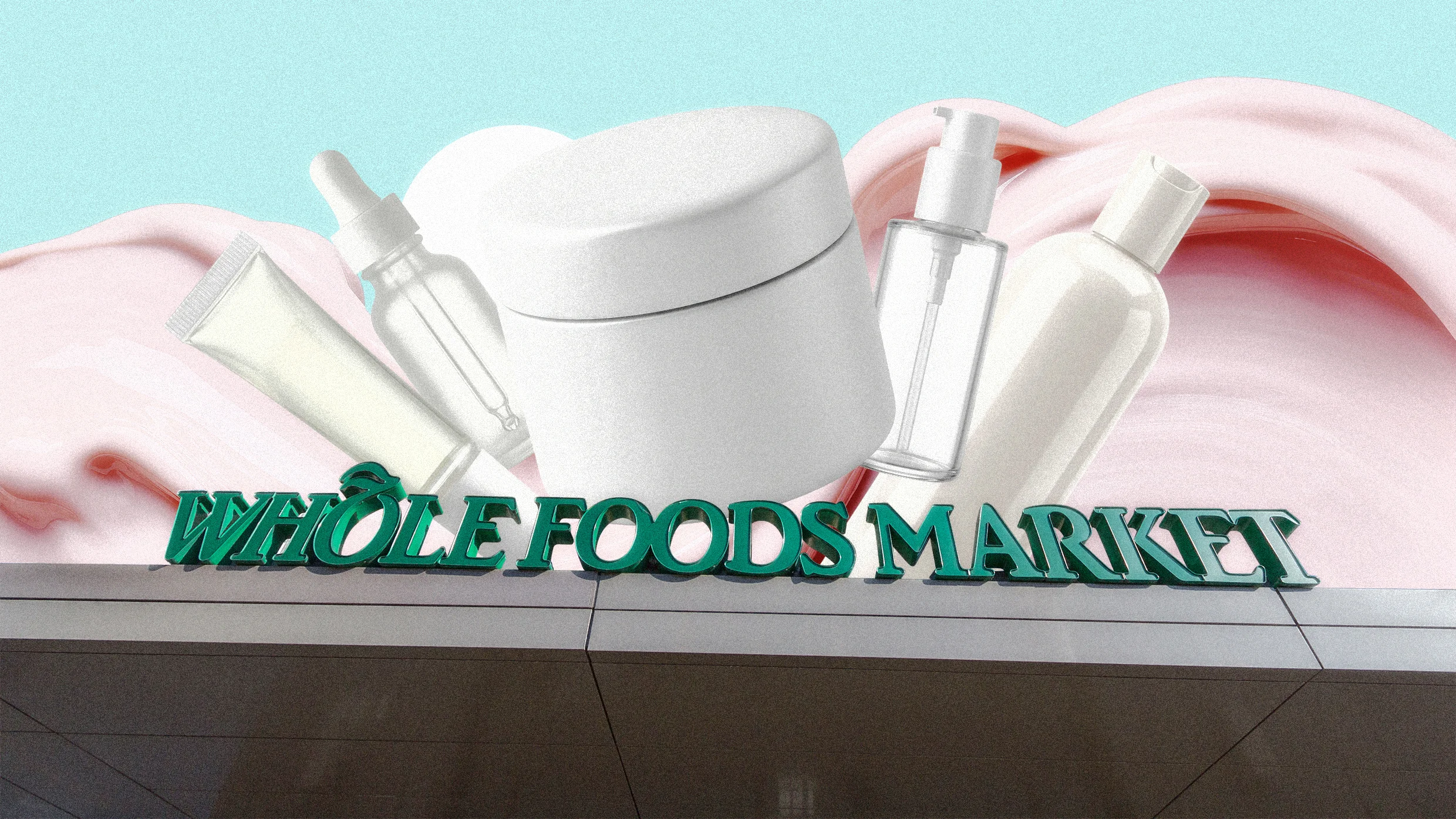
The beauty section at my local Whole Foods just got a glow-up. Steps from the entrance, just past the fruits and vegetables, the beauty aisle is now overflowing with dozens of new brands and products.
Alongside the Pacha bath bombs and Dr. Bronner’s soaps that have long been staples, you can find Cocokind’s electrolyte water cream, a moisturizer that promises to give you the glassy skin that’s so popular on TikTok. Magic Molecule vows to clear acne with a spritz of its viral skin spray. Then there’s Indie Lee. Fifteen years after helping pioneer clean skincare, the brand just debuted Indie Lee Botanicals exclusively at Whole Foods.
Since the 1980s, Whole Foods Market has been synonymous with organic produce and the affluent neighborhoods that can afford it. But over the past two years, the grocer—which Amazon acquired in 2017—has been quietly turning itself into a beauty destination. In any given week, the retailer sells products from 100 brands, according to Kat Stevenson, Whole Foods’s senior category merchant for beauty (for comparison, Sephora has around 400 brands).
Now emerging beauty brands are vying for a spot on Whole Foods’s shelves by courting its merchants with exclusive lines and reformulating their products to avoid the 200 ingredients that Whole Foods bans.
Whole Foods’s push into beauty is strategically timed. A volatile economy and skyrocketing inflation have made consumers across all economic backgrounds more careful with their money. Even the wealthier shoppers who frequent Whole Foods are looking to cut costs, and some are flocking to lower-priced grocers.
Source link