
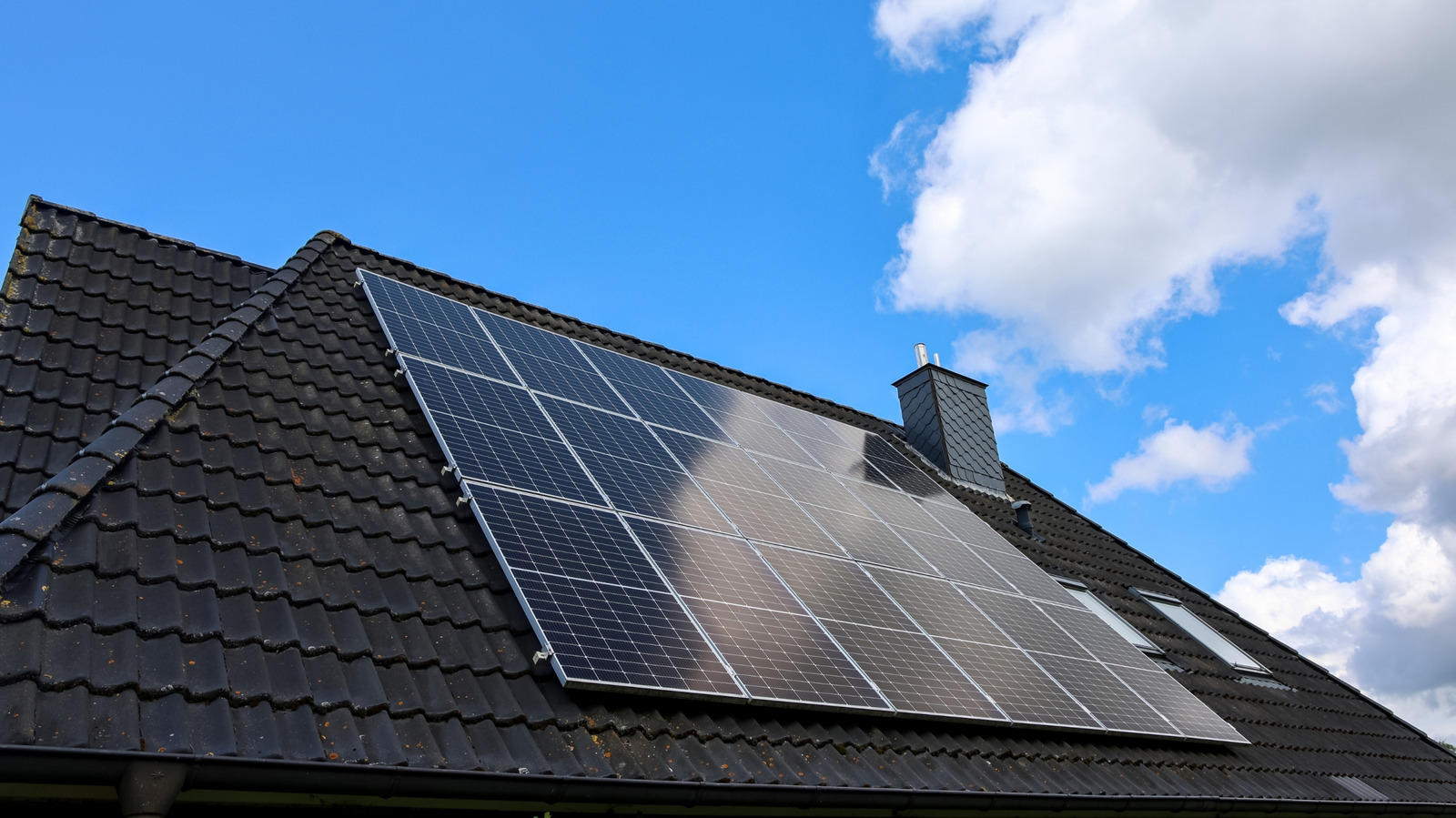
More efficient solar panels aren't always the better buy. Your roof, budget and plans for backup power have a say too.
At first glance, all the solar panels in your neighborhood may look much the same, but what they're made of can decide how much power they generate. Monocrystalline panels tend to generate more power per square foot compared to older polycrystalline models. And when skylights, chimneys and vents already take up some of the sunniest spots, picking the right solar panel can matter.
But just because a certain panel technology is more efficient doesn't instantly make it the best choice. External factors like your electricity consumption, how much shade the panels get and what your utility pays for surplus energy can change the math considerably, so it can pay to size your system using the 20 percent rule for solar panels. That means building in enough capacity to produce around 20 percent more energy than your household normally uses as a buffer for dimmer days. At the same time, inverters, mounting hardware and labor for installing the equipment need to be accounted for too (no matter how compelling the brochure seems).
There's also the burning question of what you'll be powering up with those solar panels. Someone hoping to shave off some bucks on their monthly bill needs a different setup from one who needs their Wi-Fi and kitchen appliances to survive the next power outage.
Between the monocrystalline cells (built from a single crystal of silicon) and polycrystalline cells, the former do pack a higher power density.
Source link





