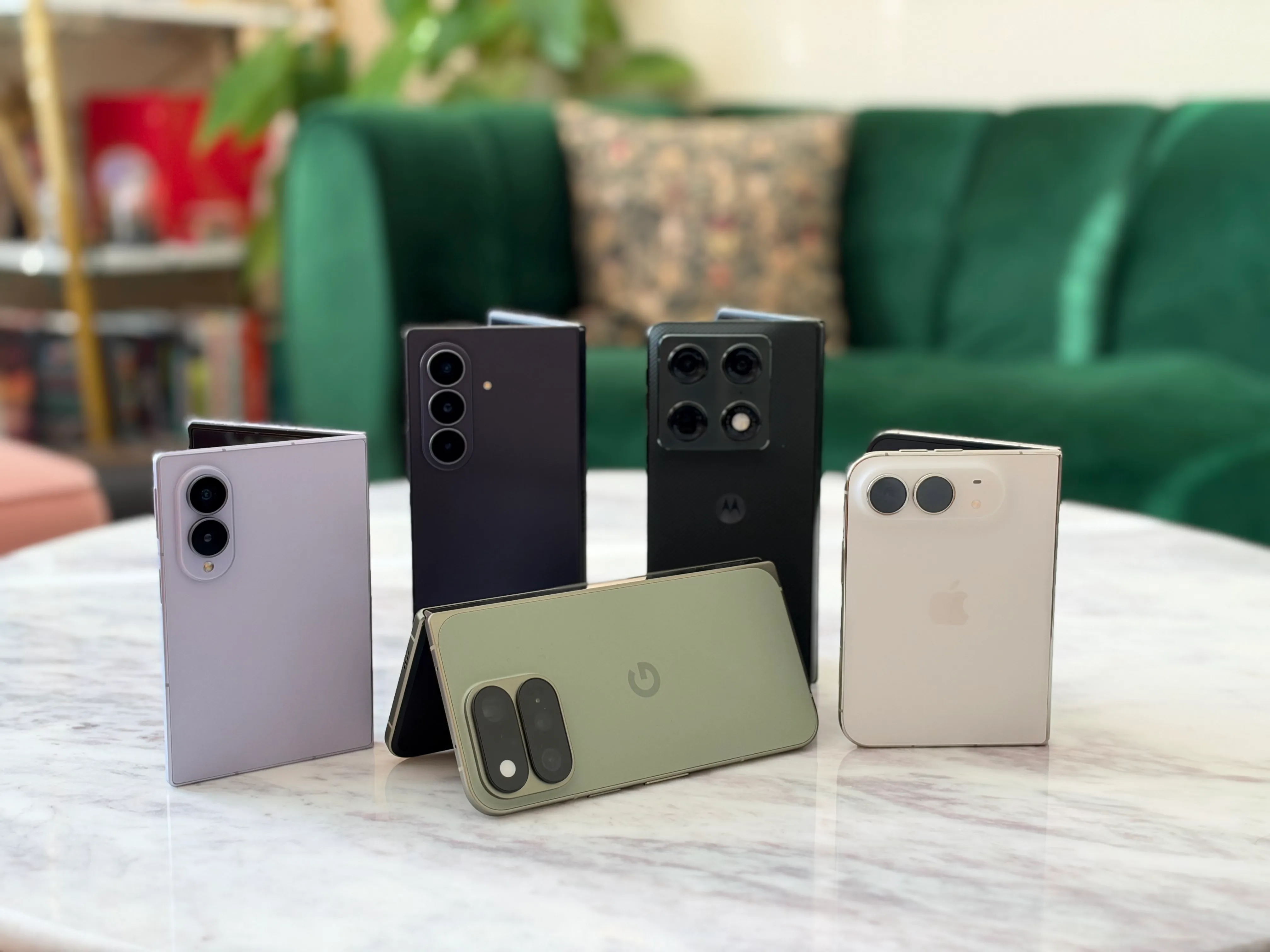
From Apple's iPhone Duo to Samsung's and Motorola's foldables, we tested how today's most popular book-style and flip phones hold up under pressure.
For years, foldable phones haven’t exactly been praised for their battery life. However, that’s starting to change.
Because of their unique design, foldables have traditionally struggled to match the battery life of conventional slab phones. Their massive displays, space-consuming hinge mechanisms and limited room for heat dissipation all present challenges. But battery technology has improved in recent years, with some of the newest foldables benefiting from higher-energy-density silicon-carbon batteries and more power-efficient processors. Even slim phones like the Galaxy Z Fold 8 can last all day, showing that you don’t have to sacrifice practicality for a sleek, innovative design.
Still, foldable phones remain a niche category, even with a major player like Apple entering the market with the iPhone Duo. But they offer an appealing alternative for anyone looking to break away from the sameness of more traditional slab phones. And with battery life being a key consideration when choosing a new device, it’s important to know which phone can keep up with all your scrolling, streaming and snapping without constantly reaching for a charger.
We’ve dug into CNET’s extensive smartphone lab data to find out which foldable phone in 2026 delivers the best battery life. Because book-style and flip phones differ in design and screen size, we’re separating the results to provide a more accurate comparison.
This year, CNET has reviewed and tested five book-style foldable phones: the Samsung Galaxy Z Fold 8 , Z Fold 8 Ultra , Motorola Razr Fold , Google Pixel 11 Pro Fold and the Apple iPhone Duo .
Source link